Smart Reading Mode Enabled
Double-click or long-press any difficult word in this article to instantly view its definition.
Austria Expels 3 Russian Diplomats Over Satellite Espionage in Vienna
Austria expelled three Russian diplomats after a 'forest of antennas' on Vienna embassy rooftops was found intercepting satellite data from the OSCE, IAEA, and other international organizations.

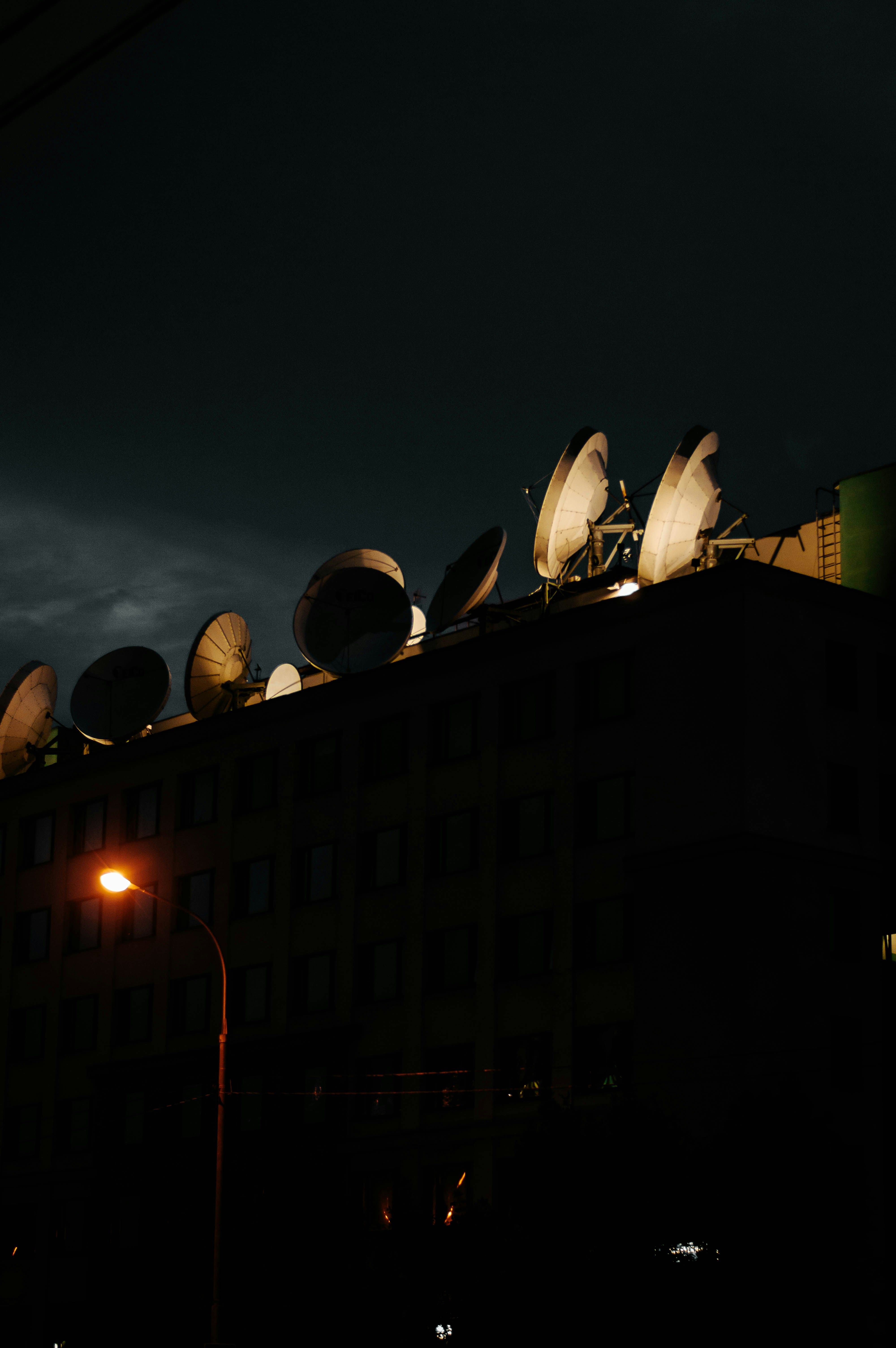
Austria declared three Russian diplomats personae non gratae on May 4, 2026, expelling them from Vienna after intelligence services uncovered a sophisticated satellite interception network concealed across multiple Russian diplomatic properties in the Austrian capital. Austrian Foreign Minister Beate Meinl-Reisinger announced the decision following a joint investigation by the Directorate for State Security and Intelligence (DSN) and allied agencies, confirming that Russian operatives had been systematically harvesting satellite communications from some of the world's most sensitive international organizations. "It is unacceptable that diplomatic immunity be used to commit espionage," Meinl-Reisinger declared, signalling a decisive shift in Austria's historically cautious approach to Russian intelligence activities on its soil.
The 'Forest of Antennas': What Was Found
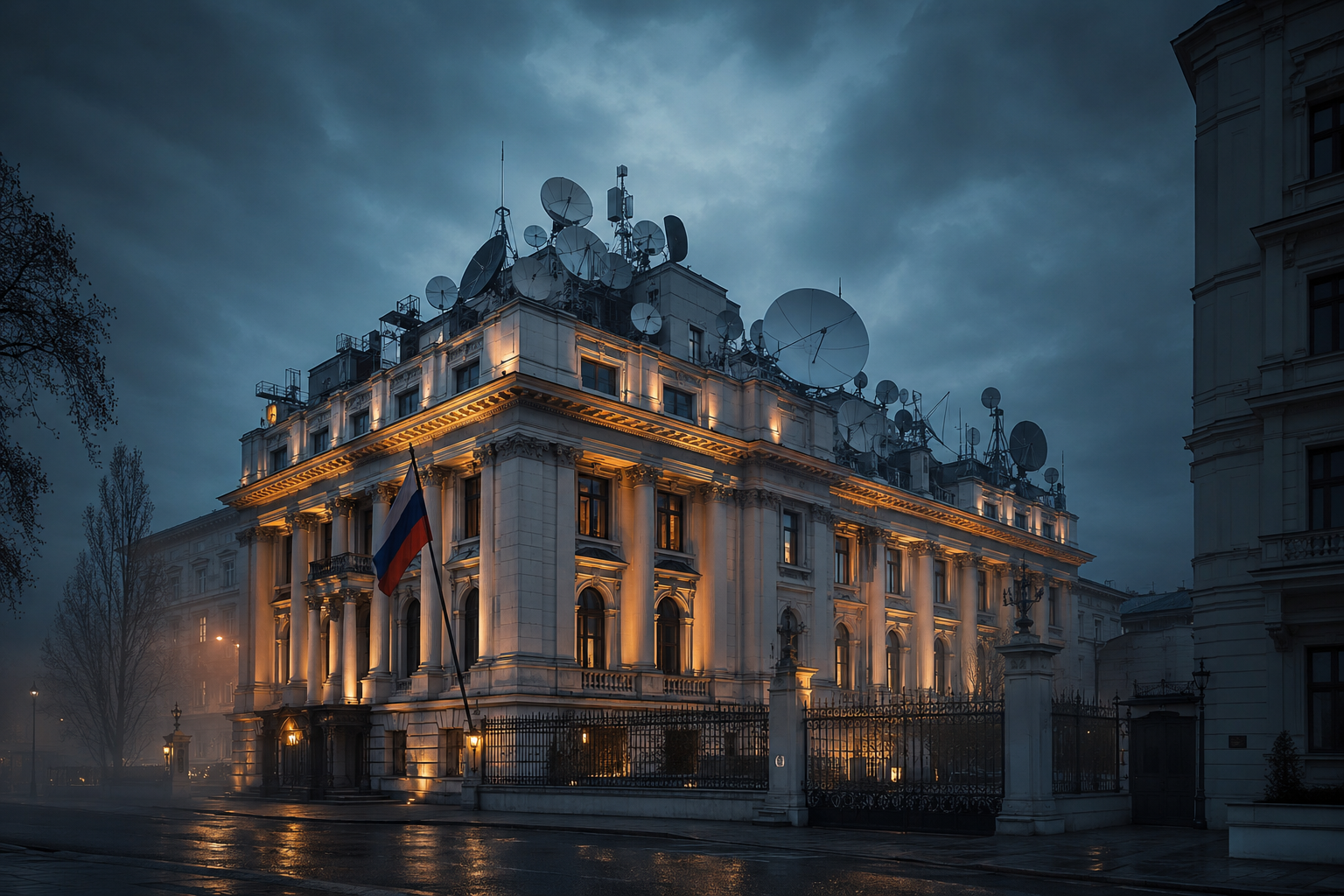
What Austrian investigators described as a 'forest of antennas' — or 'forest of antennae' — sprawled across the rooftops of Russian diplomatic buildings in Vienna turned out to be one of the most elaborate signals intelligence (SIGINT) installations ever documented on European soil. The equipment, comprising dozens of motorized satellite tracking dishes and associated signal-processing hardware, had been quietly accumulating for years, hidden in plain sight behind diplomatic immunity.
The primary installation is located at what Viennese locals call 'Russencity' — a sprawling nine-acre compound on the banks of the Danube. The site features more than 20 satellite dishes, a distinctive six-storey octagonal building, residential buildings housing diplomatic staff and their families, and a school. The compound's scale and the density of its antenna array drew the attention of Austrian intelligence analysts who had been monitoring the site for several years before the expulsions were announced.
Additional antenna installations were identified at the Russian embassy building near Vienna's Orthodox cathedral, at Russia's mission to the United Nations, at a cultural center on Brahmsplatz, and at a former sanatorium on Sternwartestrasse — a property with a long history of use by Soviet and later Russian intelligence services dating back to the Cold War era.
The satellite dishes were found to be targeting four specific commercial satellites: Eutelsat 3B, Eutelsat 10B, SES5, and Rascom QAF1 — a constellation providing coverage across Europe, Africa, and the Middle East. These satellites carry a significant volume of institutional and governmental communications traffic, including data transmitted by international organizations headquartered in Vienna, among them the Organisation for Security and Co-operation in Europe (OSCE), the International Atomic Energy Agency (IAEA), the Organisation of the Petroleum Exporting Countries (OPEC), and multiple United Nations bodies.
Investigators documented that the motorized tracking antennas were capable of reorienting themselves in real time to follow satellite arcs — a capability that proved critical in one particularly striking incident. Analysts observed that a large dish at the Russencity compound was reoriented immediately prior to the Munich Security Conference, almost certainly to intercept communications traffic generated by the high-level diplomatic gathering, before being returned to its previous position once the event concluded. The incident provided investigators with a rare, concrete demonstration of the network's active operational use.
The cumulative investment required to build and maintain such a network is estimated by intelligence analysts at between $50 million and $150 million — a figure that underscores the strategic priority Moscow has placed on maintaining a signals intelligence foothold in the heart of Europe's diplomatic capital.
Vienna — Europe's Espionage Capital
Vienna has occupied a singular position in the world of international espionage since the Cold War. Straddling the fault line between East and West, the Austrian capital became a preferred venue for intelligence operations precisely because of its neutrality, its dense concentration of international organizations, and — crucially — a quirk in Austrian criminal law that has long made it a permissive environment for foreign spies.
Today, Vienna hosts approximately 17,000 accredited diplomats — one of the highest concentrations of any city in the world. Intelligence analysts and security officials estimate that as many as 7,000 of those individuals may be engaged in intelligence activities of one kind or another, representing a staggering density of covert operatives operating under the protection of diplomatic credentials.
The legal loophole that has enabled this situation is well known to Austrian lawmakers and security officials. Under Austrian criminal law, espionage is only illegal if it directly targets Austrian interests. Foreign intelligence services spying on third-country governments, international organizations, or other foreign entities from Austrian soil operate in a legal grey zone — one that Russia, in particular, has exploited with remarkable thoroughness. Austria's government has now drafted legislation to close this loophole, though the bill has yet to pass into law.
The presence of the OSCE, IAEA, OPEC, and numerous UN bodies in Vienna makes the city an exceptionally high-value intelligence target. These organizations handle sensitive negotiations on nuclear non-proliferation, energy policy, arms control, and international security — precisely the categories of information that Russian intelligence services prize most highly. Austria's own Report on the Protection of the Constitution has described Vienna as 'one of the last remaining locations for Russian signals intelligence in Europe,' a designation that reflects both the city's unique vulnerability and the degree to which other European capitals have moved to curtail Russian intelligence activities.
Even after the expulsion of three diplomats, approximately 220 individuals remain accredited to Russian diplomatic missions in Austria — a number that security officials acknowledge almost certainly includes a significant contingent of intelligence officers operating under diplomatic cover.
Austria's Diplomatic Response and Russia's Reaction
The announcement of the expulsions on May 4, 2026 marked a significant escalation in Austria's posture toward Russian intelligence activities — and a notable departure from the country's traditionally accommodating stance. Foreign Minister Meinl-Reisinger, whose NEOS party forms part of Austria's three-party coalition alongside the ÖVP (People's Party) and the SPÖ (Social Democrats), framed the decision as a necessary assertion of sovereignty and a signal that Vienna's patience with Russian espionage had reached its limit.
Sylvia Mayer, head of Austria's Directorate for State Security and Intelligence (DSN), provided the intelligence basis for the expulsions, presenting findings that documented the scope and operational sophistication of the antenna network. Mayer's agency had been building its case over an extended period, working in coordination with allied intelligence services to map the full extent of the Russian SIGINT infrastructure in Vienna.
Russian Ambassador Andrey Yuryevich Grozov was summoned to the Austrian Foreign Ministry to receive formal notification of the expulsions. The Russian embassy's response was swift and unequivocal. In a statement, the embassy described the decision as 'outrageous,' 'unjustified,' and 'purely politically motivated,' calling it 'categorically unacceptable' and promising 'harsh' retaliation against Austrian interests. The language echoed the Kremlin's standard playbook in response to diplomatic expulsions — a combination of indignant denial and thinly veiled threat.
The three diplomats expelled on May 4 bring the total number of Russian diplomats expelled by Austria to 14 since 2020 — a period that broadly coincides with the escalation of Russia's war against Ukraine and the broader deterioration of Russia-West relations. Austrian officials described the cumulative expulsions as representing a genuine 'change of course' in the country's approach to Russian intelligence activities, though critics have noted that the pace of action has been slow relative to the scale of the documented threat.
The Egisto Ott Spy Trial and Austria's Espionage Problem
The antenna expulsions did not occur in a vacuum. They came against the backdrop of one of the most damaging domestic espionage scandals in Austria's recent history — the trial of Egisto Ott, a former senior official in Austria's counter-espionage apparatus, which began in January 2026.
Ott, who served in the Bundesamt für Verfassungsschutz und Terrorismusbekämpfung (BVT) — Austria's former domestic intelligence service — stands accused of systematically passing classified information to Russian intelligence over an extended period. Prosecutors allege that Ott's handlers included operatives connected to Jan Marsalek, the fugitive former Chief Operating Officer of the collapsed German payments company Wirecard, who is believed to be living in Moscow under the protection of Russia's Federal Security Service (FSB).
The Marsalek connection is particularly significant. Marsalek, who vanished in June 2020 as the Wirecard fraud scandal unravelled, has been identified by multiple European intelligence services as an active FSB asset. His alleged role as an intermediary between Russian intelligence and sources within Western security services — including, prosecutors allege, Ott — represents a sophisticated penetration operation that exploited the commercial and financial world as cover for intelligence gathering.
The BVT itself was dissolved and reconstituted as the DSN in 2021, partly in response to concerns about its institutional integrity following a series of scandals, including a controversial police raid on its own headquarters in 2018. The Ott trial has reopened questions about the depth of Russian penetration of Austrian security institutions and the degree to which Vienna's intelligence community was compromised during the years when the antenna network was being constructed and expanded.
Austria's government has responded to the combined pressure of the antenna revelations and the Ott trial by drafting legislation that would close the long-standing loophole in Austrian criminal law — making it illegal to conduct espionage on Austrian soil regardless of whether the target is Austrian. The bill represents a fundamental shift in Austria's legal posture toward foreign intelligence operations, though its passage through parliament remains subject to the dynamics of the three-party coalition.
Broader European Intelligence Implications
Austria is not alone in confronting Russian satellite espionage from diplomatic premises. In January 2026, Germany expelled a Russian diplomat following the discovery of similar SIGINT activities — a case that European intelligence officials say is part of a coordinated, continent-wide Russian effort to maintain signals intelligence collection capabilities in the face of increasing pressure from Western security services.
Russia's Foreign Intelligence Service (SVR) and its military intelligence counterpart (GRU) have long maintained extensive technical collection operations across Europe, exploiting the protections afforded by diplomatic premises to house equipment that would be illegal to operate from commercial or residential locations. The Vienna network, with its estimated $50 million to $150 million investment, represents the most elaborate documented example of this approach — but intelligence officials caution that it is unlikely to be unique.
The implications for NATO and its member states are significant. The satellites targeted by the Vienna network — Eutelsat 3B, Eutelsat 10B, SES5, and Rascom QAF1 — carry not only the communications of international organizations but also a substantial volume of governmental and potentially military traffic. The ability to intercept and process this data in near-real time, from a facility operating under diplomatic immunity in the heart of a neutral European capital, represents a persistent and serious intelligence advantage for Moscow.
European security officials have grown increasingly alarmed by the pattern of Russian diplomatic espionage across the continent. Since Russia's full-scale invasion of Ukraine in February 2022, dozens of Russian diplomats have been expelled from EU and NATO member states on espionage-related grounds. Yet the Vienna case illustrates the degree to which Russia has invested in technical collection capabilities that can persist even as human intelligence networks are disrupted — the antenna array continues to function regardless of how many individual officers are expelled.
The case also highlights the challenge posed by the intersection of commercial satellite infrastructure and intelligence collection. The satellites targeted by the Russian network are civilian commercial platforms, carrying a mix of governmental, institutional, and private communications. Securing this traffic against interception by a sophisticated state actor operating from a protected diplomatic facility is an extraordinarily difficult technical and legal challenge — one that European governments and international organizations are only beginning to grapple with seriously.
What Happens Next?
The expulsion of three diplomats, while symbolically significant, leaves the structural problem largely intact. Approximately 220 individuals remain accredited to Russian diplomatic missions in Austria, and the physical infrastructure of the antenna network — the dishes, the signal-processing equipment, the buildings themselves — remains in place. Austrian officials have indicated that they are considering further measures, but the constraints of diplomatic law and the realities of Austria's position as a neutral state limit the options available.
Russia's promised 'harsh' retaliation will be watched closely. Moscow's standard response to diplomatic expulsions is to expel an equivalent number of the offending country's diplomats — a tit-for-tat that reduces bilateral diplomatic capacity without fundamentally altering the intelligence landscape. Whether Russia chooses to escalate beyond this formula, or to target Austrian economic or political interests in other ways, remains to be seen.
The proposed legislation to close Austria's espionage loophole is perhaps the most consequential long-term development to watch. If passed, it would transform Vienna's legal environment for foreign intelligence operations — potentially making Austria a significantly less permissive operating environment for Russian and other foreign intelligence services. The bill's progress through parliament will be a key indicator of whether Austria's 'change of course' represents a genuine strategic reorientation or a more limited tactical adjustment.
The Egisto Ott trial, meanwhile, continues to unfold. Its outcome will have significant implications for Austria's intelligence community and for the broader question of how deeply Russian intelligence penetrated Austrian security institutions during the years when the antenna network was being built. Allied intelligence services will be watching the proceedings closely, alert to any revelations that might affect their own security posture.
European intelligence cooperation is also likely to intensify in the wake of the Vienna revelations. The case has demonstrated the value of sustained, patient technical analysis in documenting Russian SIGINT operations — and the importance of sharing that analysis across allied services. The Germany expulsion in January 2026 and the Austria expulsions in May suggest a coordinated European effort to push back against Russian diplomatic espionage, even if the pace and scale of that pushback remain contested.
The future of Vienna as a diplomatic hub is also at stake. The city's value as a venue for international negotiations and multilateral diplomacy rests in part on its reputation as a secure, neutral environment. If that reputation is eroded by the perception that Russian intelligence services are systematically intercepting the communications of organizations headquartered there, the long-term consequences for Vienna's diplomatic standing could be significant.
The expulsion of three Russian diplomats from Vienna on May 4, 2026 is, in one sense, a modest action — a carefully calibrated response to a documented intelligence operation of extraordinary scale and ambition. But it carries a weight that extends far beyond the three individuals ordered to leave. It signals that Austria, long regarded as one of Europe's most accommodating environments for Russian intelligence activities, has reached a turning point. The 'forest of antennas' that grew quietly on Vienna's rooftops for years has been exposed, and the political and legal reckoning it has triggered is only beginning. For European security, for the international organizations that call Vienna home, and for the broader contest between Russia and the West that defines this era, the implications will reverberate long after the last expelled diplomat has boarded their flight to Moscow.
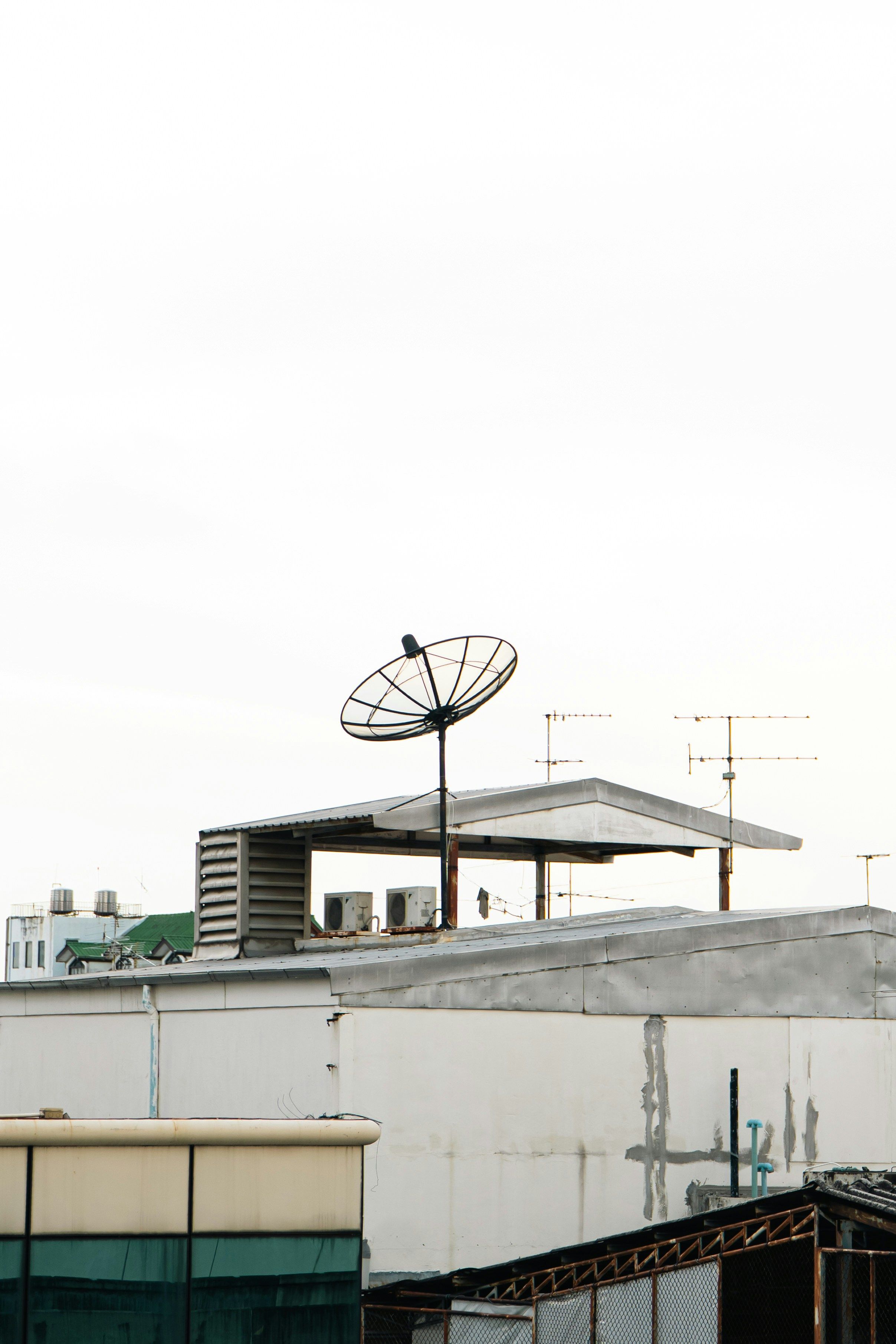
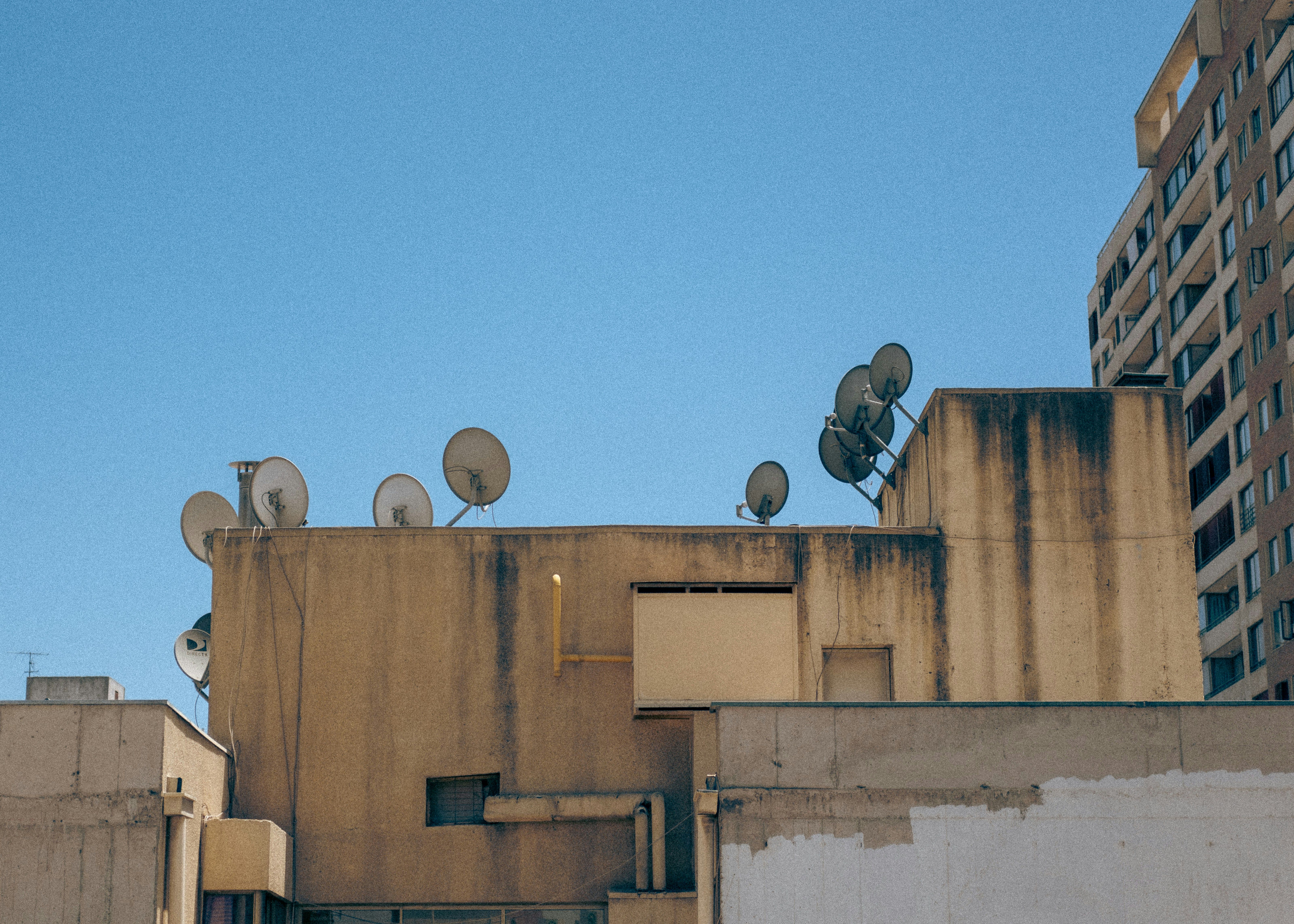
Editorial Note: The images used in this article are included solely for illustrative and contextual purposes to aid reader understanding of the subject matter. They are representative visuals intended to provide a visual reference to the themes discussed — including diplomatic buildings, satellite surveillance infrastructure, and European intelligence environments — and do not purport to depict the specific individuals, locations, or equipment directly referenced in this report. WorldPrimePost maintains strict editorial standards and acknowledges all image credits accordingly.
Related Topics:
"Curating the elite intersection of global culture, cinematic intelligence, high-end gastronomy, and the premium evolution of modern lifestyle."
" Tracking the massive architecture of global capital, sovereign wealth shifts, and the economic engines of the new world order."
"Curating the elite intersection of global culture, cinematic intelligence, high-end gastronomy, and the premium evolution of modern lifestyle."
"Decoding the high-stakes chess game of global statecraft, strategic diplomacy, and the shifting balance of world power."
" Tracking the massive architecture of global capital, sovereign wealth shifts, and the economic engines of the new world order."

WPP Threat Analysis & Intelligence Wing
Exposing shadow networks, dismantling misinformation warfare, and decoding the invisible frontlines of global security.
Get the Weekend Intelligence Briefing
Sign up for the deepest geopolitical and tech insights sent directly to your inbox every Sunday.
No spam. Unsubscribe anytime. View our Privacy Policy.
Loading Next Story