Smart Reading Mode Enabled
Double-click or long-press any difficult word in this article to instantly view its definition.
The Scoop
A 219-page independent Rape Gang Inquiry Report, published June 2026 and chaired by MP Rupert Lowe, confirms decades of organized child exploitation across 85+ British towns — and the systemic failures that allowed it since the 1950s.
Why It Matters
The inquiry names police, social services, NHS, the CPS, and successive governments as enablers of one of the worst child protection failures in Western history — raising urgent questions about accountability, survivor justice, and ongoing risks.
Executive Summary
- The first recorded case of Pakistani grooming gang activity in the UK dates to 1955; the Jay Report (2014) confirmed at least 1,400 children exploited in Rotherham alone between 1997 and 2013.
- Around 87% of convicted perpetrators in group-based child sexual exploitation cases bore distinctively Muslim names (per court records cited in the 2026 inquiry); Oxford imam Dr. Taj Hargey estimated the true gang membership to be around 95% Muslim.
- Police routinely dismissed victims as 'prostitutes,' returned them to abusers, and suppressed evidence — documented in Hansard (May 14, 2019) and multiple official inquiries.
- The widely cited 250,000 victim figure is a national extrapolation from the House of Lords, not a verified count; the true scale is unknown due to systematic record destruction and chronic underreporting.
- Whistleblowers faced dawn raids, asset freezes, fabricated charges, and career destruction; the 2026 inquiry documents that survivors received the equivalent of just £48 per year in government support.
UK Grooming Gang Scandal: 70 Years of Silence, Institutional Failure, and the 2026 Inquiry That Cannot Be Ignored
From 1955 to the 2026 Rape Gang Inquiry Report: Britain's organized child exploitation crisis, police failures, silenced survivors, and the cover-up Parliament knew about.

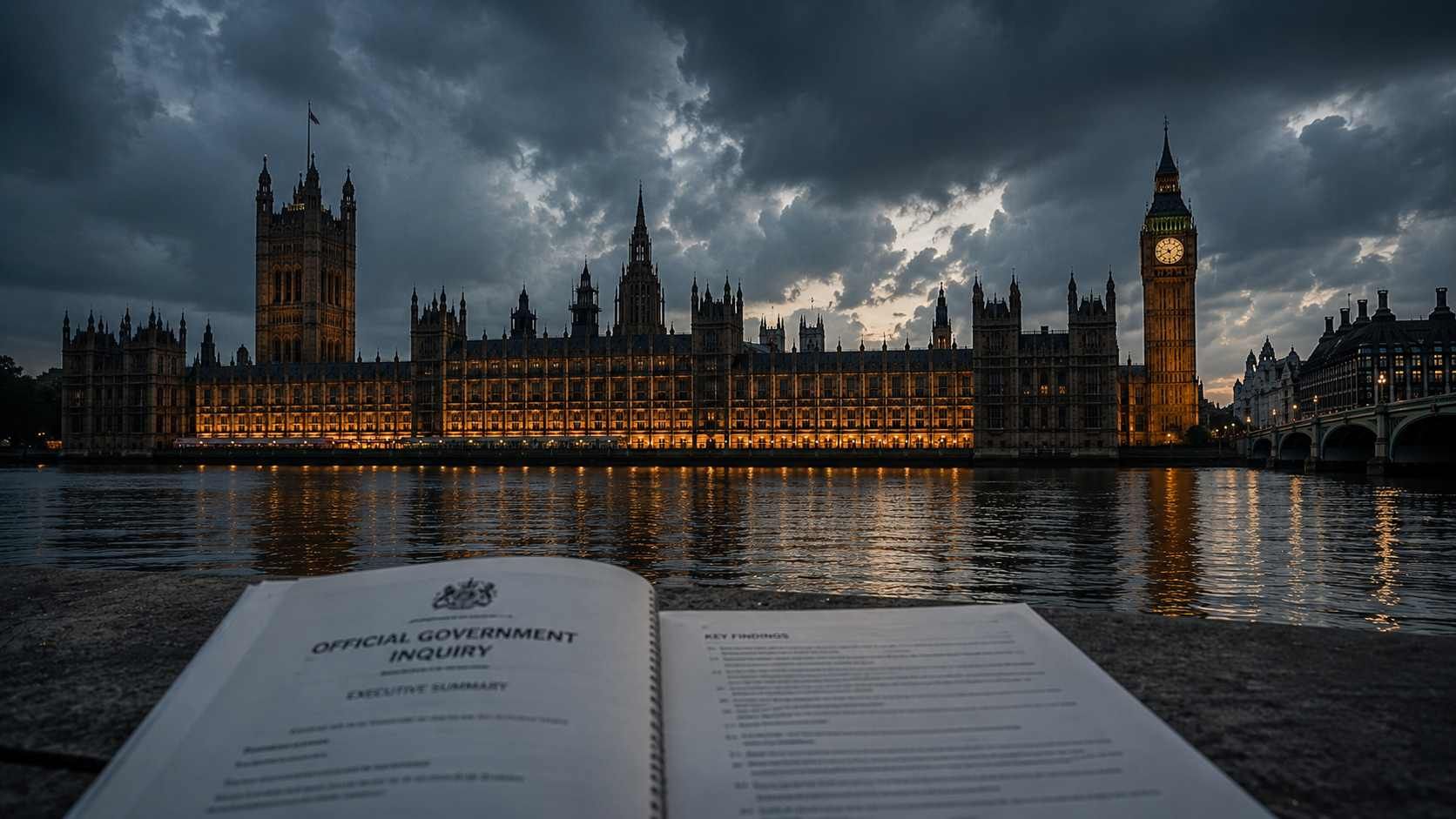
In June 2026, a 219-page document arrived in the British public consciousness like a reckoning seven decades overdue. The Rape Gang Inquiry Report — an independent, survivor-led inquiry chaired by Great Yarmouth MP Rupert Lowe and co-led by survivor and campaigner Sammy Woodhouse — did what successive governments, police forces, and councils had spent generations avoiding: it documented, in verified detail, the organized sexual exploitation of thousands of children across Britain, and named the institutions that enabled it.
Backed by cross-party MPs including Esther McVey, Nick Timothy, and Carla Lockhart, the report was prepared from survivor testimonies, whistleblower accounts, archival newspaper records, and prior official inquiries. Its central conclusions are unambiguous. Britain experienced a decades-long, nationwide pattern of organized child sexual exploitation. The authorities at every level knew. And they chose — repeatedly, calculatedly — not to act.
When we look at the full record — the 219-page inquiry report, the House of Lords debate of May 14, 2019 (documented in Hansard, Volume 797), the 2014 Jay Report into Rotherham, and years of survivor testimony — what we find is not a story of isolated failures. It is a story of systemic institutional collapse, enabled by political cowardice, the weaponization of racism accusations against anyone who tried to speak the truth, and the cynical calculation that electoral relationships mattered more than the protection of children.
This is our comprehensive account of what happened, when it started, how it operated, why it was allowed to continue, and what the documented record demands now.
Part 1: Not the 1990s — The 1950s
The most important correction to the popular narrative is chronological. Most media coverage places the grooming gang scandal in the early 2000s, treating the 2014 Jay Report as the moment of discovery. That framing is historically false — and understanding why it is false matters enormously for grasping the true scale of what occurred.
The 2026 Rape Gang Inquiry Report cites the British Newspaper Archive to document that the first recorded case of specifically Pakistani grooming gang activity in the United Kingdom dates to 1955. That year, four Bradford-based Pakistani men were charged with the rape of a 15-year-old girl from Middlesbrough. This occurred shortly after the British Nationality Act 1948 made large-scale migration from former colonial territories legally possible, bringing migrants from what is now Pakistan to British industrial towns in significant numbers for the first time.
The inquiry states directly: "What began as singular and small-scale instances became systematic and industrial over time."
By the 1970s and 1980s, as Pakistani diaspora communities in northern England's mill and mining towns became more established, the scale of exploitation grew. In towns like Telford and Rotherham, social workers, school counselors, and police officers were beginning to see recurring patterns — and, in documented cases, looking away.
Baroness Cox, who led the May 2019 House of Lords debate on grooming gangs, described the timeline directly: "Over the course of decades, not enough was done to stop these tragedies in Rotherham and other towns. Council staff, social workers and the police allowed the mass gang rape of children to continue. It seems it was far less politically complicated to keep quiet."
The significance of this timeline cannot be overstated. When the Jay Report shocked the British public in 2014 with the finding that at least 1,400 children had been exploited in Rotherham alone, it was not revealing something that had begun recently. It was documenting the first formal acknowledgment of something that had been happening, and being allowed to happen, for six decades.
Part 2: The Scale — Rotherham, Telford, Rochdale, and 85+ Districts
When we examine the documented evidence across completed local inquiries and the 2026 national report, the geographic scale is extraordinary.
Rotherham remains the most extensively documented case. The 2014 Jay Report — commissioned by Rotherham Metropolitan Borough Council and conducted by Professor Alexis Jay — found that at least 1,400 children were sexually exploited between 1997 and 2013. Girls as young as 11 were raped by multiple attackers, trafficked to other towns and cities, and subjected to sustained violence. Some were doused in petrol and threatened with being set alight. Others were threatened with weapons and warned that their families would be harmed. The Jay Report found perpetrators were overwhelmingly of Pakistani heritage.
Telford documented exploitation running from the 1980s onward — before the Rotherham timeline even begins. An estimated 1,000 children in a town of just 170,000 people suffered over four decades. Three girls were murdered in connection with the scandal. Two others died in tragedies directly linked to it.
Rochdale documented organized exploitation beginning in 2002, with at least 47 young girls subjected to abuse in the most publicly known cases.
Oxford, Huddersfield, Peterborough, Newcastle, and Bristol all produced completed prosecutions and, in some cases, formal inquiry reports. In all of them, the same operational patterns appeared, and in the overwhelming majority of cases, perpetrators were predominantly men of Pakistani heritage, organized in networks.
The 2026 Rape Gang Inquiry identified confirmed or suspected grooming gang activity in at least 85, and likely 149, local authority districts — covering roughly 50% of UK areas. In 2019 alone, 19,000 children were identified as exploitation victims nationally. The NSPCC reported in 2023 that online grooming offenses against children had increased 82% in five years.
On the 250,000 Figure — What the Record Actually Shows
This figure requires careful, honest treatment. The 2026 inquiry cites 250,000 as a "conservative working estimate." As a June 18, 2026 fact-check by Lead Stories/Yahoo News documented, and as the 2022 Independent Inquiry into Child Sexual Abuse (IICSA) itself acknowledged, "it is simply not possible to know the scale of child sexual exploitation by networks."
The 250,000 figure originates from a rhetorical extrapolation made in the House of Lords by Lord Pearson of Rannoch — first on October 22, 2018, and repeated in the May 2019 Hansard debate. Lord Pearson asked whether, if one projected Rotherham's documented victim rate nationally, the figure might reach "upwards of 250,000," calling it "probably an underestimate." He stated: "If you take the accepted figure of 1,400 victims in Rotherham alone and extend it across the country, you come to a much larger figure." How the precise calculation was derived was not explained. The Lead Stories fact-check notes that extrapolating Rotherham's experience nationally assumes comparable incidence and reporting rates across vastly different population demographics — an assumption the existing data neither supports nor refutes, because no national verified count exists.
What the data does confirm: Rotherham alone, 1,400+. Telford, approximately 1,000. Rochdale, 47+ in prosecuted cases alone. Across 85 to 149 districts. Whether the national total reaches 250,000, exceeds it, or falls short is unknown because of systematic record destruction and the absence of a national count.
Part 3: How the Networks Operated
When we analyze the documented operational methods across completed cases, a consistent pattern emerges across geographically separate scandals spanning decades.
The exploitation typically began with young men — many working as taxi drivers, takeaway workers, or in other positions giving them access to vulnerable young people — targeting girls from care homes, from economically deprived family backgrounds, or otherwise vulnerable. They befriended girls aged between 11 and 14, offering cigarettes, alcohol, mobile phone credit, and what felt to isolated and neglected children like adult attention and care.
After a period designed to create emotional dependency, the exploitation began. Girls were collected by taxi and driven to locations where multiple men were waiting. They were given alcohol and drugs. The abuse was repeated — typically for months or years. Victims were passed between men in networks operating across multiple cities.
The 2026 inquiry states directly: "Organised networks of perpetrators built coordinated operations that transported victims between locations, supplied them with drugs and alcohol, recorded abuse for distribution and blackmail, and passed girls between multiple adult men. These crimes have been committed for decades, since the 1950s, by Pakistanis in particular, and have affected every region of our nation."
In documented cases, some victims were also trafficked abroad — including to Pakistan, where forced marriages were used to trap them permanently.
The 2019 Hansard debate includes Baroness Cox's account of a survivor known by the pseudonym "Sarah" — described as one of the worst grooming cases on record — who was kidnapped at 15, held for 12 years, forced to learn the Quran in Arabic, subjected to multiple forced marriages and forced abortions, and permitted by her captors to speak only Urdu and Punjabi. Her abusers referred to her as "white trash." At the time of the 2019 Lords debate, she had received no support from social services and was, in Baroness Cox's words, "frequently suicidal."
"Caitlin Spencer" (a pseudonym; her account published as a Sunday Times-recommended book, Please, Let Me Go) described to Baroness Cox how, from the age of 14, she was groomed, sexually exploited, and trafficked across Britain by organized gangs. She told Baroness Cox: "I have flashbacks all the time. It started when I was so young and to be honest, I'm not even sure it's over. They have done so much damage to me — emotionally, physically, psychologically — that I think I am probably broken beyond all repair." At the time of the 2019 debate, she could still see her abusers driving taxis through her town with no legal consequence.
Part 4: Why Authorities Failed to Act — The Documented Mechanisms
When we analyze the documented record, two overlapping explanations emerge for why police, social services, councils, the NHS, and successive governments failed to act: institutionalized political cowardice and, in some documented cases, deliberate suppression.
The Fear of Racism Accusations
This is the thread that runs through virtually every local authority failure, documented repeatedly in official reports. The 2014 Jay Report stated explicitly that council staff and police in Rotherham were "nervous about identifying the ethnic origins of perpetrators for fear of being thought racist" and that "others remembered clear direction from their managers not to do so."
Lord Pickles, who as a senior Cabinet minister personally commissioned the Rotherham governance review and asked Louise Casey to conduct it, told the House of Lords in May 2019: "What we saw in Rotherham, and have seen in other parts of the country, is a complete breakdown of governance and of local government... The people in charge in Rotherham regarded those girls as not worth looking at or protecting, and not worth thinking about. She is quite right to say that they also had racist views and stereotypes about people of Pakistani origin. It was because they held those racist views that they were too frightened to take issue with people of that origin."
This is precise and important. Lord Pickles confirms that the dynamic operating was paradoxical: officials who held demeaning stereotypes about Pakistani communities were simultaneously too afraid to pursue Pakistani perpetrators, because challenging those communities felt, institutionally, like "racism."
The Labeling Problem
Lord Singh of Wimbledon, a Sikh peer, raised a point in the 2019 debate that Baroness Cox also stressed — and that the 2026 inquiry addresses directly. Agencies consistently applied the blanket term "Asian" to describe perpetrators who were overwhelmingly of Pakistani Muslim heritage. Lord Singh asked: "Why diffuse blame for the actions of mainly Muslim grooming gangs on innocent communities? We do not refer to the perpetrators of the genocide against Jews as 'Europeans'."
The 2026 inquiry states: "The term 'Asian' has frequently been applied in media, official statements, and public discourse to describe the perpetrators in grooming gang cases across Britain. This broad labelling can be misleading, because Britain hosts a substantial number of non-Muslim Asian populations, such as Hindus and Sikhs from India, Buddhists from Japan, and Christians from the Philippines and Vietnam. These populations have, with only very rare exceptions, had no involvement in these offences. In fact, members of these communities have more often appeared as victims than as perpetrators."
Political Calculation
Baroness Cox told the House of Lords: "Many victims did not receive support because of the state's reluctance to interfere in supposed cultural practices. Agencies downplayed ethnic or religiously identified dimensions of abuse... In the tragic cases of child sexual abuse by Roman Catholics or Anglicans, there is no inhibition about identifying these faith traditions, yet there appears to be a degree of censorship when it comes to identifying abusers who call themselves Muslim."
The 2026 inquiry names political parties directly: "The Labour Party bears primary responsibility for the longest and most deliberate cover-up. Labour-dominated local councils and MPs repeatedly prioritised electoral dependence on Pakistani Muslim communities above the safety of children."
In 2017, Labour MP Sarah Champion — who represents Rotherham — wrote that "Britain has a problem with British Pakistani men raping and exploiting white girls." She was forced to apologize and resigned her shadow cabinet position. The political establishment's response to her factually accurate statement illustrated precisely the environment that had allowed the scandal to operate for decades.
Part 5: Why Police Did Not File Cases — The Specific Record
When we look at the specifics from the inquiry documents and 2019 Hansard record, the mechanisms of police failure are documented and explicit.
Victims dismissed and labelled: Police routinely categorized victims as prostitutes or as having made "lifestyle choices." Girls abused from the age of 11 were told they had "consented" or had "brought it on themselves." Baroness Cox told the Lords: "Many victims report feeling let down by the police and social services. They have often been met with a lack of understanding and feel that their stories are not believed. Some are told that they 'brought it on themselves' or that they 'must have consented' to being raped."
Physical return of victims to abusers: The 2026 inquiry documents cases in which police physically returned girls to the people responsible for abusing them. In one case, police suggested to perpetrators that if they could persuade a victim to sign herself out of care, police would "stop bothering them." The victim — named Fiona in the inquiry's account — was nearly taken to Pakistan as a result. She was stopped not because authorities moved against her abusers, but because she did not have a valid passport.
The documented police call: One of the most widely cited passages in the 2026 inquiry involves a call made by a mother reporting her daughter missing and describing a history of abuse by Pakistani Muslim men. The call handler told her: "You can't describe them as Asian men because that's racist. You should just be glad your child is being taught a different culture."
Record review and suppression: The National Crime Agency launched Operation Beaconport in 2025 to review thousands of historical case files after initial assessments found "human errors, missed lines of inquiry, and cases wrongly dropped." In October 2025, the Metropolitan Police announced a review of 9,000 child sexual exploitation cases in London alone. A former Metropolitan Police detective described to the inquiry "industrial-scale child exploitation in the capital, with authorities aware but opting for inaction due to a mixture of incompetence, laziness, and corruption."
Prosecution timelines: The 2019 Hansard debate documented that between April 2017 and March 2018, police recorded over 16,000 cases of child rape in England and Wales — an average of 44 child rapes per day. In 2017, only 544 rapists were convicted nationally. The median time from offense to court completion for child rape cases was 2,115 days — nearly six years.
Part 6: When Survivors and Whistleblowers Were Punished Instead of Protected
Among the most troubling patterns in the documented record is what happened when survivors and professionals tried to speak up.
The 2026 inquiry states: "Whistleblowers who tried to expose the rape gangs were systematically silenced, discredited and punished. Social care professionals, campaigners, and public activists who raised evidence of still ongoing grooming, trafficking, and institutional cover-ups faced suspension, defamation proceedings, dawn raids, asset freezes, fabricated charges, gagging bail conditions, and career-ending isolation."
Sammy Woodhouse — survivor, campaigner, and co-lead of the 2026 inquiry — was the subject of a case documented in the 2019 Hansard debate by Baroness Newlove. A local authority entered a prison to ask a convicted perpetrator (jailed for 35 years for crimes including those against Woodhouse) whether he wished to pursue care proceedings for the child he had fathered. Woodhouse had no knowledge of this process. Baroness Newlove told the Lords: "As we speak, Sammy Woodhouse is facing a huge issue with a local authority. It has gone into a prison to see if the father of her son wants to have care proceedings, so that he can have contact with their son. He was jailed for 35 years. She had no knowledge of this."
Dr. Ella Hill — a survivor from Rotherham who is now a qualified physician and a named witness in the 2026 inquiry — approached police on at least five separate occasions, each time presenting medical evidence of her injuries. Each time, she was told there was nothing that could be done. Her testimony to the inquiry included the statement: "I was told that white girls are trash. They are all whores. They are lower than shit under your shoe. They don't obey Allah, so they deserve to be punished."
Another named survivor, Michelle, told the inquiry she had been subjected to abuse by between 600 and 700 different men over three years. She described the networks as "industrial" in scale — "a large central network with smaller connected groups in specific localities." She now lives with severe PTSD, and told the inquiry that these gangs had remained untouchable because "authorities feared being labelled racist."
The Survivors Speak: Testimonies That Cannot Be Ignored
The following testimonies are drawn directly from the 2026 Rape Gang Inquiry Report and the Hansard parliamentary record. Each account is presented here as it appears in the official record — with the gravity, precision, and unflinching honesty that the survivors who gave these testimonies deserve. These are not abstractions. They are the documented experiences of real people, whose voices were suppressed for years by the very institutions charged with protecting them.
Chloe — 'Hundreds and Hundreds of Men'
Chloe's abuse began when she was between 10 and 11 years old. She was targeted by Pakistani Muslim men — most of them taxi drivers — who picked her and her friends up, offered them alcohol and cigarettes, and gradually drew them into organized exploitation. She was passed between men across taxis, hotels, and drug-fueled locations, sometimes going missing for up to three days at a time. The inquiry documents the pattern directly: "In every case, the perpetrators were Muslims, and primarily Pakistani."
On one occasion, a perpetrator caused a serious physical injury requiring emergency hospital treatment. Chloe admitted herself to A&E, was treated, and was discharged — and no medical professional asked how she had sustained her injuries. Police dismissed her as a "prostitute" and took no action. Social services, rather than investigating her abusers, prioritised providing her with contraception. She knew at least 20 other girls who were victims of the same networks.
When she was approximately 19, a Pakistani Muslim illegal migrant coerced her into a forced Islamic marriage — a Nikah — to legitimise a pregnancy and to help the man obtain a visa. She was forced to wear a hijab and was prohibited from looking out the windows of her own home. When the inquiry panel asked how many men had abused her over the years, Chloe's answer was unambiguous: "Hundreds. Hundreds, and Hundreds, and Hundreds."
Fiona — 'Party Houses' and the Eid Gang Rapes
Fiona was 13 years old when she was first groomed in a care home by Pakistani Muslim men aged between 24 and 45. She was abused by between 50 and 100 men, all Pakistani Muslims, and was trafficked toward Kashmir. She was taken to what the inquiry calls "party houses" — locations where between 10 and 20 Pakistani Muslim men would gather specifically to abuse non-Muslim girls. On one occasion, she was encouraged to bring friends because the owner had relatives visiting from Birmingham to celebrate Eid, and "expected girls to be there." Inside these houses, the girls were routinely referred to as "white slags," while Pakistani Muslim girls were kept "pure" for marriage — a documented double standard running consistently through multiple cases.
When Fiona's mother called police and described her daughter's abuse by Pakistani Muslim men, a police call handler told her: "You can't describe them as Asian men because that's racist. You should just be glad your child is being taught a different culture." Police went further still — suggesting to the perpetrators that if they could persuade Fiona to sign herself out of care, they would stop investigating. The men attempted to take her to Kashmir; she was stopped only because she did not have a valid passport — not because any authority moved against her abusers.
Fiona gave birth to a son at 15, who was removed and adopted due to exploitation risks. The abuse continued until she turned 18. She was left with PTSD, substance dependency, and long-term health damage.
Michelle — 'An Industrial Network Across the Country'
Michelle was groomed at 13 by Pakistani Muslim men. At 14, she was gang-raped and beaten by three men who had locked her in a house. Over the course of three years, she was abused by between 600 and 700 different men. She became pregnant four times as a child — resulting in miscarriages, abortions, and one child she kept. Police dropped cases. Social services described what was happening to her as "consensual." She was physically tortured — burned with cigarettes, beaten, threatened with a knife, and drugged.
The inquiry records testimony that some victims described seeing girls locked in cages and subjected to extreme forms of abuse designed to dehumanize them entirely. Michelle described the network of perpetrators as "industrial" in scale: "It functions as a large central network with smaller connected groups in specific localities." She told the inquiry these gangs remained untouchable because authorities feared being labelled racist. The inquiry records: "She now lives with severe PTSD and lifelong trauma, describing both her childhood and her future as destroyed."
Taylor — When Perpetrators Recited Islamic Prayers Before the Act
Taylor's testimony introduces one of the most significant religious dimensions of this crisis documented in the 2026 inquiry. Taylor revealed that Pakistani Muslim perpetrators used to recite "Bismillah-e-rahman-ur-rahim" — the opening Islamic invocation meaning "In the name of Allah, the Most Gracious, the Most Merciful" — before raping her. This invocation is traditionally recited before beginning any religiously significant or auspicious act in Islamic practice.
Its use before committing rape reflects what the 2026 Rape Gang Inquiry identifies as a documented theological dimension to these crimes: perpetrators who operated under a framework that treated non-Muslim girls as religiously permissible targets. The inquiry does not present this as representative of Islamic teaching broadly, but as a specific, documented pattern of ideological justification used by perpetrators across multiple cases.
Sarah — 12 Years in Captivity
The case of "Sarah" — a pseudonym — was described by Baroness Cox in the House of Lords debate of May 14, 2019 (Hansard, Volume 797) as one of the worst grooming cases on record, and is documented in the 2026 inquiry. Kidnapped at the age of 15, she was imprisoned in a house, forced to learn the Quran in Arabic, and beaten when she made mistakes. She was held as a sex slave for 12 years, repeatedly raped by different members of the grooming gang.
She was subjected to three forced Sharia marriages and eight forced abortions, and gave birth to two children under captivity. Her abusers referred to her as "white trash." They forced her to wear Islamic dress and permitted her to speak only Urdu and Punjabi. She was made to cook and clean for the men who abused her. At the time of the 2019 House of Lords debate, she had received no help from social services and was, in Baroness Cox's words, "frequently suicidal."
Dr. Ella Hill — 'You Don't Obey Allah, So You Deserve to Be Punished'
Dr. Ella Hill is a survivor of the Rotherham grooming gangs who is now a qualified physician and a named witness in the 2026 inquiry. Her Pakistani Muslim abusers explicitly told her the attacks were happening because she was white and because she was a non-Muslim — condemning her simultaneously with racial and religious slurs, framing her as someone who deserved punishment for failing to follow Allah's rules. Her exact testimony to the inquiry: "I was told that white girls are trash. They are all whores. They are lower than shit under your shoe. They don't obey Allah, so they deserve to be punished."
Dr. Hill approached police on at least five separate occasions, each time presenting medical evidence of her injuries. Each time, she was told there was nothing they could do. Her case stands as one of the most direct documented examples of the intersection of racial contempt, religious justification, and institutional abandonment that the 2026 inquiry places at the centre of this crisis.
What the Perpetrators Called Their Victims — and Where They Came From
Across multiple testimonies in the 2026 inquiry, a consistent pattern of language used by perpetrators has been documented. Pakistani Muslim men in these gangs used specific terms for their victims: "Kuffar" — the Arabic and Islamic term for non-believers, used to dehumanize non-Muslim girls as religiously inferior — alongside "white trash," "white slags," and "English pig-dogs." Victims were explicitly told they "don't obey Allah" and therefore "deserve to be punished." Taylor's testimony documents that perpetrators recited Islamic prayers before committing rape — framing the act as religiously sanctioned.
The perpetrators were overwhelmingly of Pakistani Muslim heritage — predominantly men who were either British-born of Pakistani descent or Pakistani nationals and migrants. Smaller groups from Somali, Iranian, Syrian, Turkish, and other Muslim-majority backgrounds were also involved across the wider network. Fiona was trafficked specifically toward Kashmir. Sarah was forced to speak only Urdu and Punjabi — the primary languages of Pakistani Punjab and Azad Kashmir.
The 2026 inquiry is explicit that this was not random criminality. Perpetrators operated under what the report describes as "an honour and shame-based clan code that treated non-Muslim girls, especially white working-class girls, as property available for sexual use." The report identifies this as reinforced by specific theological and cultural frameworks, and states that the pattern of targeting non-Muslim girls while keeping Muslim girls "pure for marriage" is documented consistently across geographically separate cases.
Part 7: The 2026 Inquiry — Key Documented Findings
The 219-page Rape Gang Inquiry Report represents the most detailed independent accounting of this crisis produced to date.
Geographic scale: Confirmed or suspected organized grooming gang activity in 85 to 149 local authority districts — roughly half of all UK areas.
Perpetrator profile — key statistics: The 2026 Rape Gang Inquiry found that approximately 87% of those convicted in group-based child sexual exploitation cases bore distinctively Muslim names — per court records cited in the inquiry, which states: "In court records and official inquiries, around 87% of those convicted in these group-based child sexual exploitation cases bore distinctively Muslim names. The vast majority of men involved in these gangs were not convicted." Oxford Islamic Congregation imam Dr. Taj Hargey went further, estimating the true proportion of gang members who were Muslim at around 95% — "far exceeding the Muslim share of the overall United Kingdom population." In terms of heritage, perpetrators were predominantly of Pakistani Muslim heritage — the largest single group identified across court records and inquiry findings — with smaller groups from Somali, Iranian, Syrian, Turkish, and other Muslim-heritage backgrounds also documented.
87% of those convicted in group-based CSE cases bore distinctively Muslim names. Oxford Islamic Congregation imam Dr. Taj Hargey estimated the true proportion at 95% — far exceeding the Muslim share of the UK population. — 2026 Rape Gang Inquiry Report
Heritage background: Perpetrators were predominantly of Pakistani Muslim heritage, with smaller groups from Somali, Iranian, Syrian, Turkish, and other Muslim-heritage backgrounds also documented.
The labeling problem: The inquiry explicitly criticizes use of the term "Asian" to describe predominantly Pakistani Muslim perpetrators, as it unfairly implicates Britain's entire non-Muslim Asian population.
Political accountability: "The Labour Party bears primary responsibility for the longest and most deliberate cover-up. Labour-dominated local councils and MPs repeatedly prioritised electoral dependence on Pakistani Muslim communities above the safety of children."
Institutional complicity at all levels: Police, social services, NHS, Crown Prosecution Service, media, and both Labour and Conservative governments receive documented criticism.
Survivor financial support: Baroness Cox noted in the 2019 debate that the £12 million allocated nationally for sexual violence support services translated, given estimated victim numbers, to the equivalent of just £48 per victim per year — a figure she called "insultingly derisory." Lord Pearson confirmed via Written Parliamentary Answer (HL12518, December 2018) that even this figure was overstated, as it included a one-off payment.
Lord Pearson of Rannoch also cited the Quilliam Foundation's finding that 83% of grooming gang criminals came from a Muslim background (cited by Lord Pearson of Rannoch in the May 2019 House of Lords Grand Committee debate, Hansard Volume 797) — consistent with, if more conservative than, the 2026 inquiry's own court record analysis.
MP Rupert Lowe has stated publicly: "Our inquiry report proves that without doubt there is an undeniable link between religion and the rape gangs. Islam. As a country, we need to find the courage to finally say so."
Part 8: The Broader Western Context
When we look at this crisis in comparative international context, Britain is not an isolated case — though it is one of the most extensively documented.
Similar patterns of organized exploitation of non-Muslim women and girls by men from predominantly Muslim-majority backgrounds have been documented in Germany (where mass assault events on New Year's Eve 2015-16 in Cologne, Hamburg, and other cities involved hundreds of perpetrators predominantly of North African and Middle Eastern origin), Sweden (where government reports have documented disproportionate representation in sexual offense conviction statistics), France, Belgium, Norway, and the Netherlands.
The recurring institutional failure across these Western nations shares a documented common thread: reluctance to analyze the ethnic and cultural dimensions of organized sexual violence out of fear of reinforcing extremist narratives. The irony — noted by critics across the political spectrum — is stark: this reluctance provided operational cover for perpetrators over far longer periods, and generated vastly more political extremism as a direct consequence.
Lord Singh of Wimbledon made the necessary distinctions in the 2019 debate: "The presence of grooming gangs in the Muslim community arises from these negative cultural attitudes to women, which leads some to believe that they are part of the religion and that there is nothing wrong with the demeaning treatment of women and girls, particularly those outside the community... It is the Muslim community, particularly Muslim leaders, who must take the lead. It is not easy to take on centuries of negative culture wrongly attached to religion. We must help these leaders place the teachings of a great faith in the context of today's times."
This framing is important. The vast majority of Muslims and people of Pakistani heritage in Britain and across Western nations are law-abiding citizens who would condemn these crimes without hesitation. The men involved in these gangs do not represent their communities. Several Muslim scholars and community leaders have spoken out against both the perpetrators and the institutional silence. What the evidence demands is honest, evidence-based analysis of specific patterns that enabled these crimes to operate at scale — not broad condemnation of communities, but accountability from institutions that chose silence.
Part 9: The Hansard Record — What Parliament Was Told
The May 14, 2019 House of Lords Grand Committee debate (Hansard, Volume 797) deserves emphasis as a primary source, because it documents in official parliamentary record that members of the British legislature were explicitly told — in detail — the scale, the perpetrator patterns, and the institutional failures, years before the 2026 inquiry.
Key voices in that debate include:
- Baroness Cox (CB): Opened the debate, described survivor cases including Sarah and Caitlin Spencer, challenged the government on funding, prosecution timelines, and political correctness failures
- Baroness Newlove (Con): Former Victims' Commissioner, described ongoing secondary abuse of survivors by the justice system, including the Sammy Woodhouse case
- Lord Campbell-Savours (Lab): Challenged the government on funding, noting Rotherham's child social care spending had increased 90% between 2010 and 2016
- Lord Pickles (Con): Commissioned the Rotherham review and described a complete breakdown of local governance
- Lord Pearson of Rannoch (UKIP): Cited the 250,000 extrapolation and Quilliam Foundation research
- Lord Singh of Wimbledon (CB): Challenged the "Asian" labeling and argued Muslim community leaders must take ownership of the problem
- Lord Paddick (LD): A former police officer who raised the need for better relationship education, youth services funding, and more skilled investigators
- Lord Rosser (Lab): Asked about the Home Office working group established to study perpetrator characteristics
- Baroness Williams of Trafford (Con): The Home Office minister who acknowledged: "We do not think that we are there yet. So much has been uncovered in a historical sense that we clearly have an awfully long way to go."
That ministerial acknowledgment in 2019 — that Britain had "an awfully long way to go" — makes the 2026 inquiry's findings all the more significant. Seven years later, the independent report confirms that the failures she acknowledged had not been meaningfully remedied.
Part 10: What Accountability Now Requires
The 2026 inquiry, survivor advocates, and cross-party MPs have been specific about what genuine accountability demands:
- A full national statutory inquiry with powers to compel testimony, access all records, and name individual institutional failures
- Mandatory reporting of perpetrator ethnicity and religion data in all group-based child sexual exploitation convictions
- Retroactive review of all cases dropped during the period of documented institutional failure, with criminal accountability for officials who suppressed evidence or returned victims to abusers
- Deportation of all non-citizen convicted perpetrators
- Properly funded survivor support services — not the equivalent of £48 per victim per year
- Reform of taxi and private hire licensing on a national basis — a recommendation both Lord Blunkett and Lord Pickles raised in the 2019 debate
- Legal protection, not prosecution, for whistleblowers who raised concerns and were punished for doing so
- Independent child advocates embedded in all care settings where exploitation has been documented
Operation Beaconport and the Metropolitan Police's review of 9,000 cases represent the first serious attempts to address the historical backlog. Whether those reviews will produce genuine accountability — or further managed delay — remains to be determined as of this writing.
Conclusion: The Cost of Silence
When we assess the full weight of what the documented evidence shows, one truth stands above all others: the children who were abused in Rotherham, Telford, Rochdale, Oxford, and scores of other British towns did not have to suffer for decades in silence.
People in positions of authority knew. They had the tools, the legal powers, and the professional obligations to act. They made choices — driven by political calculation, career protection, electoral arithmetic, and institutional cowardice — that left thousands of children unprotected for years and, in many cases, for their entire childhoods.
Baroness Cox concluded the 2019 Lords debate with words that have proven prophetic: "The scale of suffering far exceeds the preventive measures and support for victims that are currently in place. Until comprehensive action is taken, politicians' promises of 'never again' will continue to remain unfulfilled and vulnerable girls will continue to suffer in ways that would make our suffragettes turn in their graves."
Seven years after that debate, the 2026 Rape Gang Inquiry confirmed her assessment.
For Sarah, held captive for 12 years while social services looked the other way. For Caitlin Spencer, who described herself as "probably broken beyond all repair." For Dr. Ella Hill, who presented medical evidence of her abuse to police five times and was turned away each time. For Fiona, for Chloe, for Michelle, and for the thousands whose cases were never filed, whose records were destroyed, whose voices were called politically inconvenient to hear.
The 2026 Rape Gang Inquiry has forced a reckoning that British institutions spent seventy years trying to prevent. The question now facing Britain — and the Western nations watching closely — is whether the institutions that chose silence for seven decades will finally choose truth, accountability, and justice.
"Our inquiry report proves that without doubt there is an undeniable link between religion and the rape gangs. Islam. As a country, we need to find the courage to finally say so."
Sources: UK Parliament Hansard, Volume 797, House of Lords Grand Committee, 14 May 2019 (Baroness Cox, Baroness Newlove, Lord Campbell-Savours, Lord Pickles, Viscount Falkland, Lord Cormack, Lord Pearson of Rannoch, Lord Singh of Wimbledon, Lord Paddick, Lord Rosser, Baroness Williams of Trafford); The Rape Gang Inquiry Report, June 2026, chaired by MP Rupert Lowe with Sammy Woodhouse; The Jay Report, Rotherham Metropolitan Borough Council, 2014; Independent Inquiry into Child Sexual Abuse (IICSA), 2022; Baroness Casey National Audit on Group-Based CSE, June 2025; NDTV World, 2 June 2026; Lead Stories / Yahoo News fact-check, 18 June 2026.
---
Editorial Disclaimer & Liability Notice
All information published in this article is sourced exclusively from publicly available official documents, including: (a) UK Parliament Hansard, Volume 797, House of Lords Grand Committee debate on Grooming Gangs, debated Tuesday 14 May 2019, accessible at hansard.parliament.uk — an official public record of the United Kingdom Parliament; (b) The independent Rape Gang Inquiry Report, June 2026, chaired by MP Rupert Lowe and co-led by survivor and campaigner Sammy Woodhouse; (c) The Jay Report (2014), commissioned by Rotherham Metropolitan Borough Council; (d) The Independent Inquiry into Child Sexual Abuse (IICSA, 2022), a statutory government inquiry; and (e) reports published by established international news organisations including NDTV World (India) and Lead Stories / Yahoo News (USA).
WorldPrimePost expressly disclaims all liability in respect of any reliance placed upon the information contained in this article. We have not independently conducted the inquiries described herein. We report on findings already entered into the official public record by bodies constituted under UK law. The publication of this article does not constitute an endorsement of any specific political, religious, or ideological position.
This article is not intended to cause offence to, or to hurt the religious or cultural sentiments of, any community, faith group, individual, or nation. The criminal acts documented herein were committed by specific individuals who have been prosecuted or are subject to ongoing legal proceedings under the laws of the United Kingdom. These acts cannot be, and must not be, attributed to any religion, community, or ethnic group in its entirety. We follow the same distinction explicitly drawn in the inquiry report itself, in the House of Lords debate, and by Muslim scholars and community leaders who have publicly condemned these crimes.
This article is published in the public interest. The subject matter has been formally debated in the UK Parliament, investigated by government-commissioned statutory inquiries, and covered by major international news organisations. Responsible journalism demands that such findings be reported accurately and without suppression. WorldPrimePost remains committed to fair, factual, source-verified reporting.
If any individual, organisation, or institution believes that a factual inaccuracy has been published in this article, they are invited to submit a formal correction request to our editorial team. We are committed to accuracy and will review all credible correction requests promptly.
Unlock the full Institutional Analysis
This is a premium deep-dive report. Join an elite community of investors, CEOs, and analysts who receive our exclusive global intelligence for free.
No spam. Unsubscribe anytime.
Related Topics:
"Curating the elite intersection of global culture, cinematic intelligence, high-end gastronomy, and the premium evolution of modern lifestyle."
" Tracking the massive architecture of global capital, sovereign wealth shifts, and the economic engines of the new world order."
"Curating the elite intersection of global culture, cinematic intelligence, high-end gastronomy, and the premium evolution of modern lifestyle."
" Tracking the massive architecture of global capital, sovereign wealth shifts, and the economic engines of the new world order."
" Tracking the massive architecture of global capital, sovereign wealth shifts, and the economic engines of the new world order."

The Sovereign Policy Desk
Decoding the high-stakes chess game of global statecraft, strategic diplomacy, and the shifting balance of world power.
Get the Weekend Intelligence Briefing
Sign up for the deepest geopolitical and tech insights sent directly to your inbox every Sunday.
No spam. Unsubscribe anytime. View our Privacy Policy.
Loading Next Story