Smart Reading Mode Enabled
Double-click or long-press any difficult word in this article to instantly view its definition.
The Scoop
Made on a ₹2 crore budget, the Neem Karoli Baba biopic 'Hanuman Ansh' has grossed ₹125.69 crore and is now the 9th highest-grossing Hindi film of 2026.
Why It Matters
This is not just a box office story. A devotional film with no stars and no marketing spend proved that Sanatan faith remains the single largest grassroots movement in India.
Executive Summary
- ₹125.69 crore gross on a ₹2 crore budget: the highest theatrical return on investment in Indian cinema history, alongside 'Jai Santoshi Maa'
- Opened on 250 screens, shrank to 40 in week two, then Cinépolis expanded it past 2,000 screens on public demand alone
- On 5 September, Chief Minister Pushkar Singh Dhami watched the film in Dehradun and declared it tax-free across Uttarakhand
- Hombale Films acquired the international distribution rights, with the global release set for 11 September 2026
- Director Dr. Vishal Chaturvedi has confirmed part two of the trilogy, covering Baba's Agra and Mathura years
Hanuman Ansh: How ₹2 Crore of Devotion Became ₹125 Crore, and Why Baba's Divine Power Feels Real
The Neem Karoli Baba film went from 250 screens to over 2,000, turned tax-free in Uttarakhand, secured a global release on 11 September, and confirmed a sequel. The full record till 8 September 2026.

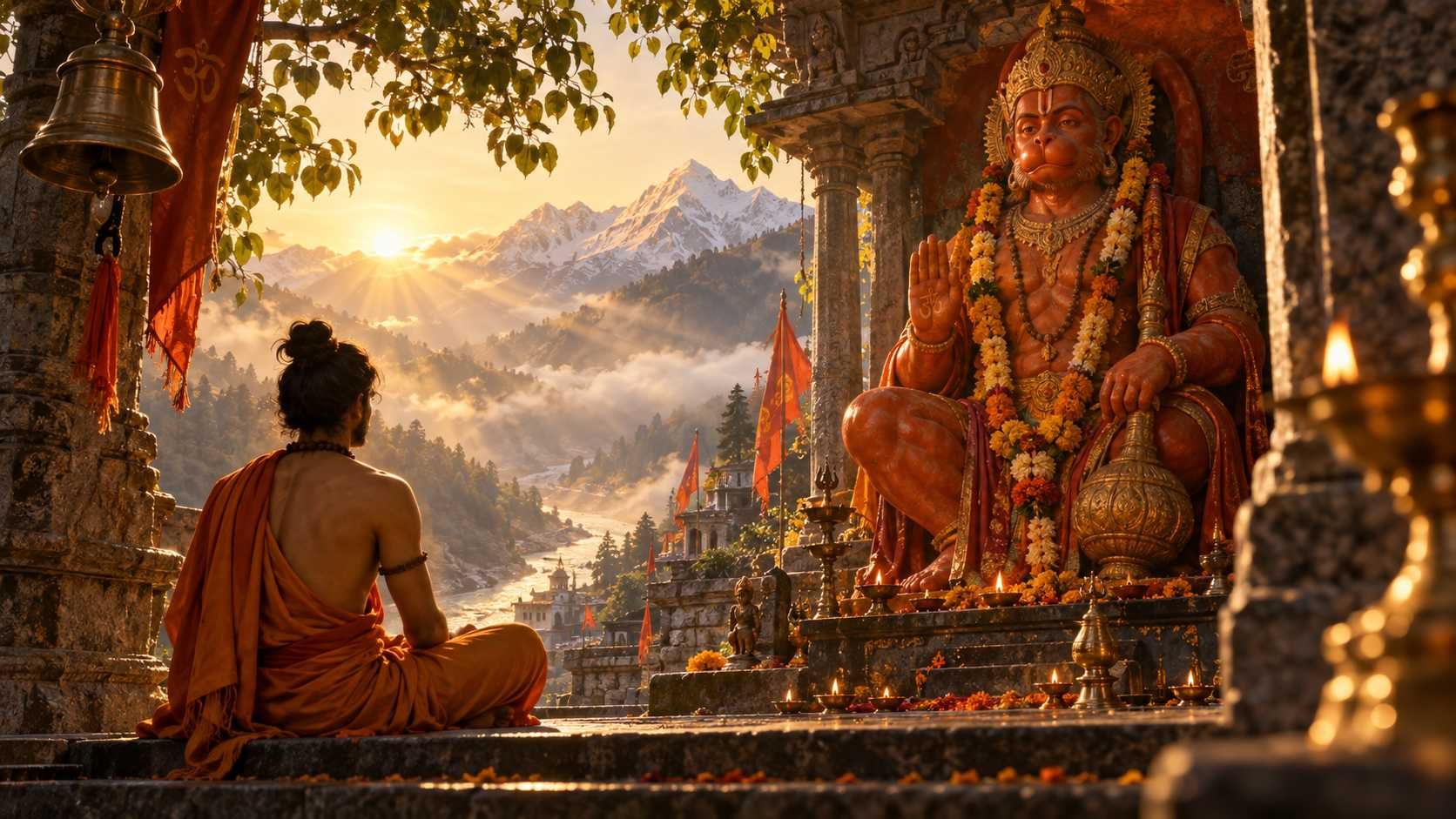
When a film is made for ₹2 crore, with no superstar, no promotional blitz, and no corporate studio umbrella, and that same film goes on to cross ₹125 crore at the box office, the language of economics calls it an outlier. But the soil of India, which still beats to the name of Ram, calls it something else entirely. It calls it Baba's grace.
'Hanuman Ansh' is the film of 2026 that quietly dismantled every established rule of Indian cinema. When it released on 7 August 2026 in roughly 250 cinemas, its name did not appear in a single trade report. It earned ₹90 lakh in its opening week. By the second week its shows had collapsed to just 40 screens. By every commercial calculation available, the film was finished.
And precisely at that point, where the arithmetic of the market ends, the arithmetic of faith began.
What happened in one month: a miracle recorded in dates
Look at the numbers as they stand on 8 September 2026, and decide for yourself whether to call this coincidence or grace.
According to Bollywood Hungama's figures dated 7 September, the film's total business has now reached ₹125.69 crore. As of 1 September, the domestic tally stood at ₹48.78 crore net and ₹57.54 crore gross, which means the film has effectively doubled its own pace in the week since. Mint reported that by day 26 the film had already earned 28 times its budget. The Indian Express recorded on 31 August that the film's fourth Sunday alone out-earned the combined total of its first three weeks. Very few films in the history of cinema have produced a graph that runs backwards like this.
Box Office India reports that 'Hanuman Ansh' is on course to become the highest theatrical return on investment in Indian cinema history, entering a category where only 1975's 'Jai Santoshi Maa' had stood until now. Fifty years later, a devotional film has repeated that exact piece of history. It is now the ninth highest-grossing Hindi film of 2026, and it has done so while overtaking films whose marketing budgets alone were several times larger than the entire cost of 'Hanuman Ansh'.
The most extraordinary part is the distribution story. Under pressure from sheer public demand, Cinépolis India lifted the film from 40 screens and progressively expanded it to more than 2,000 screens across the country. Media Infoline documented this expansion on 2 September. A fiftyfold increase in screen count is close to unprecedented in Indian distribution history. There was no paid promotion here, no purchased trending hashtag. Only the thing the trade calls word of mouth, and the thing devotees call satsang.
5 September: Uttarakhand made the film tax-free
On 5 September 2026, Uttarakhand Chief Minister Pushkar Singh Dhami watched the film in Dehradun. Once the screening ended, the state government declared it tax-free across Uttarakhand.
The decision carries a deep symbolic weight, because Uttarakhand is the very land that holds Kainchi Dham near Nainital, the principal ashram of Baba Neem Karoli, the place where lakhs of devotees gather every 15 June.
The Devbhoomi from which the spring of Baba's grace first flowed is the same Devbhoomi whose government has now cleared every obstacle from the path of his story reaching the masses. Devotees call this leela, and this time even a government notification became part of it.
From 11 September, the world will see Baba's story
On 3 September 2026, Hombale Films acquired the international distribution rights to 'Hanuman Ansh'. This is the same Hombale Films that has carried Indian cinema onto the global stage. The film releases overseas from 11 September 2026.
This development completes a circle that began decades ago. Kainchi Dham and the name of Neem Karoli Baba are not unfamiliar in the West. This is the ashram associated with Apple founder Steve Jobs, with Meta's Mark Zuckerberg, and with several figures from Hollywood. The film's teaser gestured at exactly this global connection, and outlets including Navbharat Times gave the detail prominence. This fragment of Hanuman never once advertised himself, and yet the summit figures of Silicon Valley came drawn to him of their own accord. From 11 September, that same story stands before international audiences on the big screen.
The story: a boy who set out to find his mother and found God
To understand the soul of this film, you have to understand its story, because this story is not a writer's invention. It is the documented life of a saint.
Thirteen-year-old Lakshman Das leaves the land of Braj. The reason? His mother has died, the one woman who was the single love of his life. An extraordinary logic takes shape in the boy's mind: if he is to meet his mother again, he must reach the kind of love that is larger than death. This was not renunciation. This was love pushed to its furthest edge. And the boy chooses the path to Lord Ram, through Hanuman Ji. Sanatan tradition teaches exactly this: the easiest bridge to Ram is Hanuman. Whoever takes hold of Hanuman's hand is found by Ram himself.
On his journey he arrives at a Vaishnava temple in Rajkot, Gujarat. The elderly Mahant Ji sees something in the boy's eyes that is not ordinary, and decides to test him. The boy stays silent. He accepts neither comfort nor praise. And one day, still in silence, he simply walks away. The film says something profoundly uncomfortable here: that religious institutions too can become a form of bondage, if the seeker's goal is the institution rather than God himself.
What follows are years of silent sadhana. Meditation beneath trees, nights beside rivers, a life sustained on alms. He learns spirituality from the calls of birds, from the wind, from water. In one episode he remains submerged in water for so long that the villagers assume he has drowned, and then he surfaces, entirely at peace. That episode is the film's first great signal that this body is no ordinary body.
The train that would not move without the saint
The most powerful sequence in the film is also the most famous episode in the life of Neem Karoli Baba, and the one that gave him his name.
At the age of twenty-five, Lakshman boards the first-class compartment of a passenger train without a ticket. A colonial officer orders him off. The saint does not argue. He steps down quietly and settles on the ground nearby. And then something happens that no engineering manual records. The train will not move.
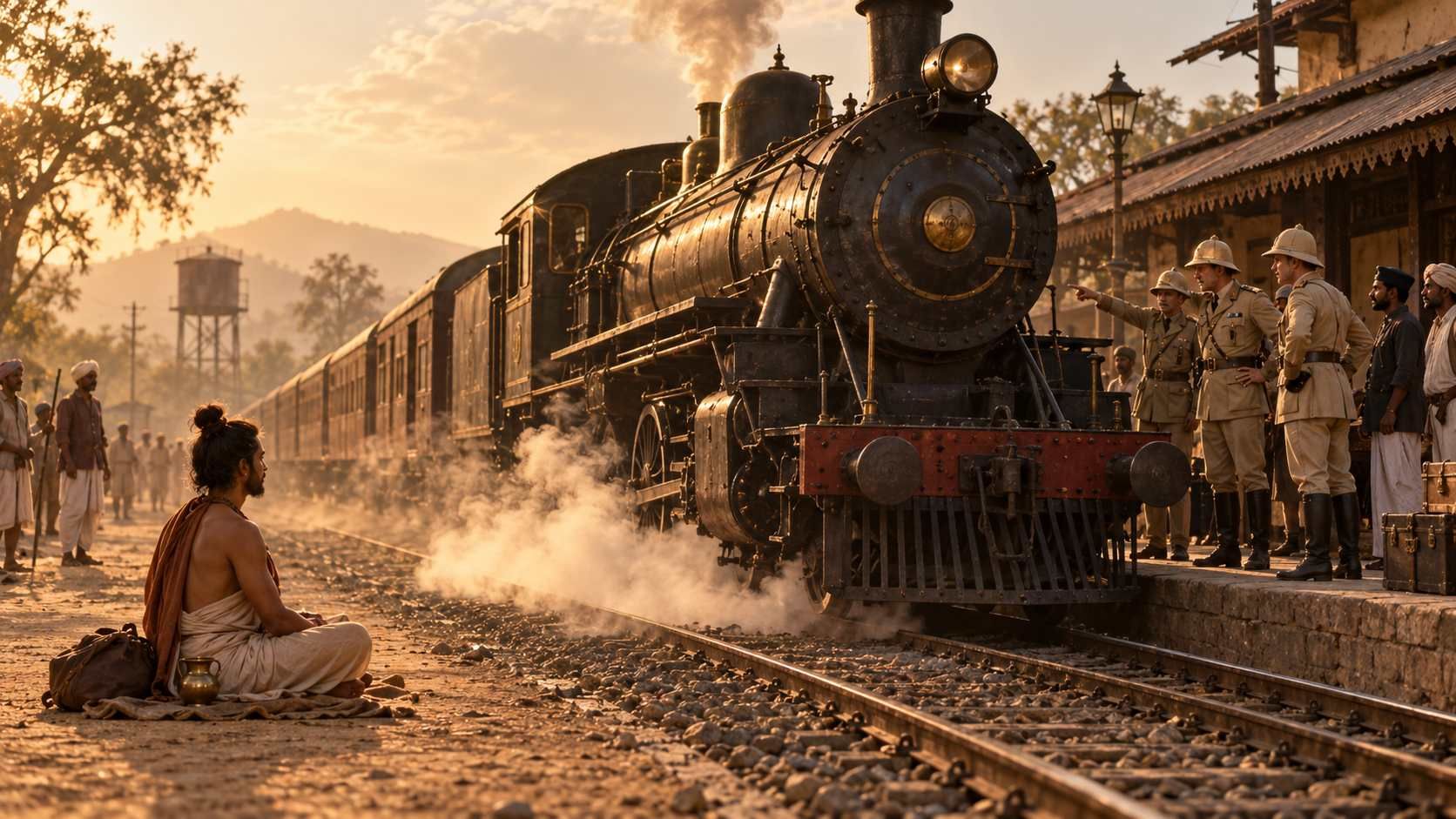
The engine is examined. The brakes are checked. Every technical component is found in perfect order. Nothing is wrong. And still the train does not budge an inch. When the railway manager learns that a sadhu was forcibly removed, he suspects this is the cause. Everyone apologises, the British officer included. The saint forgives them, boards again, and produces four first-class tickets for himself out of nowhere.
But look at his conditions, because the entire character of the saint is hidden inside them. First, that no sadhu in India should ever again be pulled off a train for want of a ticket. Second, that a railway station be built at that very spot, so the local people would have access to it.
The full weight of divine power was in his hands. He could have had the officer punished. He could have asked for anything at all for himself. What did he ask for? Dignity for others, and a station for the villagers. That is the essence of the Sanatan saint tradition: power is always spent in service. That station stands today as Neem Karori station in the Farrukhabad district of Uttar Pradesh, and from that day onward, Lakshman Das became Neem Karoli Baba to the world.
This episode is not a screenwriter's flourish. It belongs to the vast oral and written tradition that generations of devotees have preserved. The film presents it without inflated drama and without garish visual effects, and that restraint is its single greatest strength.
Hanuman, Ram, and Mahadev: the triangle of power that is the film's soul
The film's title is its thesis. 'Hanuman Ansh' means a fragment of Hanuman. In Sanatan tradition, Hanuman Ji is regarded as the eleventh avatar of Shiva, the Rudravatar. And he is the supreme devotee of Ram. Hanuman is therefore that remarkable point where the Shaiva and Vaishnava streams become one, where the immeasurable power of Mahadev surrenders itself into love for Ram.
Devotional tradition holds Neem Karoli Baba to be a fragment of this same Hanumat principle. And the film does not run from that belief. It accepts it without apology. That is its honesty. This film does not try to explain miracles away, nor mock them, nor wrap them in psychological rationalisation. It presents them with the same reverence with which they were experienced.
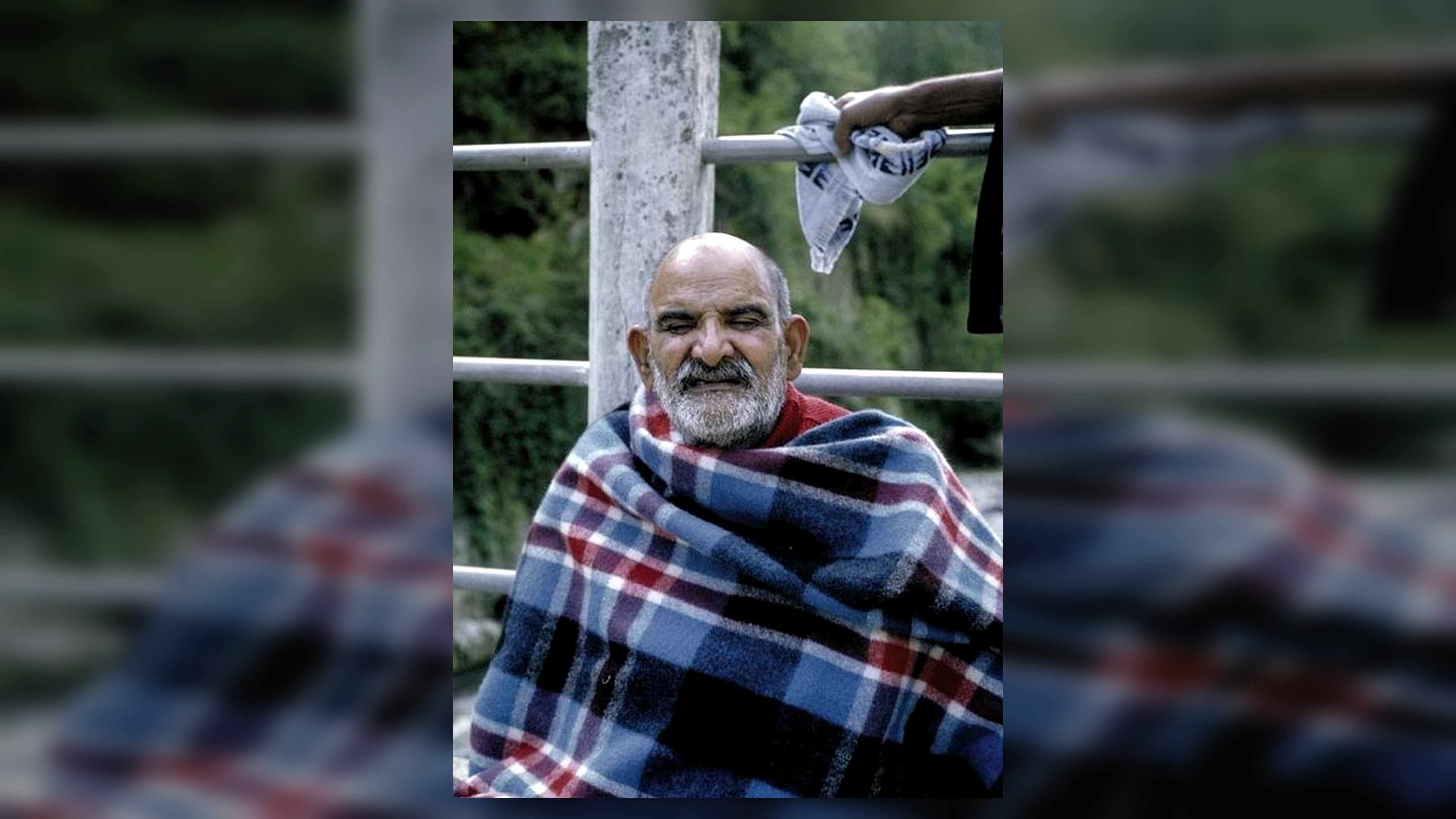
The nature of Hanuman Ji's power has always been the same. Crossing the ocean, lifting the mountain, carrying the Sanjeevani, burning Lanka: none of these were displays of limitless strength. Every one of them was Ram-karya, work done for Ram. When the detachment of Mahadev and the dharma of Ram meet in a single body, what is formed is Hanuman. And when that same principle appears in Kaliyug in the form of a saint, he asks for no throne and no crowd of disciples. He distributes food, drapes blankets over shoulders, and gives silent blessings. Letterboxd captures the film's essence in a single line: a grieving boy seeks God so that he might meet his departed mother, and in finding the divine, learns to serve humanity through miracles of love, food, and silent blessings.
That line is itself a definition of Sanatan Dharma. Here the culmination of reaching God is not the solitude of moksha. It is the widening of service.
A 43-day Hanuman Chalisa sankalp: the film's real budget
The story of how the film was made is itself a devotional story. Writer, director, and producer Dr. Vishal Chaturvedi told NDTV India that 'Hanuman Ansh' began with a 43-day Hanuman Chalisa sankalp. First the vow, then the screenplay. That order shows up in every decision this film makes.
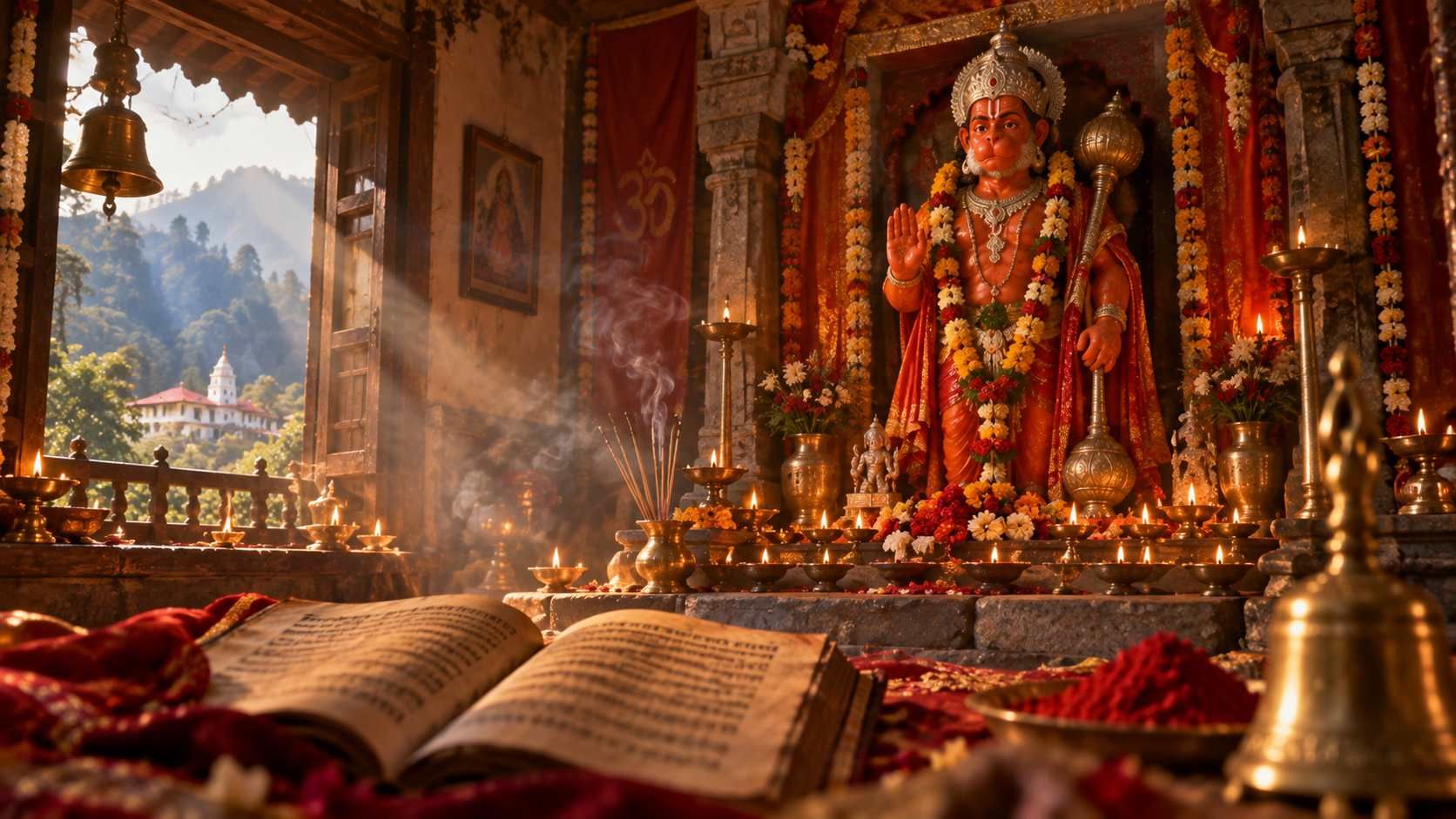
The film is based on his own spiritual memoir, 'Divine Detour: That Changed My Life'. Speaking to India Today, he explained that his research began informally around 2009, became systematic in 2016-17, and deepened further through 2022-23. He travelled to the places bound up with Baba's life, including Vrindavan, Akbarpur, Neeb Karori, and Lucknow, gathering accounts from witnesses and devotees and cross-checking them against details recorded in books. What sits in the screenplay came not from imagination but from memory and testimony.
The poster was unveiled at Kainchi Dham, Baba's principal ashram, at the start of 2026. Amar Ujala recorded the launch on 20 February 2026. Principal photography took place in November 2025, primarily in Chitrakoot. The film's opening scene was shot at the Punjabi Baba Ashram in Chitrakoot, along with key sequences including the installation of a Hanuman idol and the construction of Baba's cave. Portions were also filmed in Mumbai.
And here is an episode that devotees will call nothing other than grace. During the very first schedule, the actor originally cast in the lead role fell ill. At that time Shobhinaw Satyaa was the film's second assistant director. He auditioned, and the central role of Neem Karoli Baba came to him. The man who had been standing behind the camera was called in front of it by Baba himself. Today the country sees Baba in that very face.
Reports place the budget between ₹2 crore and ₹1.8 crore. According to Moneycontrol's 3 September report, the film's producers include Anupriya Nagar, a 21-year-old economist turned film producer. Ragini S, Namrata G Singh, and Vishal Chaturvedi himself are also producers. The banners are SWAMbhu Media Network and Holy Cow Home Productions. No corporate studio, then, and no star machinery. Only devotees, and their vow.
The music: where Krishna Das's voice speaks the name of Mahadev
The score was composed by Sadhu Sushil Tiwari, and this aspect of the film is a sadhana in its own right. The soundtrack released on 11 July 2026. It carries compositions including 'Aavagaman', 'Saasa Haale', 'Zid Pe Aa Gayi Parvati', 'Bajrang Baanka', and 'Hey Kharari', several of them built on traditional melodies. 'Maine Tere Hi Bharose' is sung by Sunil Lodhi and comes from folk tradition. 'Jai Hanuman' and 'Ram Bhajan Ki Or' carry Rishi Pathak's music.
Most significant of all are the two pieces contributed by the world-renowned kirtan singer Krishna Das: 'Om Namah Shivaya' and 'Shri Ram Jai Ram'. Krishna Das is himself a devotee of Neem Karoli Baba, and he is the man who carried the name of Ram and the name of Shiva into homes across the West. According to a March 2026 report in Bharat Express, he blessed the film's team in Florida. Consider what that means: in a single film, the name of Mahadev and the name of Ram both resound in the very voice that taught the West to chant. And the closing song, 'Hriday Mein Jinke SitaRam', was written by the director himself.
Reviews and audiences: critics startled, viewers in tears
The film runs 150 minutes. It released in Hindi with subtitles in the Braj and Bundeli languages, a decision that is itself an act of respect toward cultural roots. The trailer arrived on 18 July 2026 on the Times Music YouTube channel. The release had originally been set for 31 July and was pushed to 7 August.
The headline of Hindi News18's review says everything: without any grand drama, 'Hanuman Ansh' goes straight to the heart. It received three and a half stars. Jagran gave it three stars and wrote that the film traces the road from grief to spirituality, revealing a side of Neem Karoli Baba that had remained untold. Deccan Chronicle called it a cinematic journey of introspection, faith, and inner peace.
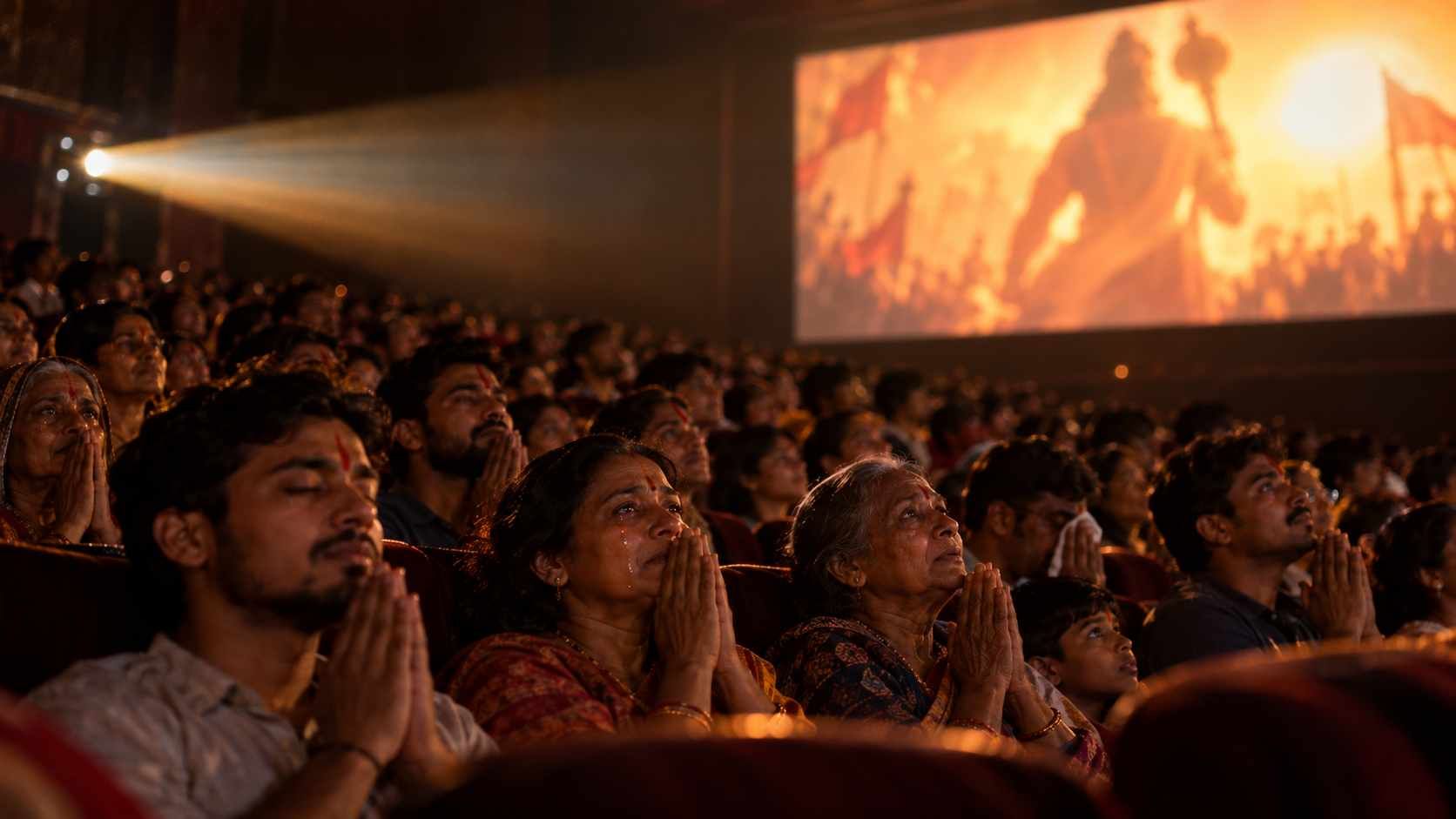
But the real review belongs to the audience. On BookMyShow, the summary distilled from more than 59,000 reviews reads in words no advertising agency wrote: super direction, great acting, wow music, blockbuster, inspiring, unbelievable. And one viewer's line outweighs them all: this is far more than a movie, it is a journey of faith. On TMDB the film holds a rating of 8.4, and on Letterboxd a 3.4 from over 1,200 ratings. Across social media and in the Hindu and Neem Karoli Baba communities on Reddit, people are writing that simply being fortunate enough to see a film like this is itself a blessing.
One more episode deserves recording. According to Navbharat Times, during production the revered Premanand Maharaj of Vrindavan issued a warning to the makers: the actor must undertake sadhana, and there must be no trifling with the character of a saint. That warning is a teaching in itself. To play a saint is not acting, it is tapasya. The response the film has received suggests the team took the warning seriously.
The next chapter of the trilogy: Agra and Mathura
'Hanuman Ansh' is the first instalment of a trilogy. The film's ending itself signals the story to come. Bollywood Hungama on 31 August, and India Today on 2 September, confirmed that Dr. Vishal Chaturvedi has already begun work on the second part.
The first film covers Baba's early life, from Firozabad through his youth. The second will cover the periods associated with Agra and Mathura, the years in which Baba's leelas and his circle of devotees expanded rapidly. On 3 September, The Hollywood Reporter India called it the sleeper hit nobody saw coming, and reported both the global release and the sequel in the same breath.
What this success actually means
To read the story of 'Hanuman Ansh' as nothing more than a box office success is to shrink it. There are three larger messages inside it.
First, the Indian viewer is still bound to his roots. When the material is true, it needs neither stars nor a promotional budget. The public becomes the distributor. The journey from 40 screens to 2,000 was not engineered by any marketing team. It was engineered by the viewers who walked out of a cinema and pulled their families, their neighbourhoods, and their offices back in with them.
Second, devotional cinema is no longer a marginal category. 'Jai Santoshi Maa' demonstrated this fifty years ago, and 'Hanuman Ansh' has now repeated it. The difference this time is that it is going global. When it reaches overseas screens with Hombale Films from 11 September, the name of Ram and the Hanuman Chalisa will resound in cities where Kainchi Dham is already spoken of with reverence.
Third, and most important, this film restores a core teaching of Sanatan Dharma that is greater than any miracle: that the purpose of divine power is service. The saint for whom a train came to a halt asked nothing for himself. He asked for the dignity of sadhus and a railway station for a village. That is the soul of India. That is Ram's idea of governance, that is Hanuman's spirit of service, and that is Mahadev's principle of renunciation.
A boy who set out looking for his mother arrived at God, and then made all of humanity his mother. Today, in the form of a ₹2 crore film, that same story is doing more than ₹125 crore in business, state governments are making it tax-free, international studios are carrying it to the world, and crores of viewers are walking out of cinemas wiping their eyes.
The market will call it a sleeper hit. Trade analysts will call it a record return on investment. But anyone who has climbed the steps of Kainchi Dham, anyone who has completed 43 days of the Hanuman Chalisa, anyone who lights a lamp before Bajrang Bali on a Tuesday, knows there is only one name for it.
Jai Shri Ram. Jai Hanuman. Har Har Mahadev.
(All box office figures and developments are based on publicly available reporting as of 8 September 2026, including Bollywood Hungama, Box Office India, The Economic Times, The Indian Express, The Hindu, Mint, India Today, Hindustan Times, The Times of India, NDTV India, Moneycontrol, The Hollywood Reporter India, and Media Infoline. Figures are subject to revision in line with later reports.)
Disclaimer
Faith and belief: This article covers a devotional biographical film and the living tradition of Sri Neem Karoli Baba. The miracles and divine interventions recorded here, including the episode of the halted train, reach us through an unbroken chain of devotional testimony: accounts given by those who were present, preserved and repeated by generations of devotees, held in the records and oral memory of Kainchi Dham and the other ashrams associated with Maharaj Ji, and documented through years of field research by Dr. Vishal Chaturvedi in his book 'Divine Detour: That Changed My Life'. For the crores of people who carry Baba in their hearts, these are not legends but lived experience, and the grace of Sri Hanuman is a daily reality rather than a matter of debate. WorldPrimePost reports them in exactly that spirit, with shraddha, and with respect for the parampara that has carried them faithfully to our time.
Box office and business data: All collection figures, screen counts, budget estimates, and return-on-investment claims are sourced from publicly available trade and news reporting as of 8 September 2026. Box office numbers reported by different trackers frequently vary, and net versus gross figures are not interchangeable. These numbers are indicative rather than audited, and are subject to revision as later reports and final studio statements emerge.
Independence and intent: This is an independent editorial feature. WorldPrimePost has no commercial, financial, or promotional relationship with the film's producers, distributors, or any associated banner, and no consideration of any kind was received for this coverage. Nothing here constitutes investment, business, or religious advice. Release dates, screen counts, and tax-free status are subject to change by the respective distributors and state authorities, and readers are advised to verify current showtimes and availability locally.
Respect for sentiment: This report is written with full respect for Sanatan Dharma, for the saint tradition, and for the sentiments of devotees of Sri Hanuman, Sri Ram, and Mahadev. Any factual error is unintentional. Corrections and additional documented accounts are welcome and will be reflected in updates to this article.
Related Topics:
" Tracking the massive architecture of global capital, sovereign wealth shifts, and the economic engines of the new world order."
"Curating the elite intersection of global culture, cinematic intelligence, high-end gastronomy, and the premium evolution of modern lifestyle."
"Decoding the high-stakes chess game of global statecraft, strategic diplomacy, and the shifting balance of world power."
" Tracking the massive architecture of global capital, sovereign wealth shifts, and the economic engines of the new world order."
" Tracking the massive architecture of global capital, sovereign wealth shifts, and the economic engines of the new world order."

Vanguard Culture Desk
Curating the elite intersection of global culture, cinematic intelligence, high-end gastronomy, and the premium evolution of modern lifestyle.
Get the Weekend Intelligence Briefing
Sign up for the deepest geopolitical and tech insights sent directly to your inbox every Sunday.
No spam. Unsubscribe anytime. View our Privacy Policy.
Loading Next Story