Smart Reading Mode Enabled
Double-click or long-press any difficult word in this article to instantly view its definition.
Demographic Anxieties and Institutional Failures: Analyzing India's Corporate and Communal Violence
An in-depth report analyzing India's shifting socio-political landscape, focusing on the 2026 TCS Nashik BPO coercion scandal, Sandeshkhali atrocities, and a decade of communal tensions.

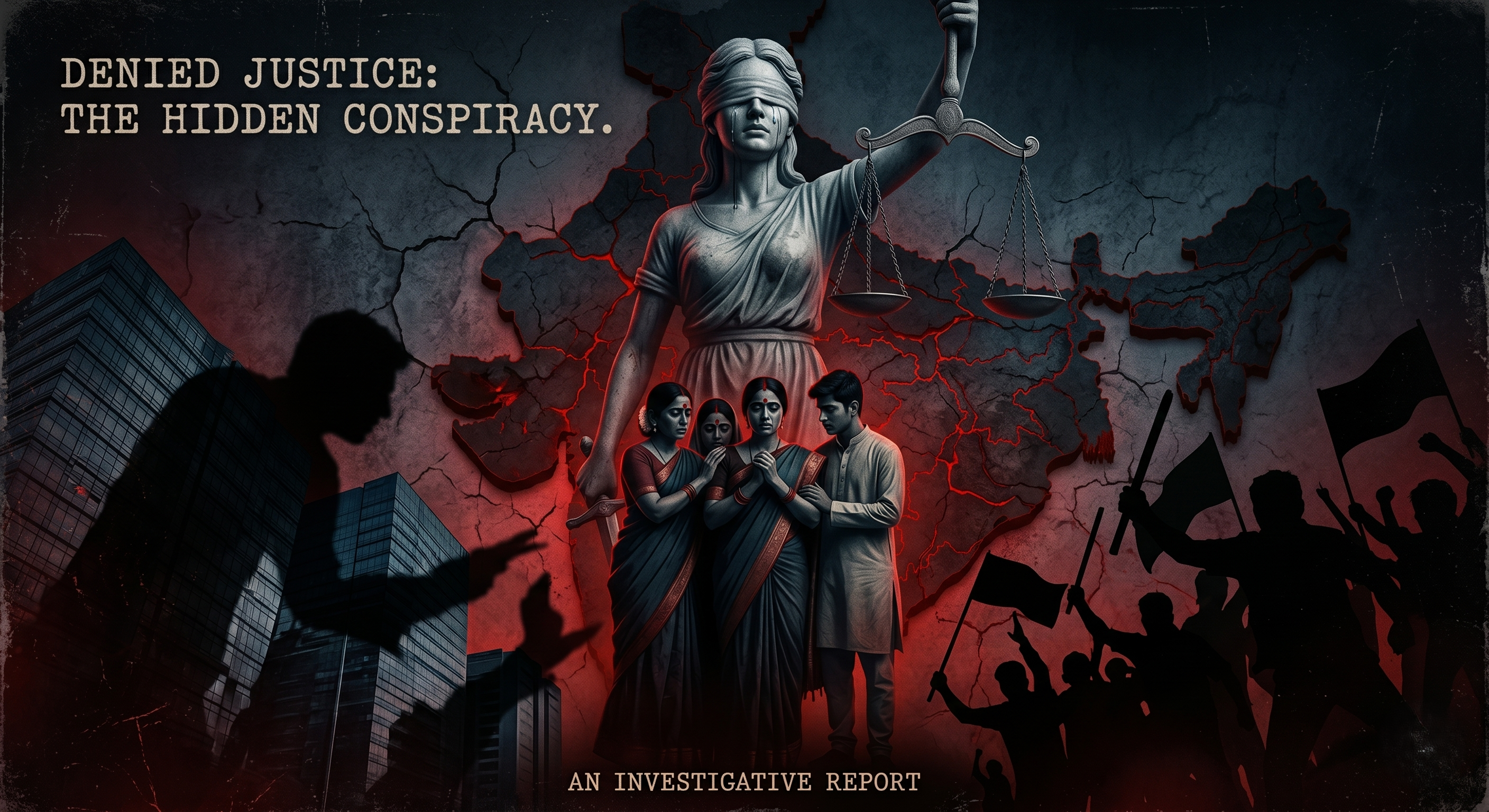
Demographic Anxieties and Institutional Failures: Analyzing India's Corporate and Communal Violence (1949-2026)
From Post-Independence Roots to Modern Crises
The roots of India's communal and demographic anxieties are deeply embedded in its post-independence history. Since the drafting of the Indian Constitution in 1949, debates around religious freedom, conversions, and communal tensions have been central to the nation's socio-political discourse. Early historical markers—such as the 1956 Niyogi Committee Report, which extensively investigated allegations of induced religious conversions by missionaries , major communal clashes like the Jabalpur riots of 1961 ``, and the landmark Supreme Court ruling in *Rev. Stanislaus v. State of Madhya Pradesh* that upheld the constitutional validity of state anti-conversion laws —demonstrate that these conflicts have long historical precedents. This report traces this continuum from 1949 to 2026, setting the historical stage to specifically cover and thoroughly analyze the alarming events, targeted violence, and institutional failures that have gripped the country in the last few years.
Over the past decade (2016-2026), India's socio-political and security landscape has witnessed a significant and concerning shift in the patterns of communal violence, religious conversions, and gender-based crimes. Historically, communal clashes and religious tensions were primarily confined to street-level disputes, rural areas, or specific festivals. However, recent evidence suggests that these trends have evolved, manifesting in highly organized forms within corporate campuses, digital spaces, and state-sponsored institutional frameworks.
The alleged 'Corporate Jihad' case that surfaced at a Tata Consultancy Services (TCS) BPO center in Nashik, Maharashtra, in April 2026 serves as the latest, most sophisticated example of this changing paradigm. This comprehensive investigative report deeply analyzes the multi-dimensional aspects of the Nashik BPO case—including allegations of sexual harassment, systematic religious coercion, international networks, and the glaring failure of corporate governance.
Furthermore, rather than viewing this incident in isolation, this report contextualizes it within the broader spectrum of recent national events. This includes the institutional sexual terror and land grabbing in Sandeshkhali, West Bengal , the micro-dispute that led to the brutal communal murder of a youth during Holi in Delhi's Uttam Nagar , and a decade-long history of targeted killings and controversial 'Love Jihad' cases across Haryana, Rajasthan, and Uttar Pradesh. An objective analysis of these interconnected events reveals a complex web of demographic anxieties, digital radicalization, and the profound vulnerabilities of both corporate and law enforcement institutions
2. The TCS Nashik BPO Case (April 2026): Anatomy of 'Corporate Jihad'
In April 2026, the industrial hub of Nashik was thrust into a national controversy when massive allegations of sexual exploitation and a forced religious conversion racket emerged from a TCS-linked BPO facility. This scandal has triggered a fierce national debate on workplace safety, the misuse of corporate authority, and the infiltration of religious extremism into the private sector.
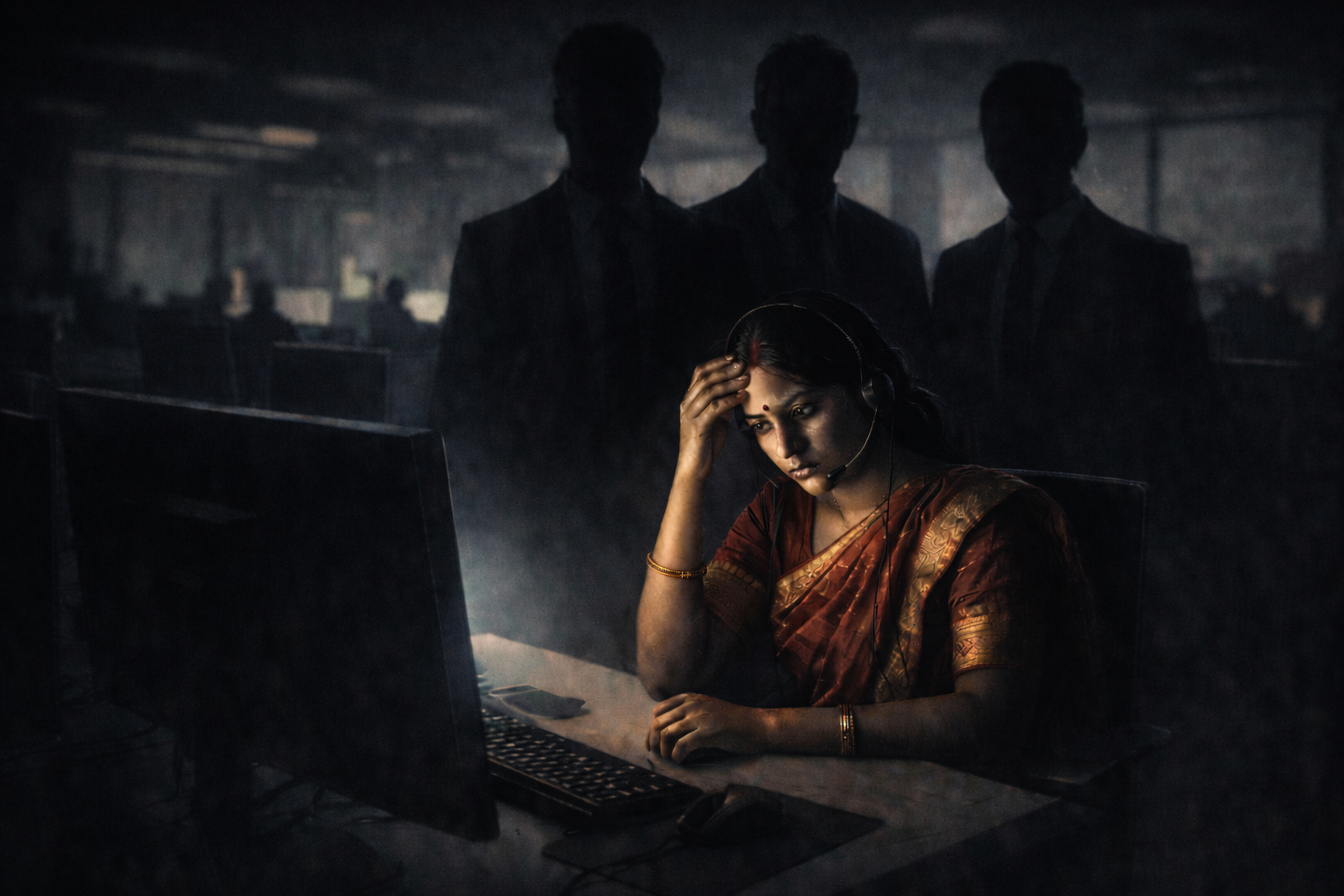
2.1 The 40-Day Undercover Police Operation
The investigation did not begin with a standard corporate grievance but was triggered by a tip-off in February 2026 from a political party worker, who alleged that a Hindu woman working at the facility was being pressured to observe Ramzan fasts. Recognizing the sensitivity of the claims, the Nashik City Police bypassed traditional inquiry methods and launched a covert, 40-day undercover operation.
Four women police constables were deployed inside the TCS campus, disguised as housekeeping staff. Operating incognito, these officers mapped interactions between employees, monitored workstations, and gathered crucial on-ground intelligence that corroborated the survivors' allegations. This unprecedented approach highlights the innovative measures law enforcement must now employ to uncover 'white-collar' cultural and religious crimes hidden behind corporate walls.
2.2 Sexual Harassment, Coercion, and the "Organized Gang"
Nashik Police Commissioner Sandeep Karnik stated that the male accused functioned as an "organized gang" targeting vulnerable female employees. As of mid-April 2026, nine FIRs have been registered—filed by eight women and one male employee, predominantly aged between 18 and 25. Seven employees have been arrested, including prime accused Danish Sheikh, Tausif Attar, Asif Ansari, Shafi Shaikh, Shahrukh Qureshi, and Raza Memon.
The modus operandi of the accused relied heavily on exploiting professional dependencies. The FIRs detail a chilling pattern of abuse:
- Sexual Harassment & Rape: Accused individuals allegedly stared at women's chests during meetings, engaged in inappropriate physical touching under the guise of work assistance, and subjected victims to obscene conversations. One FIR explicitly charges Danish Sheikh and Tausif Attar with establishing physical relations under the false pretext of marriage.
- Religious Manipulation: Victims reported intense pressure to adopt Islamic practices. They were allegedly coerced into offering namaz, reciting the kalma, and altering their dressing styles. The accused also reportedly mocked Hindu deities and forced victims to consume beef against their will.
- Psychological Blackmail: Employees who resisted these advances faced professional retaliation, such as arbitrary increases in their workloads. In a particularly disturbing instance, a male employee who opposed the conversion attempts was mocked about his childlessness, with the accused allegedly telling him to "send his wife" to them if he wanted a child.
2.3 The 'Malaysia Link' and Digital Radicalization
The Special Investigation Team (SIT) recovered over 78 'suspicious' call records, emails, and deleted WhatsApp chats using forensic tools. This digital trail exposed a potential international dimension: the "Malaysia Link".
Chats revealed the involvement of an individual named 'Imran', suspected to be a Malaysia-based preacher. The accused allegedly introduced Imran to the young female employees via video calls, where he would attempt to lure them with promises of high-paying jobs and luxurious lifestyles abroad. Given the implications of human trafficking and foreign funding, state agencies like the Anti-Terrorism Squad (ATS) and the National Investigation Agency (NIA) have been looped in to assist the SIT.
2.4 HR Complicity and the Role of Nida Khan
The most glaring institutional failure in this case was the complete breakdown of TCS's Prevention of Sexual Harassment (POSH) mechanisms. Victims had allegedly sent dozens of emails and complaints to the Human Resources department, which were actively ignored. An Assistant General Manager (AGM) from the HR department was arrested for allegedly advising a victim to "let it go" and actively shielding the accused.
At the center of this administrative controversy is 26-year-old Nida Khan. Initially labeled by police as the "absconding mastermind" who facilitated the harassment and mocked Hindu deities, her exact role remains hotly contested. While viral social media posts labeled her the 'HR Head', TCS management and her family clarified that she was merely a 'process associate' (tele-caller) with no recruitment authority. Her family vehemently denies she is absconding, stating she is at her Mumbai home and pregnant, and is seeking anticipatory bail.
2.5 The "Corporate Jihad" Narrative and Responses
The incident quickly escalated into a national political issue. BJP leader Bandi Sanjay Kumar explicitly branded the scandal as "Corporate Jihad," warning of secret pressure networks targeting Hindu women in IT hubs. Maharashtra Chief Minister Devendra Fadnavis echoed these concerns, stating that if a systemic "corporate jihad" conspiracy is proven, the state will root it out completely.
In response, Tata Sons Chairman N. Chandrasekaran called the events "gravely concerning and anguishing". TCS suspended the accused, shifted the Nashik branch to a 'work-from-home' model, and initiated an independent internal audit led by COO Aarthi Subramanian and external legal counsel. Additionally, the National Commission for Women (NCW) deployed a fact-finding committee to Nashik, and a public interest litigation was filed in the Supreme Court demanding stringent national laws against organized religious coercion.
3. Sandeshkhali (West Bengal): Institutional Sexual Terror and Land Grabbing (2024-2025)
While the Nashik case highlights vulnerabilities in corporate spaces, the Sandeshkhali atrocities in West Bengal demonstrate the horrifying consequences of state-sponsored political violence and institutional complicity.
3.1 The Catalyst: Attack on the Enforcement Directorate
Sandeshkhali, a riverine island in the North 24 Parganas district bordering Bangladesh, erupted into the national spotlight on January 5, 2024. A team of Enforcement Directorate (ED) officials arrived to raid the premises of powerful Trinamool Congress (TMC) leader Sheikh Shahjahan in connection to a multi-crore public ration distribution scam. Shahjahan's supporters violently attacked the ED officials, forcing them to flee, after which Shahjahan went into hiding for 55 days.
His temporary absence broke a decades-long climate of fear, emboldening the local Adivasi and Dalit Hindu women to take to the streets with horrific allegations against Shahjahan and his aides, Shibu Hazra and Uttam Sardar.
3.2 Systematic Sexual Assault and Economic Exploitation
The protesting women revealed a deeply entrenched system of "sexual terrorism" and economic extortion. According to testimonies, TMC strongmen would survey the village, and any woman deemed "attractive" was forcibly taken to the local party office. Women reported being held captive, forced to endure gang rape over several days, and threatened that their husbands would be murdered if they reported the crimes.
This sexual violence was intertwined with massive economic exploitation. Shahjahan and his gang allegedly engaged in brazen land grabbing, intentionally flooding fertile agricultural lands belonging to local farmers with saltwater to forcibly convert them into lucrative prawn aquaculture farms.
3.3 Institutional Apathy and NHRC/NCW Interventions
The local police not only ignored the victims' pleas but allegedly acted as enforcers for the TMC leaders, turning away women who attempted to file complaints. West Bengal Chief Minister Mamata Banerjee initially dismissed the women's allegations, claiming the unrest was a conspiracy orchestrated by the BJP and RSS.
The sheer scale of the human rights violations prompted severe rebukes from national bodies. The National Human Rights Commission (NHRC) conducted a spot enquiry in February 2024, reporting a complete breakdown of the rule of law, rampant sexual exploitation, forced unpaid labor, and forced migration of villagers fleeing the terror. The National Commission for Women (NCW) also dispatched a fact-finding team, gathering harrowing accounts from victims who detailed the police's refusal to act.
Taking suo motu cognizance of the staggering number of affidavits filed by victims, the Calcutta High Court ordered a CBI investigation in April 2024. Chief Justice T.S. Sivagnanam remarked that it would be "highly shameful" if even one percent of the horrific allegations of sexual assault and land grabbing were true.
4. Micro-Disputes Escalating to Communal Violence: Delhi Holi Murder (March 2026)
In stark contrast to the organized, long-term nature of the Sandeshkhali and Nashik cases, the March 2026 Uttam Nagar incident in Delhi exemplifies how minor, everyday urban disputes can instantly ignite deadly communal violence and mob lynching.
4.1 From a Water Balloon to a Fatal Lynching
On the evening of March 4, 2026, during Holi celebrations in the densely populated JJ Colony of Uttam Nagar, an 11-year-old Hindu girl accidentally dropped a water balloon from her terrace, which struck a Muslim woman passing below. The woman strongly objected, leading to a heated verbal altercation between the two families.
Later that night, around 10:30 PM, the situation escalated catastrophically. The woman allegedly returned with her relatives, armed with sticks, hockey sticks, and stones. The mob attacked the Hindu family. During the chaos, 26-year-old Tarun Kumar—a digital marketing student studying to support his family—was cornered outside his lane and brutally beaten. Tarun succumbed to severe head injuries the following morning.
4.2 Arson, 'Bulldozer Action,' and Social Media Policing
Tarun's murder immediately triggered intense communal tensions in Uttam Nagar. Outraged members of right-wing political outfits took to the streets, resulting in retaliatory arson where vehicles were torched and vandalized, necessitating the deployment of the Rapid Action Force (RAF). The Delhi Police arrested eight individuals, including a 14-year-old minor and the prime accused, Imran (alias Bunty).
The state's response added a highly controversial dimension to the incident. Within days of the murder, the Municipal Corporation of Delhi (MCD) deployed bulldozers to demolish portions of the main accused's residence, classifying it as an "illegal encroachment". This swift, punitive demolition bypassed standard legal protocols, sparking intense debates regarding the constitutionality of "bulldozer justice".
Concurrently, the digital sphere became a battleground of misinformation. The Delhi Police were forced to issue legal takedown notices against multiple social media accounts for spreading inflammatory rumors aimed at inciting further riots, highlighting the volatile intersection of localized crime and digital amplification.
5. A Decade of Conflict: 'Love Jihad', Forced Conversions, and Targeted Killings (2016-2026)
The 'Corporate Jihad' narrative of Nashik and the communal clashes of Delhi do not exist in a vacuum; they are built upon a decade of intense societal anxiety surrounding religious conversion, interfaith relationships, and targeted killings.
The term "Love Jihad" is heavily promoted by right-wing groups to describe an alleged organized conspiracy wherein Muslim men feign love to lure Hindu women into marriage for the sole purpose of religious conversion. While critics and sociologists frequently dismiss this as an Islamophobic conspiracy theory lacking demographic evidence , the sheer volume of violent incidents, police reports, and organized rackets over the last ten years has cemented this fear in the public consciousness.
5.1 High-Profile Killings and Extortion Rackets
Several horrific crimes have acted as flashpoints, continually validating the anxieties surrounding interfaith interactions:
- The Murder of Nikita Tomar (Haryana, 2020): In a case that shocked the nation, 20-year-old college student Nikita Tomar was shot dead at point-blank range in broad daylight by a Muslim man, Tausif. Her family testified that Tausif murdered her because she vehemently refused his demands to convert to Islam and marry him.
- The Dismemberment of Shraddha Walkar (Delhi, 2022): The gruesome murder of 27-year-old Shraddha Walkar, who was strangled and dismembered into 35 pieces by her live-in partner Aaftab Poonawala, became a central rallying point for right-wing groups claiming it was the ultimate, horrific manifestation of "Love Jihad".
- Blasphemy and Targeted Beheadings (Rajasthan & Gujarat, 2022): The digital sphere's lethal real-world impact was laid bare in 2022. In Udaipur, tailor Kanhaiya Lal was brutally beheaded in his shop by two radicalized men for allegedly sharing a social media post supporting controversial remarks about the Prophet Muhammad. Similarly, Kishan Bharvad was murdered in Gujarat on the directives of a cleric over an allegedly blasphemous social media post.
- The 100-Crore Conversion Syndicate (Uttar Pradesh, 2025-2026): Moving beyond individual actors, the UP ATS busted a massive, organized conversion racket led by Jalaluddin (alias Changur Baba). Investigators revealed the syndicate was backed by foreign funding exceeding 100 crore rupees and utilized a specific 'rate card' offering large sums (e.g., 15 lakhs) to operatives who successfully targeted and converted upper-caste Hindu women, deaf-mute children, and other vulnerable demographics.
5.2 The Legislative Weaponization of Anxieties
In response to these violent incidents and mounting public pressure, numerous Indian states—including Uttar Pradesh, Haryana, Madhya Pradesh, and Karnataka—enacted stringent anti-conversion laws between 2020 and 2026. These laws specifically criminalize religious conversion carried out through "misrepresentation, force, fraud, undue influence, coercion, allurement, or marriage".
While the state argues these laws are vital for protecting vulnerable women from predatory deception, human rights organizations contend that they are weaponized to harass consenting interfaith couples and disproportionately target minority communities, effectively criminalizing personal choice under the guise of national security.
6. Analyzing the Shift: From the Streets to the Cubicle
A sociological analysis of the events from 1949 through the explosive decade of 2016-2026 reveals a terrifying evolution in the mechanics of communal targeting. The transition from historical street-level riots to 'Love Jihad', and now 'Corporate Jihad', signifies that perpetrators are weaponizing professional hierarchies, economic dependency, and institutional structures.
In the TCS Nashik case, the perpetrators used the threat of poor performance reviews, increased workloads, and career sabotage as leverage to force religious compliance and exact sexual favors. This is an insidious form of "soft power" radicalization that exploits the ambitions and economic vulnerabilities of young professionals.
Furthermore, the role of digital surveillance cannot be overstated. Whether it is a foreign preacher using video calls to traffic young professionals (Nashik) , social media posts resulting in immediate assassinations (Kanhaiya Lal) , or viral misinformation sparking urban riots (Uttam Nagar) , the digital ecosystem acts as a primary catalyst, accelerating and amplifying the scale of radicalization and violence.
7. Legal and Institutional Solutions: The Path Forward
The interconnected crises across Nashik, Sandeshkhali, and Delhi demand immediate, robust, and impartial institutional reforms:
- Mandatory Third-Party Audits of Corporate POSH Compliance: The utter failure of internal HR mechanisms at TCS Nashik highlights a dangerous corporate complacency. IT associations have rightly petitioned the Ministry of Labour for mandatory, state-level, third-party audits of all POSH committees in multinational companies. HR executives who suppress complaints must face criminal complicity charges.
- Expansion of Proactive Intelligence and Undercover Operations: The Nashik City Police's 40-day undercover operation serves as a blueprint for modern law enforcement. To combat sophisticated, white-collar coercion networks where victims fear economic retaliation, police must increasingly deploy covert intelligence rather than waiting for victims to navigate hostile grievance systems.
- Strict Disassociation of Law Enforcement from Political Patrons: The Sandeshkhali atrocities lay bare the catastrophic results of police forces acting as private militias for ruling political parties. Ensuring absolute political neutrality within local police forces is paramount to preventing state-sponsored syndicates from operating with impunity.
- Regulating the Digital Sphere against Radicalization: With foreign entities allegedly utilizing communication apps to run conversion and trafficking modules, national security agencies (NIA, ATS) must enhance their cyber-surveillance capabilities to sever international funding and radicalization pipelines before they infiltrate domestic institutions.
8. Conclusion
India currently stands at a volatile crossroads where historical communal fault lines from 1949 are intersecting with modern institutional vulnerabilities. The past decade proves that the threat to citizens—particularly women—is no longer confined to isolated alleys or remote villages. From the political terror in the wetlands of Bengal to a bloody dispute over a water balloon in the capital, and the air-conditioned boardrooms of a global IT giant in Maharashtra, the battleground has expanded.
The term 'Corporate Jihad' may be politically charged, but the underlying reality it describes—an organized, systemic abuse of power to force religious and sexual subjugation—is a verifiable threat. Protecting the secular, democratic, and inclusive fabric of India requires tearing down the walls of institutional apathy. It demands a justice system that acts with unwavering speed, corporate environments that prioritize employee safety over brand reputation, and a societal rejection of the extremist ideologies that continue to claim innocent lives.
Related Topics:
"Curating the elite intersection of global culture, cinematic intelligence, high-end gastronomy, and the premium evolution of modern lifestyle."
" Tracking the massive architecture of global capital, sovereign wealth shifts, and the economic engines of the new world order."
"Curating the elite intersection of global culture, cinematic intelligence, high-end gastronomy, and the premium evolution of modern lifestyle."
"Decoding the high-stakes chess game of global statecraft, strategic diplomacy, and the shifting balance of world power."
" Tracking the massive architecture of global capital, sovereign wealth shifts, and the economic engines of the new world order."
WPP Threat Analysis & Intelligence Wing
Exposing shadow networks, dismantling misinformation warfare, and decoding the invisible frontlines of global security.
Get the Weekend Intelligence Briefing
Sign up for the deepest geopolitical and tech insights sent directly to your inbox every Sunday.
No spam. Unsubscribe anytime. View our Privacy Policy.
Loading Next Story