Smart Reading Mode Enabled
Double-click or long-press any difficult word in this article to instantly view its definition.
The Weaponization of the Strait of Hormuz: How the April 25 Attack Shocked the Global Economy
Investigation into the April 25, 2026 Hormuz attack, the US-Iran dual blockade, and how maritime militarization drives up global inflation and oil prices.

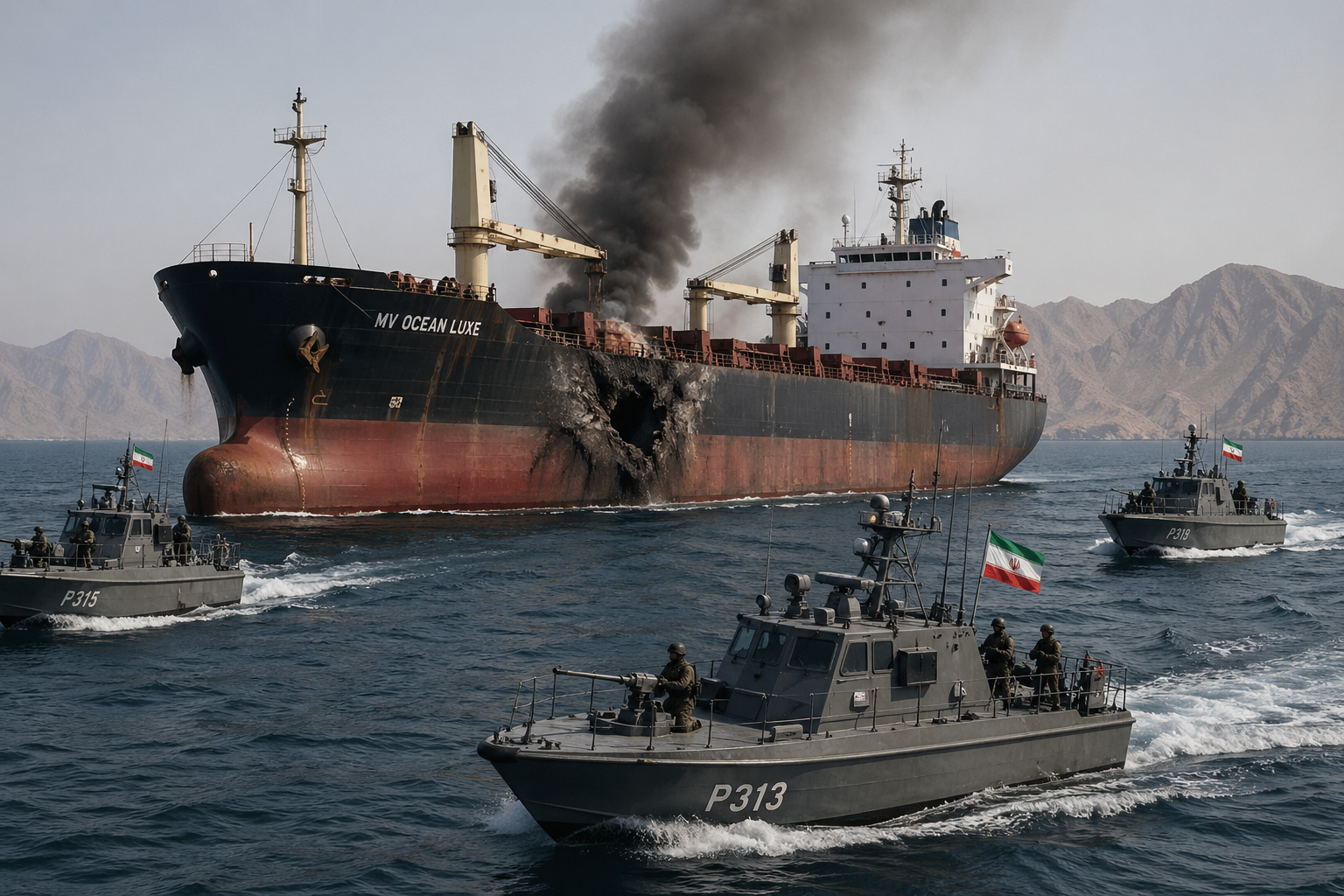
Militarization of Maritime Trade Routes: A Detailed Investigation into the April 25, 2026 Strait of Hormuz Attack and Its Impact on the Global Economy
Executive Summary and Strategic Context
The architecture of global maritime trade, which has been based on the principle of Freedom of Navigation for decades, is currently undergoing an unprecedented and violent structural transformation. The unidentified attack on a commercial cargo ship near the Strait of Hormuz on the morning of April 25, 2026, is glaring proof that global chokepoints are no longer traditional commercial routes but have transformed into active battlegrounds. Immediately following this incident, widespread panic swept through energy markets, resulting in a 2.5% spike in global oil prices (specifically Brent Crude). This event is not merely a localized security failure; rather, as an 'investigative' case study, it confirms that maritime trade routes are now being weaponized in modern geopolitical conflicts.
US and Israeli intelligence agencies and defense analysts have expressed a strong suspicion that Iran-backed proxy groups are behind this attack. This incident comes at a time when diplomatic negotiations and a fragile ceasefire are in place between the US and Iran, making it clear that strategies of asymmetric warfare are now being adopted as an alternative to direct confrontation by state-sponsored military forces.
The purpose of this report is to deeply analyze the tactical and strategic implications of the April 25 incident. Alongside this, the report presents a detailed investigation of the broader impacts of the 'Dual Blockade' architecture, the disruption of global supply chains, rising freight insurance costs, the humanitarian crisis of stranded seafarers, and the increasing militarization of maritime trade from the South China Sea to the Baltic Sea.
The April 25, 2026 Unidentified Attack: A New Chapter in 'Gray Zone' Warfare
On the morning of April 25, 2026, a Greek-owned commercial vessel traveling from the Jebel Ali port in the UAE to Mundra, India, was targeted by an unidentified projectile in open waters, approximately 25 nautical miles northeast of Oman. According to alerts issued by the United Kingdom Maritime Trade Operations (UKMTO), the attack caused severe damage to the ship's bridge (control room), although no fires or environmental leaks were reported, and all crew members were reported safe.
This attack is a classic example of modern 'Gray Zone' warfare tactics. No state or non-state actor officially claimed responsibility for this attack, which is a calculated move to deliberately maintain tactical ambiguity. This type of strategy allows the attacker to disrupt global commerce and demonstrate regional strike capability without facing direct diplomatic or conventional military retaliation. American and Israeli officials believe the attack was carried out by militia groups backed by Iran, directed to exert pressure on the international community amidst stalled peace talks.
The complexity of this attack must be understood in the context of the broader electronic warfare underway in the region. In the weeks preceding this incident, multiple instances of Global Positioning System (GPS) signal jamming and manipulation of Automatic Identification System (AIS) transponders have been recorded in and around the waters of the Strait of Hormuz. Due to these electronic disruptions, many commercial vessels have been forced to turn off their AIS broadcasts to evade attacks, creating navigational chaos and plunging one of the world's busiest waterways into darkness. When radar and tracking systems fail, it becomes nearly impossible for commercial ships to receive timely assistance from security forces.
The Architecture of the 'Dual Blockade' in the Strait of Hormuz
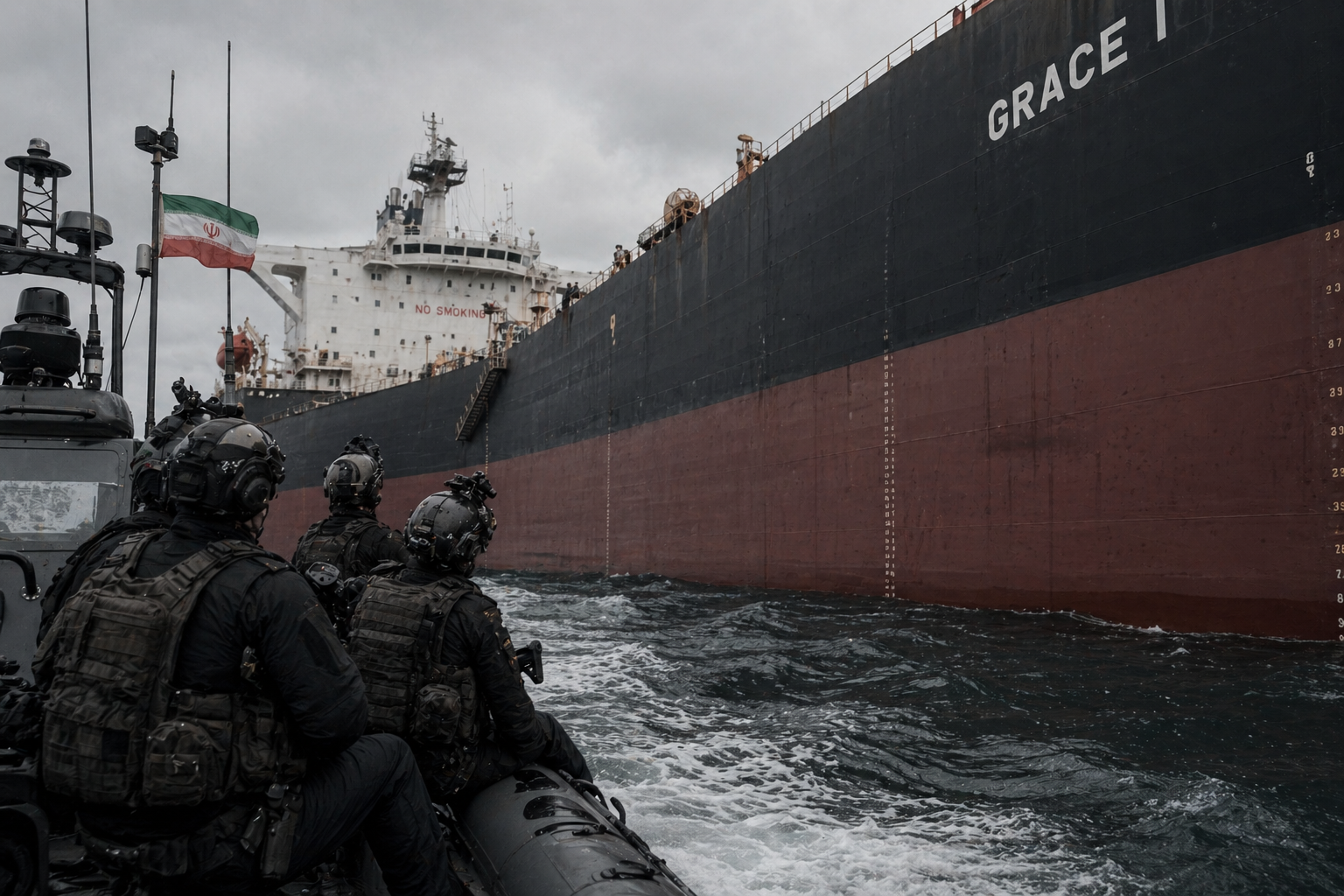
The April 25 attack cannot be viewed in isolation. It must be understood as a direct consequence of the broader conflict that began on February 28, 2026, which has dismantled the security architecture of the entire Middle East. The conflict was initiated by massive airstrikes conducted by the US and Israel targeting Iran's nuclear and ballistic missile programs, resulting in the death of Iran's Supreme Leader Ali Khamenei. Subsequently, his son Mojtaba Khamenei took power and launched devastating retaliatory strikes against Israel and US bases in the Arabian Peninsula.
As conventional military operations slowed down, the war evolved into a highly destructive economic siege, creating a permanent state of 'Dual Blockade' in the Persian Gulf.
US Enforcement and "Economic Fury"
The US strategy is being led by Treasury Secretary Scott Bessent, who has termed it "Economic Fury". The primary objective of this strategy is to completely paralyze Iran's maritime revenues and oil export networks. The US military and Navy have imposed a strict blockade on Iranian ports, intercepting any vessels in international waters suspected of smuggling Iranian crude oil. By late April, the US Central Command (CENTCOM) officially announced that US forces had forced 31 commercial vessels to turn around or return to port under this blockade.
This economic warfare has also been taken to the digital front. The US Treasury Department recently froze $344 million in cryptocurrency assets linked to Iran to degrade Tehran's ability to evade sanctions. US Defense Secretary Hegseth has clarified that this blockade will continue "for as long as it takes," and the US Navy has been ordered to destroy any Iranian vessel laying naval mines in the strait.
Iran's Retaliatory Strategy and the Weaponization of the Chokepoint
In response, Iran's Islamic Revolutionary Guard Corps (IRGC) adopted a strategy of weaponizing its geographic control over the Strait of Hormuz. The Strait of Hormuz is critical to global energy security, as nearly 20% of the world's total traded oil and a large portion of liquefied natural gas (LNG) pass through this narrow waterway during peacetime.
Initially, Iran announced the closure of the strait only to vessels from the US, Israel, and their Western allies. However, as the US blockade tightened, the IRGC expanded its scope of operations. Iran established a sort of 'de facto transit toll system,' under which vessels passing through the strait must obtain prior permission from Iranian authorities and pay fees based on their cargo and risk levels. Any ship that violates these rules or is deemed "hostile" by Iran is forcibly intercepted by the IRGC and redirected toward Iranian shores.
A conditional ceasefire mediated by Pakistan was announced on April 8, which was later extended indefinitely by US President Donald Trump. But there is a massive contradiction between diplomatic negotiations and the ground reality of the waterway. While US envoys Jared Kushner and Steve Witkoff negotiate with Iranian Foreign Minister Abbas Araghchi in Islamabad, naval interceptions and the use of military force at sea have intensified. Iranian Parliament Speaker Mohammad Bagher Ghalibaf has explicitly stated that fully reopening the Strait of Hormuz is "impossible" until the US lifts its naval blockade.
Detailed Chronology of Commercial Ship Hijackings and Interceptions
In the days immediately preceding the unidentified attack on April 25, there was an aggressive surge in piracy and state-sponsored interceptions. Both the US and Iran have adopted a 'tit-for-tat' strategy against each other, blurring the line between civilian and commercial vessels. Heavily armed commandos and advanced tactical equipment are being openly utilized in these operations.
| Date (April 2026) | Vessel Name | Flag State | Intercepting Force | Tactical Details and Location |
|---|---|---|---|---|
| April 20 | Touska | Iran | US Navy | This cargo ship was fired upon and subsequently captured by US forces near the Strait of Hormuz in the northern Arabian Sea. |
| April 20 | Dorena | Iran | US Navy | A supertanker intercepted off the southern coast of India and escorted back to port by a US Navy destroyer. |
| April 21 | Tifani | Botswana | US Navy | This 'stateless' vessel was boarded by US forces in the Indian Ocean. This marked the first US boarding of a vessel outside the Middle East during the 2026 conflict. |
| April 22 | Majestic X | Guyana | US Navy | Located in the Indian Ocean between Sri Lanka and Indonesia. The ship was headed for Zhoushan, China. The US Defense Department released a video of its seizure. |
| April 22 | MSC Francesca | Panama | IRGC (Iran) | Boarded by 20 heavily armed Iranian commandos using fast-boats in the Strait of Hormuz. The ship was headed to Hambantota, Sri Lanka |
| April 22 | Epaminondas | Liberia | IRGC (Iran) | Greek-owned vessel bound for Gujarat, India. Fired upon by an IRGC gunboat, severely damaging its bridge, and later directed into Iranian waters. |
The hijackings of the MSC Francesca and Epaminondas, in particular, were utilized by Iran for extensive psychological and propaganda warfare. Iranian state television and media outlets affiliated with the IRGC broadcast dramatically edited videos of masked commandos scaling the hulls of these massive container ships. Iran justified these seizures by claiming that the MSC Francesca had ties to Israel, while the Epaminondas was transiting without proper permits and had tampered with its navigation systems.
Conversely, the US Defense Department released footage of its special forces deployed on the deck of the Majestic X, signaling that the Pentagon is fully committed to global maritime enforcement to disrupt illicit networks providing material support to Iran. This conflict is no longer merely a regional dispute; it has expanded into the Indian Ocean and beyond.
Macroeconomic Impact: Energy Markets and the Global Inflationary Wave
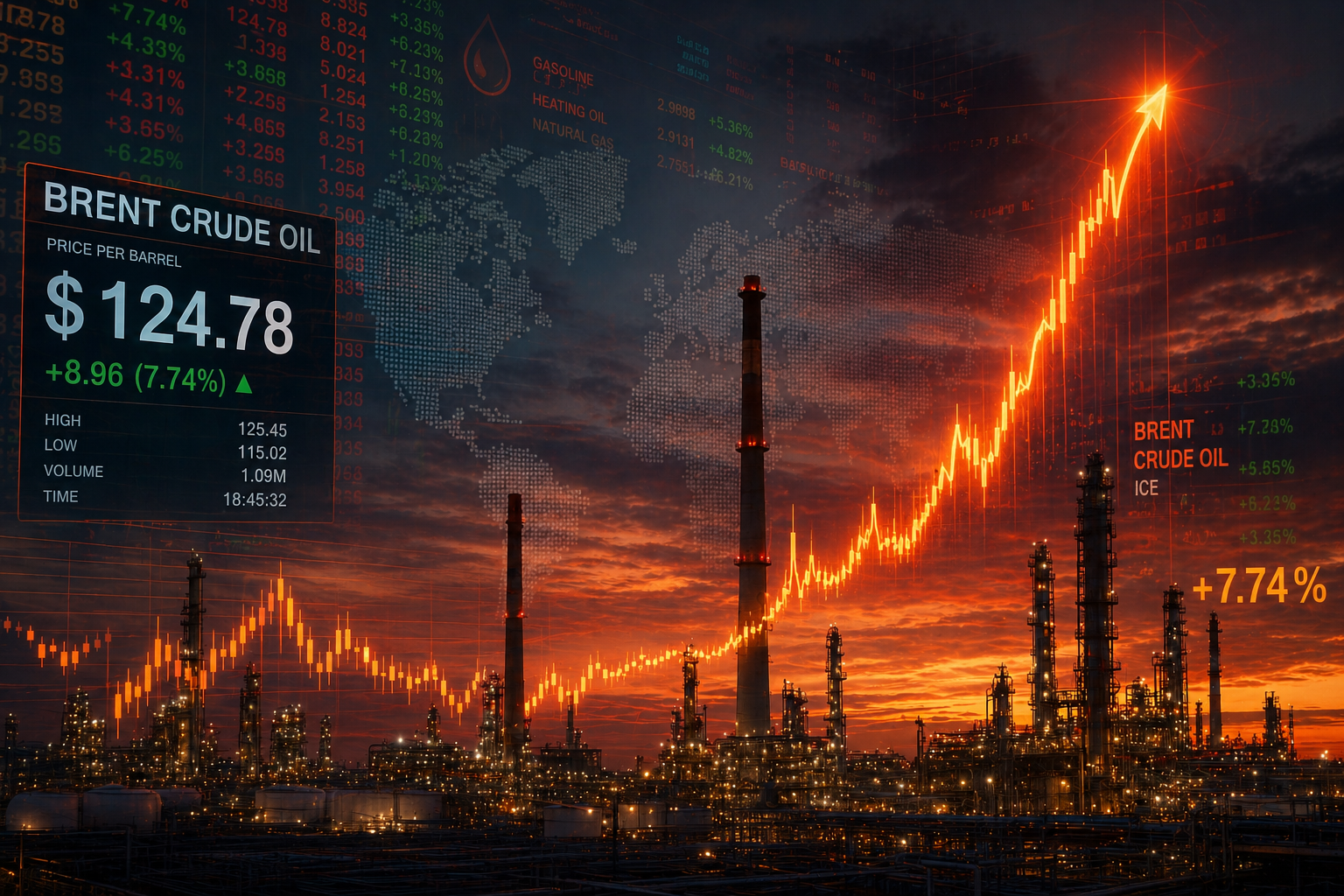
The transformation of the Strait of Hormuz into an active 'kinetic kill zone' represents the most significant structural shock to global energy markets since the oil crises of the 1970s. As news broke of the unidentified attack on a commercial vessel off the coast of Oman on April 25, panic swept through global commodity markets, resulting in an immediate 2.5% increase in Brent Crude Oil prices, crossing the $105.88 per barrel mark.
Brent and WTI Price Trajectories
Oil pricing data for 2026 reveals a market entirely subjugated by the Geopolitical Risk Premium. In January 2026, when the prospects of conflict were limited to diplomatic threats, Brent crude traded around $61 per barrel. By late February, the risk of military action pushed it up to $73. As war broke out and the actual blockade of the strait began, the market experienced an unprecedented rally, and by mid-March, prices touched an inflation-adjusted historic high of $126 per barrel.
Although prices saw some relief (dropping to around $90) due to the ceasefire announcement in early April, the market violently reversed course once it became clear that the naval blockade was not ending. With Brent crude sustained above $105, the US benchmark West Texas Intermediate (WTI) also remains under heavy pressure above $94.40 per barrel. This widening price differential between the two benchmarks underscores the fact that Brent crude prices are more sensitive to Middle Eastern shipping risks.
Complete Exhaustion of Global Supply Buffers
The resilience displayed by the global economy during the first four weeks of the crisis was largely an illusion. According to analysts from Rystad and the International Energy Agency (IEA), the initial shocks of the war were absorbed by pre-war surplus inventories, crude-on-water, floating storage, and policy barrels released by global governments.
However, by the end of April 2026, all these buffers have been completely exhausted. Consequently, the market is no longer in a position to absorb any additional disruptions. This is why a single unidentified attack incident, like the one on April 25, triggers direct and violent spikes in global prices. Analysts warn that even if the Strait of Hormuz were reopened fully and immediately, it would take several weeks to restore pre-war crude flows. Even more alarming is that approximately 20% of the damaged production capacity across the Middle East is not expected to recover in the short to medium term.
The Ripple Effects: Gas, Fertilizers, and Freight Costs
The crisis is not limited to crude oil but has contaminated the entire global supply chain. The macroeconomic impacts are summarized in the table below:
This overarching macroeconomic environment is exerting sustained and devastating downward pressure on global growth rates. According to forecasts by the UBS Chief Investment Office, if oil prices remain above $90 per barrel, it will cause a severe decline of 0.2 to 0.4 percentage points in the 2026 GDP growth of the United States, Europe, and China. Additionally, to cope with high energy costs, countries like Japan have had to launch initiatives like 'Cool Biz', encouraging government employees to wear shorts and T-shirts in offices to reduce reliance on air conditioning.
Humanitarian Crisis: Innocent Seafarers Caught in the Crossfire
Amidst the glare of geopolitical diplomacy and macroeconomic data, a profound and often overlooked humanitarian crisis is unfolding. The sudden closure of the Strait of Hormuz in late February left approximately 2,000 commercial ships and over 20,000 seafarers hopelessly stranded within the Persian Gulf. By the last week of April, around 600 ships (including 325 crude oil and chemical tankers) are still anchored helplessly in the Gulf, unable to find a safe passage out.
The physical and psychological toll on commercial crews is unprecedented. Seafarers from major labor-supplying countries like India find themselves trapped in an active war zone. Reports emerging from Iran's inland ports are deeply grim. For instance, Indian seafarers like Ankit Yadav and Salman Siddiqui have been stuck on cargo vessels for weeks, surviving on limited rations of potatoes and tomatoes while constantly hearing the terrifying sounds of missiles flying overhead and nearby explosions. Their return and repatriation have been entirely halted because the US naval blockade and Iranian interceptions prevent them from traveling to safe ports like Oman.
Even more dire is the situation of seafarers held hostage by foreign navies and militias. When the IRGC boarded the MSC Francesca and Epaminondas, they detained crews of multiple nationalities, including 15 Filipino seafarers and two Croatian citizens. Although the Philippine government's Department of Migrant Workers and the Croatian Foreign Ministry have confirmed that these seafarers are currently "safe" and being treated humanely, they remain held captive at the port of Bandar Abbas.
These innocent mariners are being used as geopolitical bargaining chips in a conflict they have no part in. This systemic threat has sparked a massive global labor shortage. Mariners from India, one of the world's top three seafarer suppliers (employing over 300,000 seafarers), are reluctant to return to sea due to security concerns. Those willing to go demand exorbitant 'hazard pay', which further inflates global logistics and freight rates. Compared to the 'Tanker War' of the 1980s, when the US Navy could effectively provide escorts, modern asymmetric military technology is so advanced today that fully securing any waterway has become nearly impossible.
The End of the Liberal Maritime Order: Parallel Developments in the South China Sea and Europe
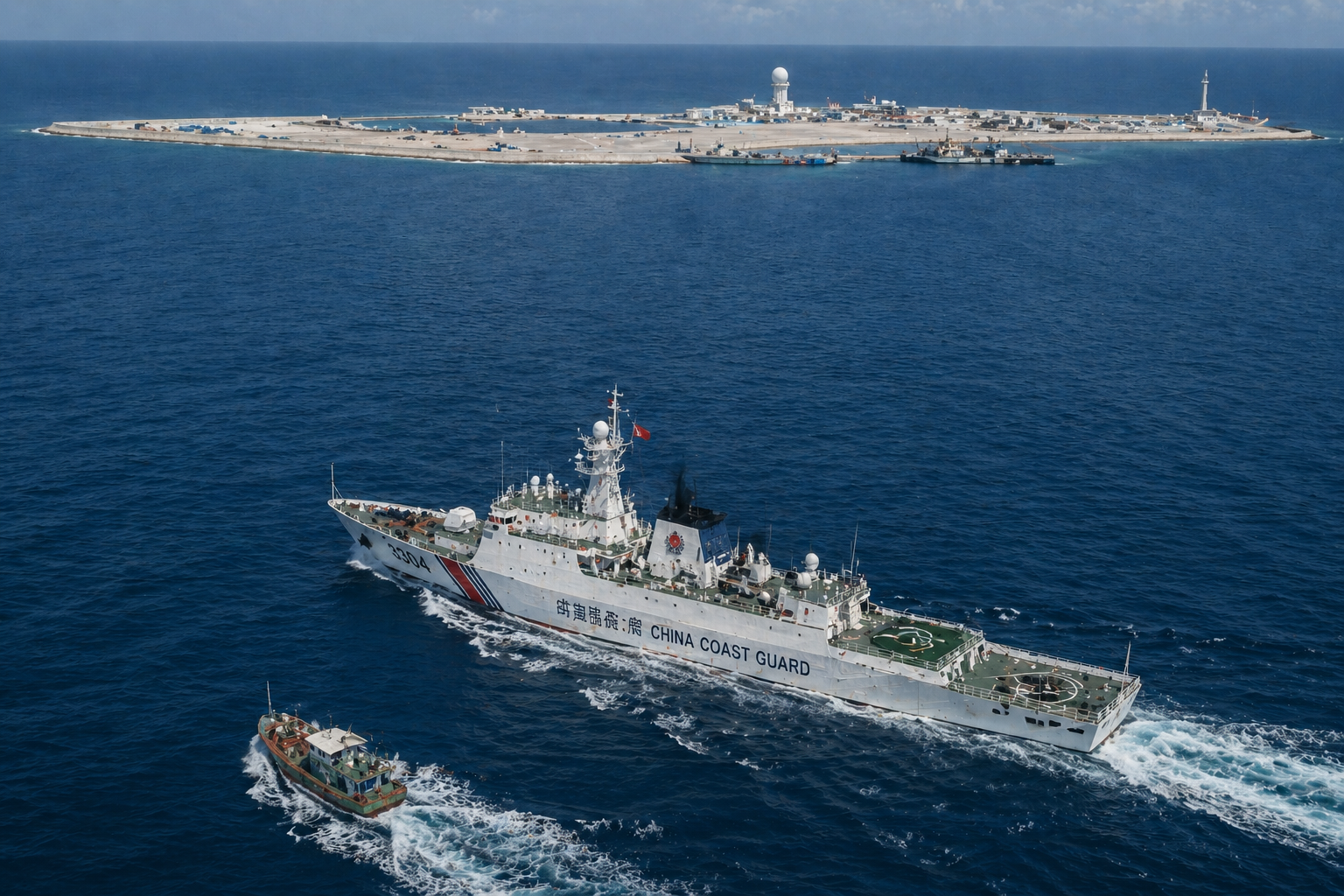
The weaponization of the Strait of Hormuz is not an isolated or purely Middle Eastern geographic anomaly. It represents the acceleration of a much broader global trend whereby all major strategic maritime routes are being militarized. The principle of Freedom of Navigation and the concept of oceans as an open Global Commons, which has underpinned the international liberal trade order for centuries, is now actively disintegrating.
The South China Sea Paradigm
Parallel to the tensions in the Middle East, the South China Sea continues to suffer from regional expansionism and militarization. This waterway, facilitating approximately $7.4 trillion worth of maritime trade annually and holding billions of barrels of untapped oil and natural gas reserves, is claimed almost entirely by China under its disputed "nine-dash line". Despite a clear 2016 ruling by the Permanent Court of Arbitration in The Hague—which legally invalidated Beijing's claims under UNCLOS—China has continued to expand its aggressive military presence.
Similar to the 'Gray Zone' tactics observed in Hormuz, China has deployed heavily militarized fishing fleets (Maritime Militias) and the China Coast Guard to assert territorial control. Throughout 2024 and 2025, these forces executed highly dangerous ramming maneuvers against Philippine Coast Guard vessels operating within the Philippines' Exclusive Economic Zone (EEZ). This campaign combines physical intimidation with massive artificial island-building projects, pushing one of the world's richest marine ecosystems toward collapse. In response, the United States has been forced to invest over $136 million to bolster the maritime law enforcement capabilities of its Indo-Pacific partners, turning a pure commercial corridor into a high-security flashpoint.
Russian Tactics in the Baltic and Black Seas
Likewise, the maritime domain surrounding Europe has been fundamentally altered. Since 2025, the Russian Navy has regularly deployed its warships (frigates) and submarines to escort its commercial oil tankers (often referred to as the 'shadow fleet') through the Baltic Sea, the North Atlantic, and the English Channel.
This tactic revives the antiquated concept of naval convoys, historically reserved only for 'total wars' like World War II, and applies it to everyday energy trade. By providing security to its shadow fleet, Moscow is sending a clear strategic message to Western nations: any interference with a Russian-affiliated commercial vessel will be treated as a direct attack on the Russian state. Simultaneously, continuous jamming of GPS signals in narrow waterways is making navigation nearly impossible for commercial competitors. In response, NATO and its allies are attempting to solidify their foothold in the Black Sea region through new infrastructure projects in Romania, Greece, and Bulgaria.
Diplomatic Stalemate and Strategic Assessment
This global convergence of maritime crises underscores that traditional diplomatic frameworks are proving entirely inadequate when it comes to asymmetric naval warfare. The situation in Hormuz today (2026) is technologically vastly different from the wars of the 1980s. Technologies such as long-range explosive drones, smart naval mines, autonomous fast-attack crafts, and AIS spoofing have now fallen into the hands of non-state actors. Consequently, establishing a flawless naval security cordon is impossible. The single drone/projectile attack on April 25 proves that even a minor incident is sufficient to trigger panic in global commodity markets.
Current political maneuvering between Washington and Tehran points toward a prolonged and damaging stalemate. The US strategy relies entirely on the belief that Iran is collapsing economically, losing hundreds of millions of dollars daily. However, this American 'economic strangulation' strategy is inadvertently causing massive collateral damage to global supply chains and European energy security. Dissatisfaction and reshuffling have also been observed within the US Defense Department; the abrupt resignation of Navy Secretary John Phelan at the height of the naval blockade, and his replacement by Undersecretary Hung Cao, evidence that command structures are under intense pressure.
Conversely, Iran's strategy is predicated on the belief that it can inflict unbearable economic pain on the global market before its domestic economy completely collapses. Iran believes that by choking the strait, it can hold international trade hostage and thus pressure the US into lifting sanctions. Recent statements by the Iranian Foreign Minister have made it clear that blockading Iranian ports is an act of war, and retaliation will be exacted by intercepting commercial shipping.
Conclusion: Navigating the New Maritime World Order
The unidentified attack on a commercial vessel near the Strait of Hormuz on April 25, 2026, is a stark indicator of the deepening vulnerability of global economics. The immediate 2.5% spike in Brent Crude Oil prices following this incident illustrates a market that has become hyper-sensitive, having lost all its structural shock absorbers.
Looking ahead, it is evident that the militarization of strategic trade routes is not a short-term phenomenon but a permanent paradigm shift. From the Strait of Hormuz to the South China Sea and the Baltic Sea, state and non-state actors are exploiting civilian shipping lanes for geopolitical extortion. As a result, supply chain volatility and higher inflation will become deeply embedded in the global economy. Commercial operators will no longer be able to plan their business solely on fuel and logistics; they must now factor extortionate insurance premiums, drastically longer navigational detours (such as via the Panama Canal), and direct physical security threats into their standard operational expenditures.
The maritime crisis of 2026 proves unequivocally that oceans are no longer merely passive avenues for the transit of goods; they have been actively weaponized. Until a comprehensive diplomatic solution is reached that addresses the underlying geopolitical tensions rather than just deterring tactical strikes, the oceans will remain volatile and contested battlegrounds. And until then, the global economy will remain at the mercy of the next 'unidentified projectile' like the one on April 25.
*(Disclaimer: The image used in this article is AI-generated/stock photography and is for representational purposes only.)*
Related Topics:
"Curating the elite intersection of global culture, cinematic intelligence, high-end gastronomy, and the premium evolution of modern lifestyle."
" Tracking the massive architecture of global capital, sovereign wealth shifts, and the economic engines of the new world order."
"Curating the elite intersection of global culture, cinematic intelligence, high-end gastronomy, and the premium evolution of modern lifestyle."
"Decoding the high-stakes chess game of global statecraft, strategic diplomacy, and the shifting balance of world power."
" Tracking the massive architecture of global capital, sovereign wealth shifts, and the economic engines of the new world order."
The Global Desk
Decoding international power shifts, global conflicts, and the geopolitical upheavals reshaping the world order in real time.
Get the Weekend Intelligence Briefing
Sign up for the deepest geopolitical and tech insights sent directly to your inbox every Sunday.
No spam. Unsubscribe anytime. View our Privacy Policy.
Loading Next Story