Smart Reading Mode Enabled
Double-click or long-press any difficult word in this article to instantly view its definition.
UK to Return 2000+ Ancient Jain Manuscripts to India | Historic Heritage Deal
The UK's Wellcome Collection signs a landmark MoU to return over 2,000 ancient Jain manuscripts to India, marking a historic moment in global cultural heritage repatriation.

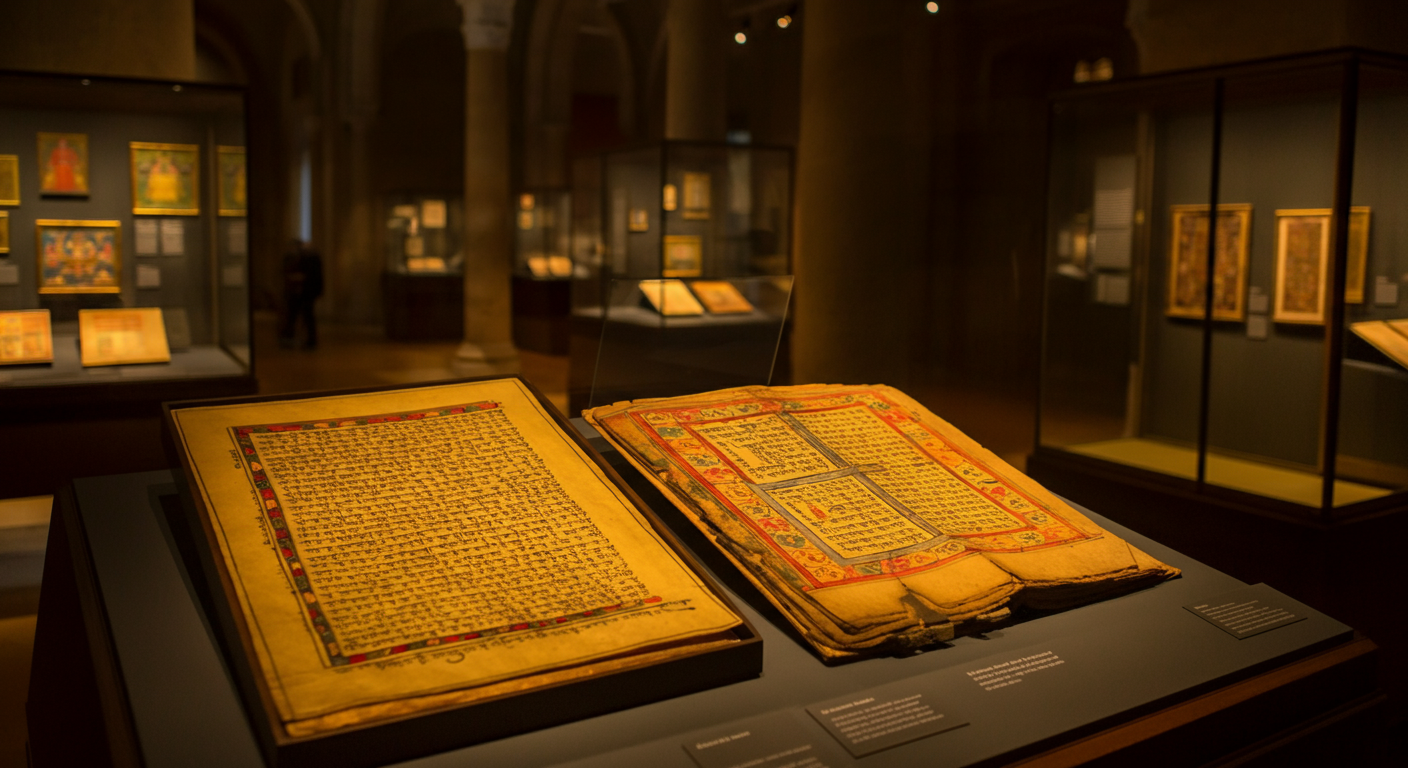
In a landmark moment for cultural heritage repatriation, the United Kingdom's prestigious Wellcome Collection has signed a Memorandum of Understanding (MoU) with Indian authorities to return more than 2,000 ancient Jain manuscripts — treasures of immeasurable religious, philosophical, and historical significance that have resided on British soil for over a century. This agreement marks one of the most consequential acts of cultural diplomacy between India and the UK in recent memory, signalling a profound shift in how former colonial powers reckon with the artifacts and intellectual heritage they once removed from their lands of origin. For the global Jain community, for scholars of South Asian history, and for advocates of heritage justice worldwide, this is a moment of extraordinary importance.
A Historic Agreement: The MoU Between Wellcome Collection and India
The Memorandum of Understanding signed between the Wellcome Collection in London and Indian cultural authorities represents a formal, binding commitment to the repatriation of over 2,000 ancient Jain manuscripts. The Wellcome Collection, renowned globally as a museum and library dedicated to the history of medicine and human experience, has held these manuscripts as part of its vast South Asian holdings — a collection assembled largely during the era of British colonial expansion in India. The MoU outlines a structured, phased process for the transfer of these manuscripts back to India, with interim custodianship assigned to Birmingham University's Dharamnath Network in Jain Studies to ensure proper digitization, conservation, and cataloguing before the final handover.
The key terms of the agreement emphasize collaborative stewardship: the Wellcome Collection will work in close partnership with Indian institutions and the Dharamnath Network to ensure that the manuscripts are not merely returned but are preserved, digitized, and made accessible to scholars and communities worldwide. The signing ceremony, attended by representatives from both the UK and Indian governments as well as leading figures from the Jain community and academic world, was described by participants as a deeply emotional and historically resonant occasion. Officials on both sides acknowledged that the agreement goes beyond the mere transfer of physical objects — it is a recognition of India's intellectual sovereignty and the living spiritual tradition that these manuscripts represent.
The significance of this formal commitment cannot be overstated. Unlike informal gestures or unilateral decisions by individual institutions, the MoU establishes a legal and diplomatic framework that sets a precedent for future repatriation agreements. It acknowledges the provenance of the manuscripts, the circumstances under which they left India, and the moral obligation of the holding institution to facilitate their return. Cultural diplomacy experts have hailed the agreement as a model for how nations and institutions can navigate the complex terrain of colonial-era acquisitions with sensitivity, transparency, and mutual respect.
What Are These Jain Manuscripts? A Glimpse Into Ancient Wisdom
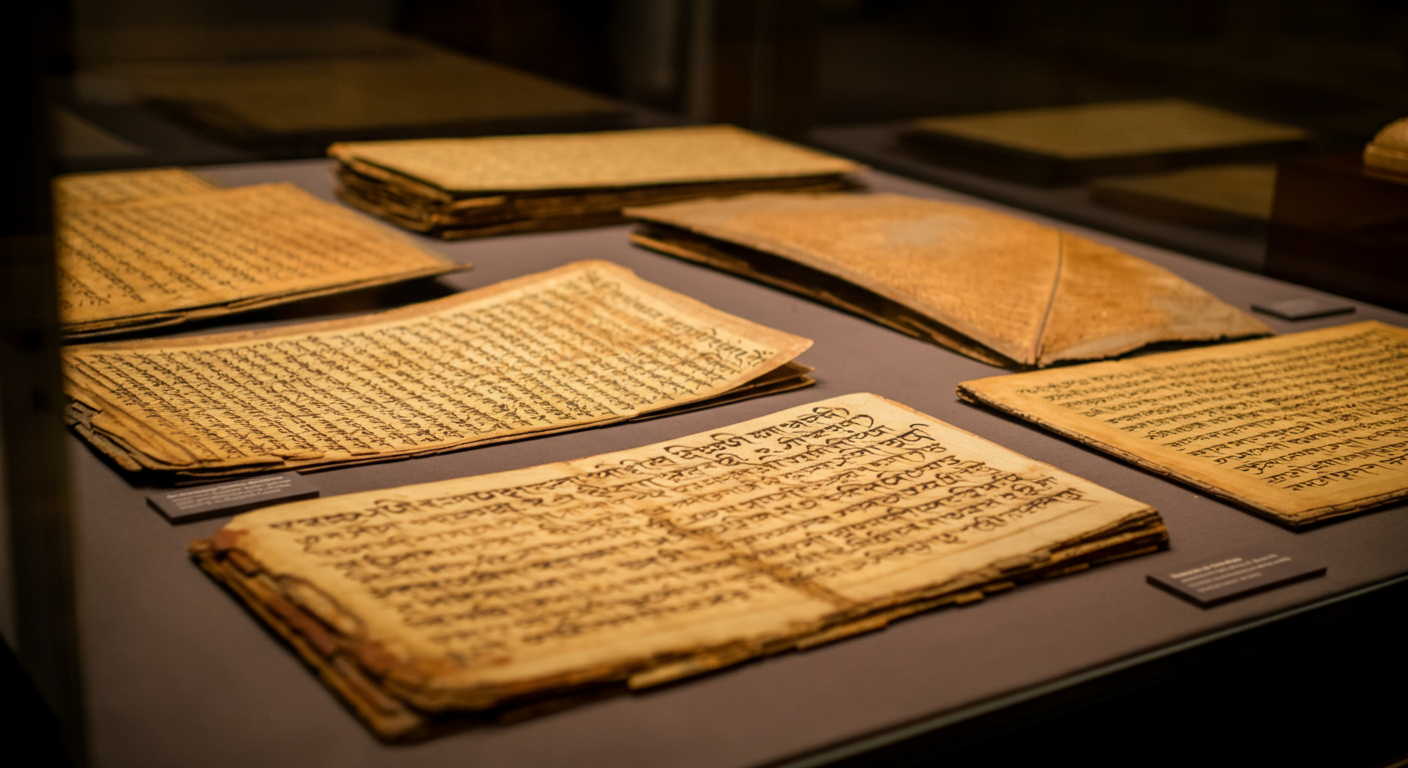
The manuscripts at the heart of this historic deal are extraordinary artifacts of human civilization. Composed on palm-leaf and paper, and written in Sanskrit, Prakrit, and various regional scripts, these ancient manuscripts span centuries of Jain intellectual and spiritual output. Some of the oldest among them date back over a thousand years, making them among the most ancient surviving documents of the Jain tradition. They encompass a breathtaking range of subjects: Jain cosmology and metaphysics, ethical treatises on the principles of ahimsa (non-violence), detailed commentaries on canonical Jain texts, poetry, mathematics, astronomy, and narrative literature that illuminates the daily life and spiritual aspirations of Jain communities across the Indian subcontinent.
The rarity and scholarly value of these ancient manuscripts India is reclaiming cannot be overstated. Jainism, one of the world's oldest living religions, has a rich tradition of manuscript production and preservation — Jain monks and scholars were among the most prolific scribes in pre-modern India, and Jain libraries (known as bhandars) were repositories of knowledge that extended far beyond religious doctrine to encompass science, philosophy, and the arts. Many of the manuscripts in the Wellcome Collection are unique copies, with no known duplicates surviving elsewhere. Their loss to Indian scholarship over the past century has been a significant gap in the study of Jainism and South Asian intellectual history.
Beyond their religious and philosophical content, these manuscripts are also remarkable as physical objects. The artistry of their production — the careful preparation of palm leaves, the precision of the scripts, the vivid miniature paintings that illustrate many of the texts — reflects the extraordinary craftsmanship of the scribes and artists who created them. Scholars of Jainism, Sanskrit literature, Indian art history, and the history of science have long recognized the Wellcome Collection's Jain holdings as a treasure trove of primary source material. Their return to India will open new avenues of research and reconnect living Jain communities with the written foundations of their faith.
The Dharamnath Network in Jain Studies at Birmingham University
A central pillar of the repatriation agreement is the role assigned to Birmingham University's Dharamnath Network in Jain Studies, which will serve as the initial custodian of the manuscripts during the critical transitional phase. The Dharamnath Network, established with the support of the UK's Jain community and named in honour of the fifteenth Jain Tirthankara, is one of the leading academic centres for the study of Jainism in the Western world. Its mission encompasses the scholarly study of Jain philosophy, history, and culture, as well as the promotion of Jain values and heritage within the broader academic community.
Under the terms of the MoU, Birmingham University's Dharamnath Network will undertake a comprehensive programme of digitization, conservation, and cataloguing of the manuscripts before their eventual transfer to India. This process is essential to ensure that the physical manuscripts are stabilized and that high-quality digital copies are created and made freely accessible to researchers worldwide. The digitization effort will employ the latest imaging technologies, including multispectral imaging that can reveal text invisible to the naked eye, ensuring that every detail of these precious documents is captured and preserved for future generations.
Why These Manuscripts Matter: Colonial History and the Independence Movement
To understand the full significance of this repatriation, it is essential to understand how these manuscripts came to be in the Wellcome Collection in the first place. Like so many cultural artifacts now held in Western institutions, the Jain manuscripts were acquired during the era of British colonial rule in India — a period during which the systematic removal of Indian art, literature, and religious objects was commonplace. Henry Wellcome, the pharmaceutical magnate whose collection forms the basis of the Wellcome Collection, was an avid collector of objects related to medicine and human culture from around the world. His agents acquired manuscripts, medical instruments, and religious objects from India on a vast scale, often through transactions that reflected the profound power imbalances of the colonial relationship.
The removal of these manuscripts from India was not merely a commercial transaction — it was part of a broader pattern of cultural suppression that accompanied British colonial rule. As India's independence movement gathered momentum in the early twentieth century, the preservation and celebration of Indian cultural heritage became an act of political resistance. Leaders of the independence movement, from Mahatma Gandhi to Rabindranath Tagore, understood that the recovery of India's intellectual and cultural legacy was inseparable from the struggle for political freedom. The manuscripts that are now being returned were, in a very real sense, casualties of colonialism — removed from the communities that created them and deposited in a foreign institution where they were largely inaccessible to the people whose heritage they represented.
The broader colonial legacy of removing cultural artifacts from India and other colonized nations is a subject of growing scholarly and public attention. Institutions across Europe and North America hold vast collections of objects acquired under colonial conditions, and the question of what obligations these institutions have to the communities from which the objects were taken is one of the defining ethical debates of our time. The return of the Jain manuscripts by the Wellcome Collection is a powerful statement that heritage repatriation is not merely a matter of legal ownership but of moral responsibility — an acknowledgment that the removal of these objects was wrong and that their return is an act of historical justice.
The Global Movement for Cultural Heritage Repatriation
The return of the Jain manuscripts takes place against the backdrop of a rapidly accelerating global movement for cultural heritage repatriation. From the long-running debate over the Elgin Marbles — the ancient Greek sculptures removed from the Parthenon by Lord Elgin in the early nineteenth century and now held in the British Museum — to the return of the Benin Bronzes from European museums to Nigeria, institutions around the world are being called upon to reckon with the provenance of their collections and to make amends for the acquisitions of the colonial era. The momentum behind this movement has grown significantly in recent years, driven by advocacy from source communities, changing attitudes within the museum sector, and increasing political pressure from governments in the Global South.
International frameworks, most notably the 1970 UNESCO Convention on the Means of Prohibiting and Preventing the Illicit Import, Export and Transfer of Ownership of Cultural Property, have provided a legal and ethical foundation for repatriation claims. While the UNESCO Convention primarily addresses illicit trafficking in cultural property, its principles have been widely applied to the broader question of colonial-era acquisitions. The 1995 UNIDROIT Convention on Stolen or Illegally Exported Cultural Objects has further strengthened the international legal framework for repatriation. These instruments, combined with growing public awareness and institutional willingness to engage with difficult histories, have created an environment in which agreements like the Wellcome Collection MoU are increasingly possible.
The Jain manuscript deal is particularly significant within this global context because it involves not just the return of physical objects but the establishment of a formal, collaborative framework for doing so. Unlike some repatriation agreements that have been contentious or one-sided, the MoU between the Wellcome Collection and India represents a genuine partnership — one that prioritizes the long-term preservation and accessibility of the manuscripts while honouring the rights of the source community. This precedent-setting approach may well serve as a template for future repatriation agreements involving manuscripts, archives, and other documentary heritage, a category of cultural property that has received less attention than sculptural and artistic objects but is no less important.
India's Response: A Nation Reclaims Its Intellectual Legacy
The response in India to the announcement of the MoU has been one of widespread celebration and deep pride. Government officials, from the Ministry of Culture to the Ministry of External Affairs, have welcomed the agreement as a significant achievement of India's cultural diplomacy and a vindication of the country's long-standing efforts to secure the return of its heritage from foreign institutions. Senior ministers have described the return of the Jain manuscripts as a historic moment that reflects the growing respect for India's cultural sovereignty on the world stage, and have pledged that the government will work closely with the Jain community and academic institutions to ensure that the manuscripts are properly received, housed, and made accessible upon their return.
Leaders of the Jain community in India have responded with particular emotion to the news. For Jain religious leaders, scholars, and community organizations, the return of these ancient manuscripts is not merely a cultural or political event — it is a spiritual homecoming. The manuscripts contain the words of Jain saints and scholars who lived and taught on Indian soil, and their return is seen as a restoration of a sacred connection between the living Jain tradition and its written heritage. Community leaders have called for the manuscripts to be housed in a dedicated facility that will make them accessible to Jain pilgrims, students, and scholars, and have expressed hope that the repatriation will inspire a broader effort to recover Jain manuscripts and artifacts held in other foreign collections.

What Happens Next? The Road to Full Repatriation
The path from the signing of the MoU to the full repatriation of the manuscripts is a carefully planned, multi-stage process designed to ensure that the transfer is carried out with the highest standards of conservation and scholarship. In the first phase, the manuscripts will be transferred from the Wellcome Collection to Birmingham University's Dharamnath Network in Jain Studies, where they will undergo a comprehensive programme of condition assessment, conservation treatment, and high-resolution digitization. This phase is expected to take several years, given the scale of the collection and the meticulous care required to handle manuscripts of this age and fragility.
The digitization and cataloguing phase is particularly critical. Each manuscript will be fully catalogued, with detailed records of its physical condition, content, provenance, and scholarly significance. Digital copies will be created using state-of-the-art imaging technology and will be made available through open-access platforms, ensuring that researchers and community members around the world can access the manuscripts even before the physical objects are returned to India. This commitment to open access reflects the collaborative spirit of the MoU and ensures that the scholarly value of the manuscripts is not diminished by the process of repatriation.
The eventual transfer of the physical manuscripts to India will require careful logistical planning, including the identification of appropriate receiving institutions, the preparation of climate-controlled storage and display facilities, and the development of a long-term conservation and access plan. Indian authorities have indicated that they are committed to ensuring that the manuscripts are housed in conditions that meet international standards for the preservation of documentary heritage, and that they will be made accessible to scholars, students, and members of the Jain community. The timeline for the full repatriation has not been publicly specified, but officials on both sides have expressed confidence that the process will be completed within a reasonable timeframe.
The Broader Impact on Jain Communities Worldwide
The significance of the Jain manuscript repatriation extends far beyond India's borders. The global Jain diaspora — which includes substantial communities in the United Kingdom, the United States, Canada, East Africa, and beyond — has followed the development of the MoU with intense interest and deep emotion. For diaspora Jains, many of whom have maintained strong connections to their religious and cultural heritage while building lives in countries far from India, the return of these manuscripts is a powerful affirmation of the value and vitality of Jain civilization. Community organizations in the UK, where the Jain community has been particularly active in supporting the Dharamnath Network and advocating for the repatriation, have celebrated the agreement as a historic achievement.
Access to these ancient manuscripts will have profound implications for the religious and cultural identity of Jain communities worldwide. The texts contained in the collection include foundational works of Jain philosophy and ethics, as well as literary and scientific works that demonstrate the breadth and sophistication of the Jain intellectual tradition. For Jain educators, religious leaders, and community members, the availability of these texts — both in their original physical form and through digital platforms — will enrich religious education, deepen understanding of Jain history, and strengthen the sense of connection to a living tradition that stretches back thousands of years.
The educational and spiritual implications of the repatriation are particularly significant for younger generations of Jains growing up in the diaspora. For these young people, who often navigate the challenges of maintaining a distinct cultural and religious identity in pluralistic Western societies, the return of the manuscripts sends a powerful message: that their heritage is valued, that their history matters, and that the global community recognizes the importance of preserving and celebrating the Jain tradition. Community leaders have expressed hope that the repatriation will inspire a new generation of Jain scholars, artists, and advocates who will carry the tradition forward with renewed pride and purpose.
Conclusion: A New Chapter in Indo-British Cultural Relations
The agreement to return over 2,000 ancient Jain manuscripts from the Wellcome Collection to India is far more than a logistical arrangement for the transfer of physical objects. It is a symbolic act of profound importance — a recognition by a major British institution that the removal of these manuscripts during the colonial era was wrong, and that their return is both a moral obligation and an opportunity to build a more equitable and respectful relationship between the UK and India. The MoU represents a new chapter in Indo-British cultural relations, one defined not by the power imbalances of the colonial past but by the principles of partnership, mutual respect, and shared commitment to the preservation of humanity's cultural heritage.
As the world watches this historic heritage repatriation unfold, the return of the Jain manuscripts offers a hopeful vision of what cultural diplomacy can achieve when institutions and governments are willing to confront difficult histories with honesty and courage. The manuscripts themselves — those fragile, beautiful, irreplaceable records of ancient wisdom — will soon begin their long journey home, carrying with them the hopes and prayers of millions of Jains around the world. Their return is a reminder that heritage justice is not merely a matter of the past, but a living commitment to the future — a future in which the intellectual and spiritual legacies of all civilizations are honoured, preserved, and shared with the world.
Related Topics:
"Curating the elite intersection of global culture, cinematic intelligence, high-end gastronomy, and the premium evolution of modern lifestyle."
" Tracking the massive architecture of global capital, sovereign wealth shifts, and the economic engines of the new world order."
"Curating the elite intersection of global culture, cinematic intelligence, high-end gastronomy, and the premium evolution of modern lifestyle."
"Decoding the high-stakes chess game of global statecraft, strategic diplomacy, and the shifting balance of world power."
" Tracking the massive architecture of global capital, sovereign wealth shifts, and the economic engines of the new world order."

The Global Desk
Decoding international power shifts, global conflicts, and the geopolitical upheavals reshaping the world order in real time.
Get the Weekend Intelligence Briefing
Sign up for the deepest geopolitical and tech insights sent directly to your inbox every Sunday.
No spam. Unsubscribe anytime. View our Privacy Policy.
Loading Next Story