Smart Reading Mode Enabled
Double-click or long-press any difficult word in this article to instantly view its definition.
US-China Intelligence War 2026: The Fight Over AI Secrets and Nuclear Sites
In 2026, the US-China rivalry escalated into an unprecedented intelligence war spanning AI espionage, space weapons, and nuclear site surveillance at Lop Nur.

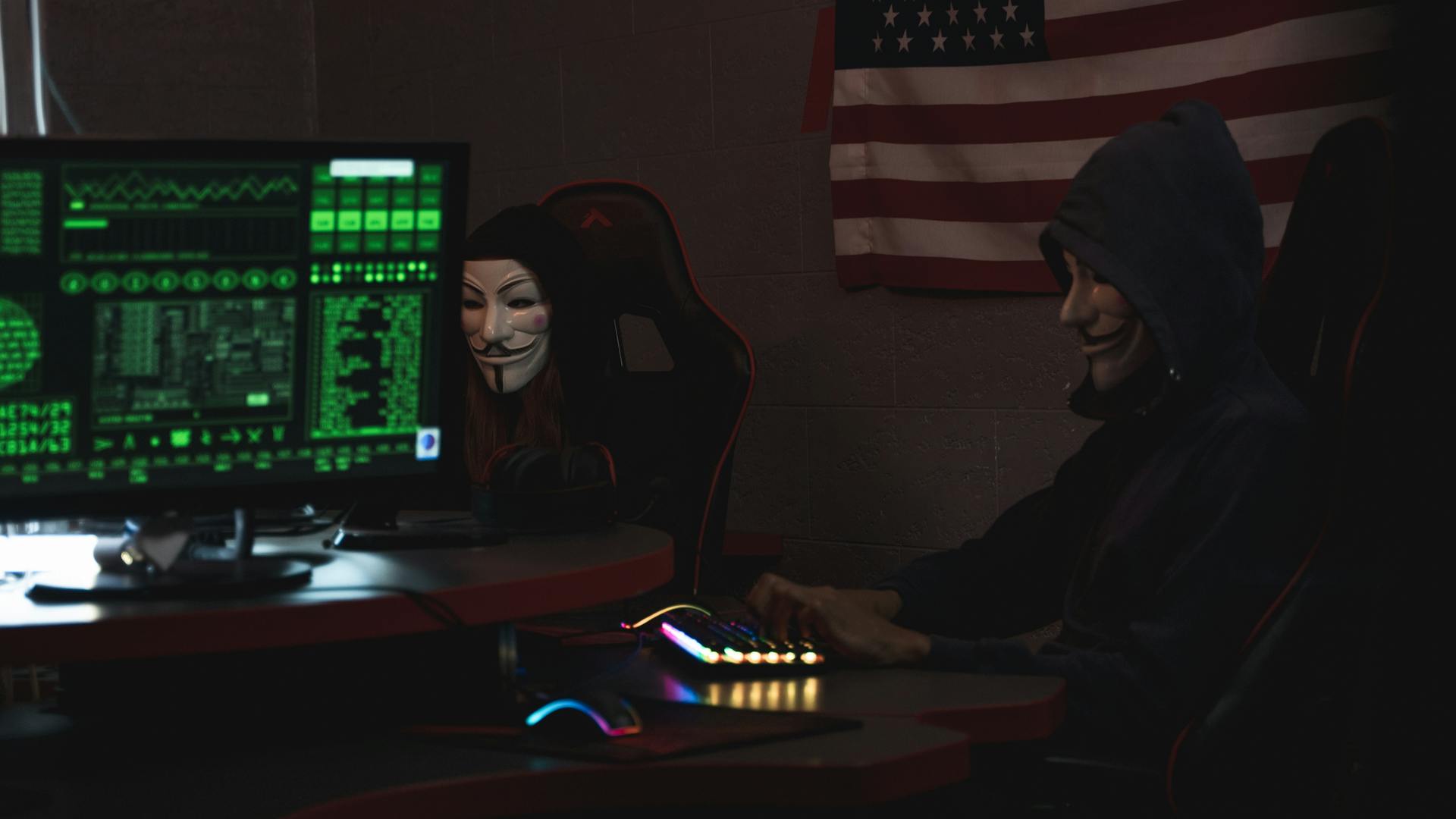
The Cold War spy game — dead drops, defectors, and listening stations — has been replaced by something far more consequential. The new intelligence war between the United States and China is fought with algorithms that can drain the knowledge from a frontier AI model in days, with satellites that peer through clouds and darkness, and with seismic sensors that detect nuclear detonations buried deep beneath the Gobi Desert. On April 23, 2026, the White House fired what may be remembered as the opening salvo of this new era: a formal memo from Michael Kratsios, director of the White House Office of Science and Technology Policy, accusing China of running 'deliberate, industrial-scale campaigns to distil US frontier AI systems.' The intelligence war between Washington and Beijing is no longer a shadow conflict. It is the defining geopolitical contest of the 2020s.
The AI Heist — Industrial-Scale Theft
On April 23, 2026, Michael Kratsios issued a memo that sent shockwaves through Silicon Valley and Washington's national security establishment alike. The document, reported by Reuters, accused Chinese state-linked actors of leveraging 'tens of thousands of proxy accounts to evade detection and using jailbreaking techniques to expose proprietary information' embedded within America's most advanced AI systems. The technique at the heart of this campaign — known as adversarial distillation — is not mere hacking. It is something more insidious: a systematic effort to extract the learned capabilities of a frontier AI model by bombarding it with carefully crafted queries, then using the outputs to train a rival model. In effect, China was attempting to steal not just data, but intelligence itself.
The scale of the operation was staggering. Anthropic, the San Francisco-based AI safety company behind the Claude family of models, publicly disclosed that it had identified and shut down three Chinese AI laboratories running a combined total of 24,000 fake accounts designed to siphon US AI technology. These were not opportunistic freelancers. They were organized, well-resourced operations with the hallmarks of state coordination — systematic query patterns, rotating proxy infrastructure, and a clear strategic objective: to close the gap between Chinese and American AI capabilities without the years of investment and research that gap represents.
The US State Department moved swiftly. On April 24, 2026 — just one day after the Kratsios memo — the department issued a global warning to allied governments and international partners about alleged AI thefts by DeepSeek and other Chinese AI laboratories. DeepSeek, the Hangzhou-based AI firm whose January 2025 model release had already rattled US markets, was now at the center of a formal diplomatic and intelligence dispute. The State Department's warning was unprecedented in its specificity: it named Chinese AI entities by name and urged allies to scrutinize their own AI supply chains for potential compromise.
To understand why adversarial distillation matters strategically, consider what it bypasses. Training a frontier AI model requires billions of dollars in compute, years of research, and access to vast proprietary datasets. Distillation attacks short-circuit all of that. By querying a target model millions of times — using jailbreaking prompts to circumvent safety filters and extract raw capability — an adversary can approximate the model's behavior at a fraction of the cost. For a nation seeking to achieve AI parity with the United States, it is the most efficient form of technological theft ever devised.
Beijing's response was predictable but pointed. The Chinese Embassy in Washington dismissed the allegations as 'baseless,' while China's foreign ministry urged the United States to 'abandon biases' and stop what it characterized as politically motivated technology suppression. Chinese officials framed the US accusations as part of a broader campaign to contain China's legitimate technological development — a narrative that resonates domestically and finds some sympathy among nations wary of American tech dominance. But the evidence assembled by Anthropic and corroborated by US intelligence agencies was difficult to dismiss: 24,000 fake accounts do not materialize by accident.
The Nuclear Shadow — Lop Nur Under the Microscope
While the AI espionage war dominated headlines in April 2026, a quieter but potentially more consequential intelligence battle had been unfolding since February. On February 17, 2026, US Assistant Secretary of State Christopher Yeaw delivered a remarkable testimony at the Hudson Institute in Washington. Speaking with unusual candor, Yeaw revealed that a remote seismic monitoring station in Kazakhstan had detected an 'explosion' of magnitude 2.75 on June 22, 2020 — located approximately 450 miles away at the Lop Nur test grounds in western China's Xinjiang region. The implication was explosive in every sense: China may have conducted a low-yield nuclear test in violation of the Comprehensive Nuclear-Test-Ban Treaty (CTBT), which Beijing signed in 1996.
Yeaw described a technique known as 'decoupling' — the detonation of a nuclear device inside a large underground chamber specifically engineered to absorb and dissipate the shockwave, reducing the seismic signature to levels that might evade detection or be dismissed as a minor geological event. The technique is not new; it was theorized during the Cold War as a potential means of cheating arms control agreements. But Yeaw's testimony represented the most direct public accusation by a senior US official that China had actually employed it. The magnitude 2.75 reading, he argued, was consistent with a small nuclear yield that had been deliberately masked.
China denied the allegations categorically. Beijing's foreign ministry called the claims 'irresponsible' and 'politically motivated,' insisting that China had maintained a strict moratorium on nuclear testing since 1996. The Comprehensive Nuclear-Test-Ban Treaty Organization (CTBTO), the Vienna-based body that operates the global monitoring network, adopted a more cautious position — neither confirming nor denying the US assessment, noting that its own data required further analysis. The ambiguity was itself revealing: in the world of nuclear intelligence, certainty is rarely available, and ambiguity is a weapon.
The Lop Nur revelations arrived against a backdrop of accelerating nuclear anxiety. The Pentagon's most recent assessment projects that China will field more than 1,000 nuclear warheads by 2030, up from an estimated 600-plus operational warheads today — a pace of expansion that has no precedent in the post-Cold War era. Meanwhile, the New START treaty between the United States and Russia — the last major bilateral nuclear arms control agreement — expired on February 5, 2026, leaving the world without a legally binding framework to constrain the nuclear arsenals of any of the three major nuclear powers for the first time in decades. President Trump has pressed China to join a three-way nuclear treaty with the US and Russia, but Beijing has consistently refused, arguing that its arsenal is too small to warrant inclusion in a trilateral framework — an argument that grows less credible with each passing year.
The intelligence dimensions of the nuclear question are profound. Monitoring a nation's nuclear program — its test sites, its warhead production facilities, its missile deployment patterns — requires the most sophisticated surveillance capabilities that exist. The Lop Nur site, a vast salt flat in the Taklamakan Desert, has been the subject of continuous US satellite surveillance for decades. The ability to detect a magnitude 2.75 seismic event 450 miles away and attribute it to a specific location speaks to the extraordinary reach of the US intelligence apparatus. But it also illustrates the limits of that apparatus: even with all available tools, the question of whether China conducted a nuclear test in 2020 remains, officially, unresolved.
Space — The New Battlefield
If the AI espionage war is fought in the digital realm and the nuclear intelligence contest plays out beneath the earth's surface, the third front of the US-China intelligence war is being waged 400 kilometers above it. By mid-2025, China's operational satellite fleet had exceeded 1,060 spacecraft, according to the US-China Economic and Security Review Commission's 2025 annual report — a number that places Beijing in direct competition with Washington for orbital dominance. Hundreds of those satellites are dedicated to intelligence, surveillance, and reconnaissance (ISR) missions: monitoring US carrier strike groups in the Pacific, tracking troop movements in the Indo-Pacific theater, and providing real-time targeting data for China's growing arsenal of precision-strike weapons.
The United States has responded with urgency. The US Space Force's 'Race to Resilience' initiative — launched to ensure that American space-based capabilities remain operational even under adversarial attack — aims to field battle-ready architectures by 2026. The Space Force's budget for fiscal year 2026 is approaching $40 billion, a figure that would have seemed extraordinary a decade ago but now reflects the hard reality that space is no longer a sanctuary. Space Force Chief General B. Chance Saltzman has been unambiguous about the stakes: 'The Space Force will do whatever it takes to achieve space superiority.' In the lexicon of military strategy, 'superiority' is not a modest ambition.
The Trump administration's Golden Dome missile defense initiative adds another layer to the space competition. Conceived as a next-generation shield against ballistic and hypersonic missile threats, Golden Dome relies heavily on space-based sensors and interceptors — assets that would themselves become targets in any conflict with China. Beijing has invested heavily in counter-space capabilities: maneuverable satellites capable of approaching and disabling US spacecraft, ground-based lasers designed to blind optical sensors, and anti-satellite missiles that have already been tested against orbital targets. The weaponization of space, long feared and long deferred, is now an operational reality.
On the intelligence side, the US has increasingly turned to commercial satellite networks to supplement its classified ISR capabilities. Commercial providers operating synthetic aperture radar (SAR) satellites — capable of imaging through clouds and in complete darkness — now provide US intelligence agencies with near-continuous coverage of Chinese military installations, naval movements in the South China Sea, and activity at sensitive sites like Lop Nur. This democratization of satellite intelligence has strategic implications that cut both ways: it makes US surveillance more resilient and harder to disrupt, but it also means that the same commercial imagery is available to any nation willing to pay for it.
Human Intelligence — The CIA's Mandarin Gambit
In February 2026, the Central Intelligence Agency took an unusual step into the open. The agency launched a public Mandarin-language recruitment campaign on YouTube, directly targeting disaffected Chinese military officers and government officials. The videos — polished, emotionally resonant, and carefully crafted to appeal to individuals disillusioned by Xi Jinping's sweeping anti-corruption purges — represented a significant departure from the CIA's traditionally covert approach to human intelligence recruitment. The message was clear: if you are a Chinese military officer who has watched colleagues purged, imprisoned, or disappeared by the Central Military Commission's disciplinary apparatus, the CIA is listening.
The timing was deliberate. Xi Jinping's anti-corruption campaign, which has ensnared hundreds of senior military officers since 2012, has created a class of aggrieved insiders with access to sensitive information and, potentially, motivation to share it. The purge of multiple Rocket Force commanders in 2023 — the branch responsible for China's nuclear and conventional missile arsenal — was particularly significant. US intelligence analysts assessed that the resulting atmosphere of fear and suspicion within the People's Liberation Army had created recruitment opportunities that did not exist a decade ago. The CIA's public campaign was designed to reach individuals who might never be approached through traditional clandestine channels.
The human intelligence contest runs in both directions. In January 2026, the US Department of Justice announced a 200-month prison sentence — nearly 17 years — for a former US Navy sailor convicted of spying for China. The case was a reminder that Chinese intelligence services remain highly active in recruiting American military and government personnel, exploiting financial pressures, ideological sympathies, and personal vulnerabilities. China's Ministry of State Security has also been linked to attempts to infiltrate US congressional staff email systems, seeking intelligence on legislative deliberations about Taiwan, semiconductor export controls, and military aid packages.
Beijing has responded to the CIA's recruitment campaign with characteristic intensity. Chinese state media warned citizens against approaches by Western intelligence agencies, and the Ministry of State Security issued public guidance on identifying and reporting foreign recruitment attempts. The counter-intelligence apparatus has been reinforced, with particular attention paid to military personnel who have had contact with foreign nationals or who have traveled abroad. In the human intelligence dimension of the US-China intelligence war, both sides are playing an aggressive game — and both sides are scoring.
The Cyber Front — America's Most Persistent Threat
The 2026 Annual Threat Assessment, published by the US Intelligence Community, delivers its most consequential judgment in unambiguous language: China remains the most serious, widespread, active, and persistent cyber threat to US critical infrastructure. This is not a new finding — China has topped the US cyber threat assessment for years — but the 2026 edition reflects a qualitative escalation in both the sophistication and the strategic ambition of Chinese cyber operations. The goal, US intelligence officials assess, is no longer merely espionage. It is the pre-positioning of malicious code within US power grids, water systems, financial networks, and transportation infrastructure — capabilities designed to enable rapid, devastating disruption of essential American services at the moment of Beijing's choosing.
The strategic logic is chilling. In a conflict scenario — a Taiwan contingency, a South China Sea confrontation — China's ability to simultaneously conduct kinetic military operations and cripple US domestic infrastructure would create a crisis management nightmare for Washington. American political leaders would face the impossible task of managing a foreign military crisis while their own population confronted power outages, disrupted communications, and compromised financial systems. The cyber operations documented in the 2026 Threat Assessment are not, in this reading, acts of espionage. They are acts of strategic preparation.
The AI dimension of cyber warfare adds a further layer of complexity. In May 2026, a security incident involving Anthropic's Mythos AI security platform sent US financial institutions scrambling to audit their cyber defenses. The incident — details of which remain partially classified — highlighted the degree to which AI systems have become both tools and targets in the cyber warfare contest. AI-powered intrusion detection systems can identify anomalous network behavior at speeds no human analyst can match; but AI-powered attack tools can probe defenses with equal speed and creativity. The integration of AI into cyber operations has accelerated the tempo of the contest to a point where human decision-making is increasingly a bottleneck.
US cyber defenses have been substantially upgraded since the Volt Typhoon revelations of 2023-2024, which exposed deep Chinese penetration of US critical infrastructure networks. The Cybersecurity and Infrastructure Security Agency (CISA) has expanded its operational partnerships with private sector entities, and the NSA's Cybersecurity Directorate has increased its public threat intelligence sharing. But the fundamental asymmetry of cyber warfare — in which offense is structurally easier than defense — means that the United States remains perpetually on the back foot, patching vulnerabilities faster than they can be exploited, but never quite fast enough.
The Diplomatic Tightrope — Intelligence War Meets Summit Diplomacy
On May 14-15, 2026, President Donald Trump visited China — the first US presidential visit to Beijing in years, and one of the most consequential diplomatic encounters of his second term. The summit produced carefully worded joint statements on trade and climate, but the intelligence war that had dominated the preceding weeks was conspicuously absent from the official communiqués. Both sides had made a calculated decision: the intelligence tensions would be managed quietly, through back-channel communications between intelligence chiefs, rather than aired publicly in ways that might derail the broader diplomatic agenda.
The summit was made possible, in part, by an October 2025 detente that had briefly lowered bilateral tensions following a period of acute confrontation over Taiwan and semiconductor export controls. That detente had established a fragile framework for managing competition — acknowledging that the two nations were engaged in a fundamental strategic rivalry while creating guardrails to prevent that rivalry from escalating into open conflict. The intelligence war tested those guardrails severely in the spring of 2026, but both sides ultimately chose to preserve the diplomatic channel.
China's careful avoidance of direct public criticism of the US intelligence accusations reflected a pragmatic calculation about economic consequences. With bilateral trade still running at trillions of dollars annually despite years of tariffs and restrictions, Beijing was unwilling to allow the intelligence dispute to trigger a broader economic rupture. Chinese officials privately acknowledged the sensitivity of the AI theft allegations while publicly maintaining their denials — a posture designed to preserve domestic credibility while avoiding the kind of escalatory rhetoric that might force Washington's hand.
The question of Nvidia's H200 chips — the most powerful AI training accelerators commercially available — illustrated the technological dimension of the diplomatic tightrope. The chips had been green-lit for export in January 2026 following a policy review, but as of April 2026, no shipments had been made. The delay reflected the unresolved tension between US commercial interests in maintaining access to the Chinese market and the national security imperative to prevent China from acquiring the hardware needed to close the AI capability gap. The H200 question was, in microcosm, the entire US-China technology competition: a contest between economic interdependence and strategic competition, with no clean resolution in sight.
What This Means for the World
The convergence of AI espionage, space weapons, nuclear surveillance, human intelligence operations, and cyber warfare into a single, integrated strategic competition creates a new kind of geopolitical environment — one for which the existing international frameworks are profoundly inadequate. The arms control treaties that governed the Cold War were designed for a world of missiles and warheads, not algorithms and orbital assets. The intelligence-sharing agreements that bind the Five Eyes alliance were not conceived with AI distillation attacks in mind. The norms of diplomatic conduct that have historically constrained intelligence operations between great powers are being tested by capabilities that did not exist when those norms were established.
The risk of miscalculation is acute. In a world where AI systems are making increasingly autonomous decisions about network intrusions, satellite maneuvers, and threat assessments, the margin for human error — and human correction — is shrinking. A Chinese satellite that approaches a US reconnaissance asset too closely, an AI-powered intrusion tool that inadvertently triggers a US critical infrastructure alarm, a seismic event at Lop Nur that US sensors interpret as a nuclear test — any of these could generate a crisis that neither side intended and neither side is fully equipped to manage.
For US allies and neutral nations, the intelligence war presents a set of uncomfortable choices. European governments that have integrated Chinese telecommunications infrastructure into their networks face pressure from Washington to remove it — pressure that carries significant economic costs. Indo-Pacific nations that rely on both US security guarantees and Chinese trade relationships are being asked, implicitly, to choose sides in a contest they did not initiate and cannot easily exit. The global implications of the US-China intelligence war extend far beyond the bilateral relationship: they are reshaping the architecture of international technology governance, the norms of state behavior in cyberspace, and the strategic calculations of every nation that must navigate between the two superpowers.
New international frameworks are urgently needed — but the prospects for their emergence are dim. The bilateral trust deficit between Washington and Beijing is at a historic low. Multilateral forums like the United Nations have proven unable to generate binding norms for cyber operations or space weapons. The CTBT, which might have provided a framework for addressing the Lop Nur allegations, has never been ratified by the United States. The gap between the pace of technological change and the pace of diplomatic adaptation has never been wider — and the consequences of that gap have never been more dangerous.
Conclusion
The intelligence war between the United States and China is no longer a shadow conflict conducted in the margins of the bilateral relationship. It is the central contest of the 2020s — a competition that spans the digital realm, the orbital environment, the nuclear underground, and the human networks of espionage and counter-espionage that have always been the sinew of great-power rivalry. The April 2026 White House memo, the Lop Nur revelations, the CIA's Mandarin recruitment campaign, the Space Force's race for orbital dominance, and the cyber operations pre-positioned within America's critical infrastructure are not isolated incidents. They are facets of a single, integrated strategic competition whose outcome will determine who controls the technologies, the skies, and the nuclear balance of the next century. The world is watching — and the stakes have never been higher.
Related Topics:
"Curating the elite intersection of global culture, cinematic intelligence, high-end gastronomy, and the premium evolution of modern lifestyle."
" Tracking the massive architecture of global capital, sovereign wealth shifts, and the economic engines of the new world order."
"Curating the elite intersection of global culture, cinematic intelligence, high-end gastronomy, and the premium evolution of modern lifestyle."
"Decoding the high-stakes chess game of global statecraft, strategic diplomacy, and the shifting balance of world power."
" Tracking the massive architecture of global capital, sovereign wealth shifts, and the economic engines of the new world order."
WPP Threat Analysis & Intelligence Wing
Exposing shadow networks, dismantling misinformation warfare, and decoding the invisible frontlines of global security.
Get the Weekend Intelligence Briefing
Sign up for the deepest geopolitical and tech insights sent directly to your inbox every Sunday.
No spam. Unsubscribe anytime. View our Privacy Policy.
Loading Next Story