Smart Reading Mode Enabled
Double-click or long-press any difficult word in this article to instantly view its definition.
The Fall of a Fortress: West Bengal’s 50-Year History of Political Violence and the Historic 2026 Regime Change
An analysis of West Bengal's political history, tracing violence under Left/TMC, industrial decline, demographic shifts, and the historic 2026 assembly election regime change.

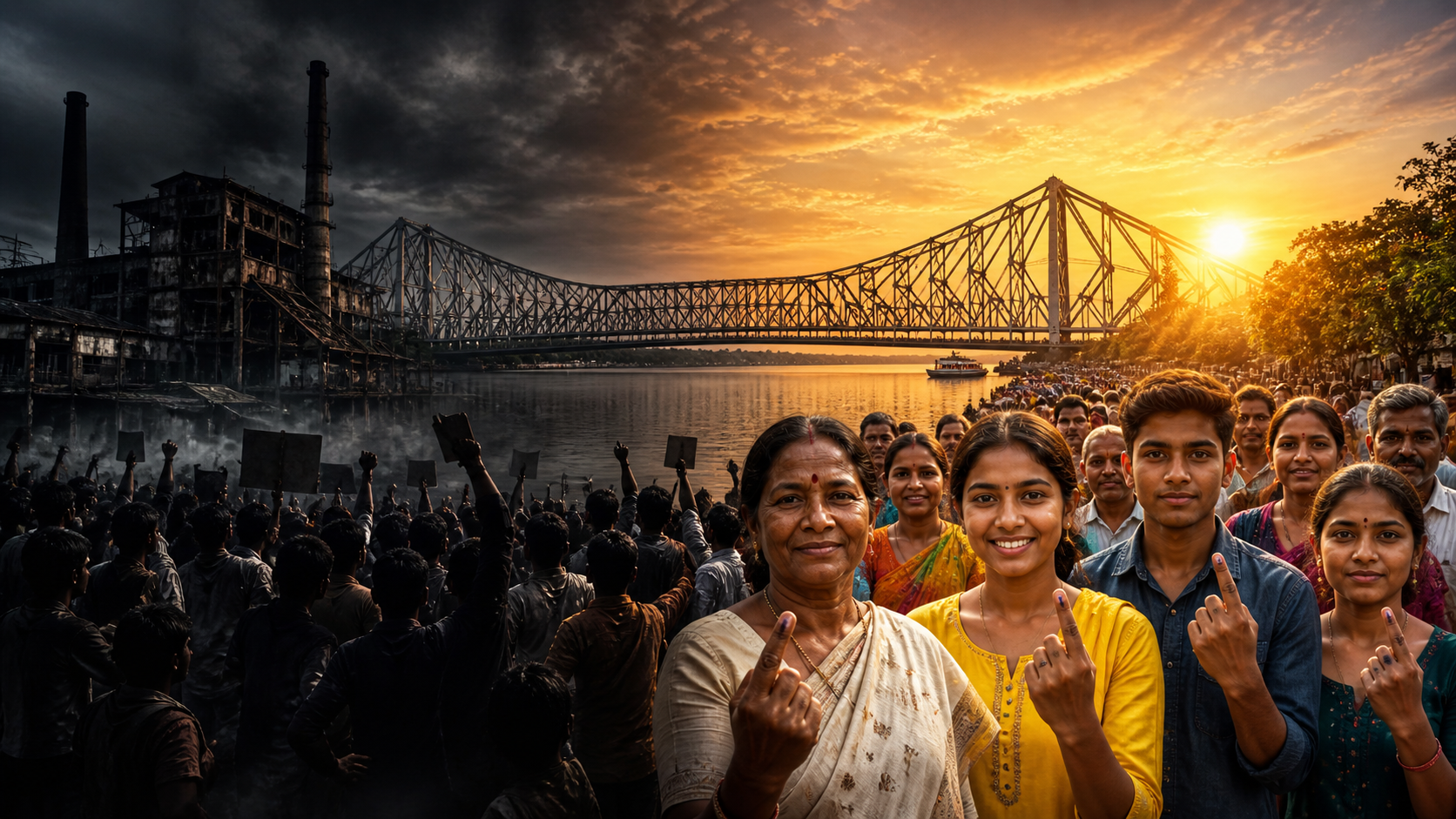
West Bengal: Political Violence, Demographic Transition, Industrial Decline, and the Historic Regime Change of 2026
West Bengal's contemporary history is a complex saga that encapsulates extraordinary intellectual and cultural heritage alongside stark contradictions of institutionalized political violence, severe economic decline, and demographic instability. This research report presents a detailed, fact-based, and multidimensional analysis of the developments in the state over the past five decades. At the core of this study is the structural political violence that has functioned as a systematic tool to maintain control over power, from the Left Front era to the Trinamool Congress (TMC) regime.
Specifically, this report conducts an in-depth examination of the unprecedented violence following the 2021 assembly elections, the systematic atrocities against Hindu women and opposition workers, and the forced migration from the state. Furthermore, it provides a detailed analysis of the land-grabbing and sexual assault cases in Sandeshkhali, as well as the brutal rape and murder at RG Kar Medical College in 2024, which served as major catalysts for public outrage and exposed the state's administrative and moral collapse.
Once a leading industrial state in India, West Bengal currently suffers from severe economic paralysis. This report evaluates the causes of this industrial decline from the 1947 partition to 2026, including the exodus of thousands of companies in recent years. Concurrently, it documents the illegal infiltration across the India-Bangladesh border, the resulting demographic shifts in border districts, and the far-reaching impacts of the 'Special Intensive Revision' (SIR) campaign launched by the Election Commission of India (ECI) in 2025. Finally, the report analyzes the historic assembly election results declared on May 4, 2026, marking a massive regime change as the Bharatiya Janata Party (BJP) secured a clear majority, fundamentally altering the state's political landscape.
1. Institutionalization of Political Violence in West Bengal: A Historical Perspective (1970-2011)
Violence in West Bengal's politics is not an accidental or sporadic phenomenon; rather, it is a deliberate and structural tool developed by political parties to establish a monopoly over state institutions and crush opposition. The roots of this violence trace back to the turbulent 1960s and 1970s when leftist movements took a militant turn, birthing a political culture that gripped the state for decades to come.
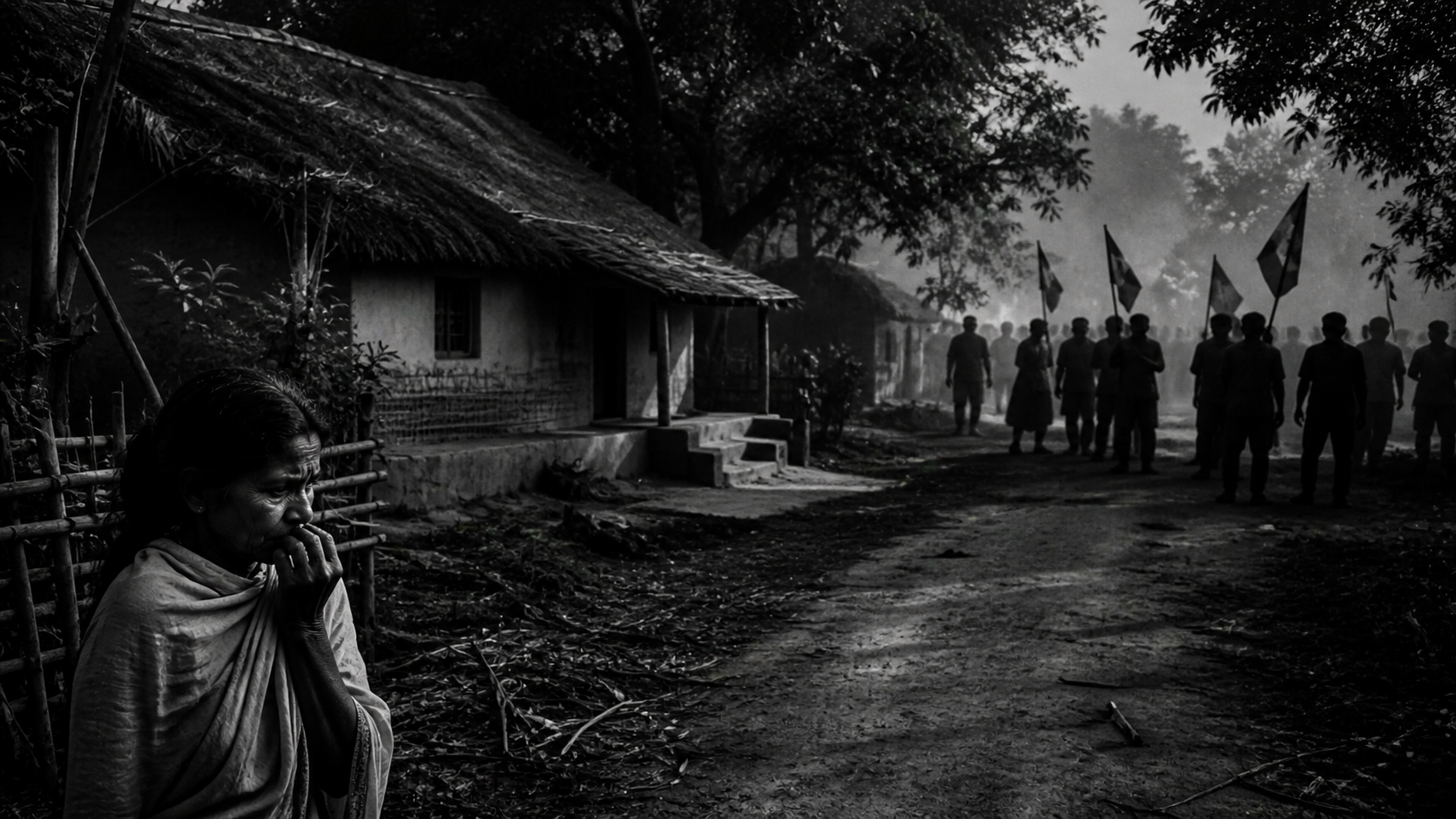
1.1 Sainbari Massacre (1970) and the Rise of a Culture of Revenge
The 'Sainbari Murder' in Bardhaman on March 17, 1970, is considered an early and horrifying chapter in the institutionalization of violence. Following the fall of the Ajoy Mukherjee-led United Front government, leftist parties called for a statewide bandh. The Sain family, prominent Congress supporters, was targeted by a violent mob. Malay Kumar Sain, Pranab Kumar Sain, and Jitendranath Roy were brutally murdered. Reports suggest the attackers forced a mother to eat rice stained with her dead sons' blood. The Mukherjee Commission formed to investigate the incident noted the failure of local police. However, in 1978, all 83 accused were acquitted. This sparked an endless cycle of revenge, leading to retaliatory violence such as the Ahladipur village attack in 1972 by Congress-aligned groups.
1.2 Marichjhapi Massacre (1979): State-Sponsored Violence and Dalit Refugees
After the Left Front assumed power in 1977, violence transformed into an everyday political tool. The darkest example is the 'Marichjhapi Massacre' between January and May 1979. Dalit (Namasudra) refugees from East Pakistan, previously sent to harsh camps in Dandakaranya, returned to Bengal hoping to settle in the Sundarbans based on earlier promises made by Left leaders. However, the Left government declared their settlement an ecological threat to the tiger reserve and initiated a brutal eviction. The state implemented an economic blockade, cutting off food and water, followed by police action. While the official death toll was extremely low, independent researchers and survivors estimate the casualties between 10 to 10,000, with severe allegations of rape and starvation. Victims' identities as Dalits and refugees made them highly vulnerable to this state violence.
1.3 1980 to 2011: Rural Dominance, Ananda Marga, and Nandigram
During the 1980s and 90s, violence became deeply linked to rural control, panchayats, and resource distribution. Horrific incidents included the burning alive of 17 Ananda Marga monks in Kolkata in 1982, the Bantala rape and murder of female health officials in 1990, the Nanoor massacre of landless laborers in 2000, and the Chhoto Angaria killings. The Left Front's 34-year rule ultimately crumbled due to violent land acquisition disputes. In Nandigram (2007-08), clashes between CPI(M) cadres, police, and villagers opposing a chemical hub project resulted in over 50 deaths, paving the way for Mamata Banerjee's TMC to win in 2011.
2. Post-2021 Election Violence: Retribution, Exodus, and Judicial Intervention
When the TMC came to power in 2011 with the slogan "Bodol Chai, Bodla Noy" (We want change, not revenge), many hoped for an end to the violence. However, analysts note the structural violence simply "changed ownership". The most blatant display of this occurred after the May 2021 assembly elections.
2.1 The Nature of Violence and Targeted Attacks
Following the TMC's decisive victory on May 2, 2021, systematic post-poll violence erupted across the state. Attacks were primarily targeted at Bharatiya Janata Party (BJP) supporters, polling agents, and communities that voted for the opposition. The violence had severe communal and class dimensions, with low-income Hindus frequently targeted. Incidents of looting, arson, and horrific acts of sexual violence against Hindu women were reported as tools of political retribution. BJP workers like Manik Moitra and Congress worker Debdeep Chatterjee were brutally murdered. The terror caused hundreds of families to flee West Bengal and seek refuge in neighboring Assam, prompting the Assam government to set up temporary relief camps.
2.2 National Human Rights Commission (NHRC) and Judicial Stance
Due to the inaction of local police, the Calcutta High Court intervened and ordered the formation of a fact-finding committee led by NHRC member Rajiv Jain. The committee's report revealed a complete collapse of law and order, recording approximately 1,979 complaints involving about 15,000 victims. A five-judge bench of the High Court observed that the allegations were "prima facie true" and reprimanded the state government for failing to rehabilitate displaced people and restore trust.
2.3 CBI and SIT Investigations
On August 19, 2021, expressing a lack of faith in the state police, the Calcutta High Court ordered a Central Bureau of Investigation (CBI) probe into heinous crimes like murder and rape. For lesser offenses, a Special Investigation Team (SIT) of senior IPS officers was formed. By January 2022, the CBI was actively investigating 39 cases of rape/molestation and 52 cases of murder/unnatural deaths, filing several charge sheets. Despite the state government's appeals to the Supreme Court, investigations continued, and central forces had to be deployed for extended periods to manage the ongoing unrest.
3. Modern Catalysts of Public Outrage: Sandeshkhali and RG Kar Incidents
The year 2024 marked a turning point in West Bengal's political history, with two major incidents exposing the deep-rooted syndicate raj and an alarming "threat culture." These events heavily influenced the public mood leading up to the 2026 elections.
3.1 Sandeshkhali: State-Sponsored Feudalism and Sexual Violence
In January and February 2024, Sandeshkhali, a remote area in North 24 Parganas, gained national attention when local women rebelled against systemic abuse by powerful TMC figures.
- The Trigger: On January 5, an Enforcement Directorate (ED) team raided the home of TMC leader Shahjahan Sheikh regarding a ration scam. A mob of his supporters brutally attacked the officers, after which Sheikh absconded for 55 days.
- Sexual Violence and Land Grabbing: Women revealed a reign of terror led by Sheikh and his aides, Shibu Hazra and Uttam Sardar. They alleged they were summoned to party offices at "ungodly hours" and subjected to sexual assault and gangrape. Furthermore, agricultural lands and playgrounds were forcibly grabbed and converted into saltwater fisheries, destroying local livelihoods.
- Action Taken: Local police initially refused to register FIRs. Following massive protests, the Calcutta High Court ordered a CBI probe into the land grabbing and sexual assault allegations. Shibu Hazra was arrested on February 17, and Shahjahan Sheikh was finally arrested by state police on February 29 before being suspended by the TMC.
3.2 RG Kar Medical College: The 'Threat Culture' and Systemic Collapse
The horrifying incident at Kolkata's RG Kar Medical College in August 2024 laid bare the mafia-like networks operating within elite urban institutions.
- The Crime: On August 8-9, a 31-year-old female postgraduate trainee doctor was brutally raped and murdered in a seminar hall after a grueling 36-hour shift. Her body showed signs of severe violence.
- Cover-up and Vandalism: The college principal, Dr. Sandip Ghosh, illegally revealed the victim's name and attempted to label it a suicide. The victim's parents were hindered from seeing the body, and the cremation was hastily pushed through by the administration. On August 14, as protests surged, a mob vandalized the hospital, severely damaging the crime scene in what was perceived as an attempt to destroy evidence.
- Exposure of 'Threat Culture': Investigations revealed a deeply entrenched "threat culture" at the institution. A syndicate of doctors and students allegedly engaged in extortion, sexual harassment, threatening students with academic failure, and forcing them to attend political rallies. Reports suggested the victim was a whistleblower intending to expose this corruption.
- Aftermath: The Calcutta High Court transferred the case to the CBI, and the Supreme Court formed a National Task Force to address healthcare workers' safety.
4. The Decline of Industrialization in West Bengal: Economic Paralysis (1947-2026)
Parallel to its political turbulence, West Bengal suffered a massive economic decline, transitioning from India's industrial powerhouse to a state grappling with capital flight and unemployment.
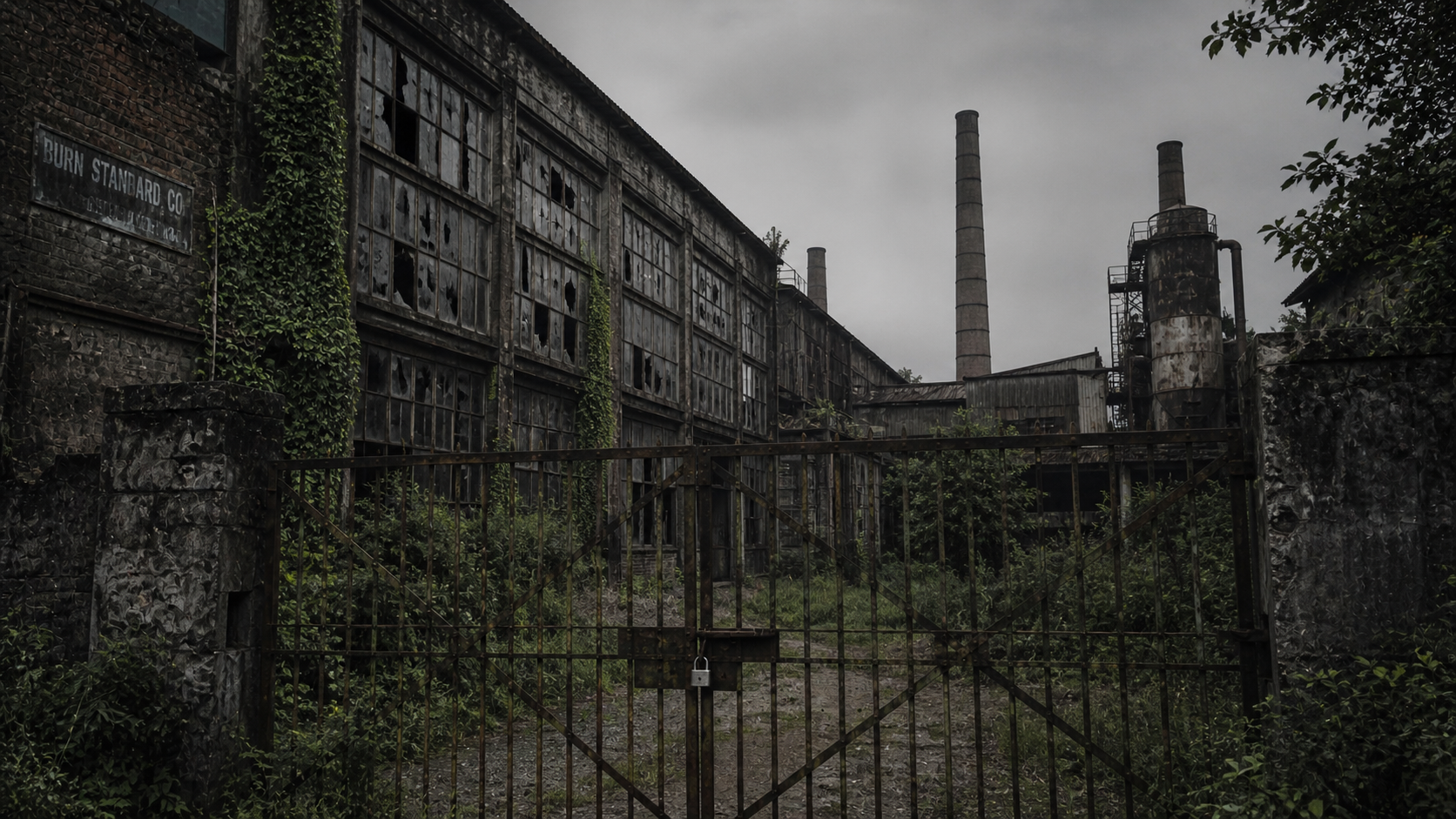
4.1 Post-Independence Era and Early Decline
In 1950-51, West Bengal accounted for 27% of India's total industrial production, second only to Bombay. The decline began with the 1947 Partition, which dealt a severe blow to the jute industry by separating the mills in West Bengal from the raw material sources in East Pakistan. In the 1960s, cuts in the railway budget heavily impacted the state's engineering sectors. Furthermore, the central government's 'Freight Equalization Policy' neutralized West Bengal's geographical advantage of proximity to coal and steel, allowing industries to set up anywhere in India at uniform raw material costs.
4.2 Left Front Rule and Militant Trade Unionism
The decline accelerated rapidly in the 1970s and 80s under communist rule. The culture of 'Gherao' (encircling management) and militant trade unionism terrified investors. In 1965, the state saw 179 strikes; by 1970, this had skyrocketed to 678 strikes and 128 lockouts. Constant 'bandhs' (general strikes) destroyed the work culture. By 2007-08, West Bengal's share of national industrial production had plummeted to a mere 3.9%, and its share of industrial employment fell to 4.9%.
4.3 TMC Era and the Corporate Exodus (2011-2026)
Industrial revival remained elusive under the TMC government, as the union militancy of the Left was replaced by 'syndicate raj' and extortion networks. Between 2011 and 2025, an astonishing 6,895 companies shifted their registered offices out of West Bengal to states like Maharashtra, Gujarat, and Delhi. This exodus included major listed firms as well as hundreds of MSMEs, exacerbated by significant job losses in the informal sector.
5. Demographic Transition, Illegal Infiltration, and the 2025 SIR Campaign
West Bengal shares a porous 2,216 km border with Bangladesh, making illegal immigration a defining geopolitical and demographic issue.
5.1 Historical Infiltration and Demographic Shifts
While the initial post-1947 and 1971 migrations were largely Hindu refugees fleeing persecution, the subsequent decades saw massive waves of economic migration, predominantly by poor Muslims from Bangladesh. The Indian government deemed migration after March 25, 1971, as illegal, but border security estimates indicated that nearly 15 million Bangladeshi nationals reside illegally in India, with a large concentration in West Bengal. Census data from 1981-1991 and 1991-2001 revealed abnormal population growth in border districts like Nadia, Malda, Murshidabad, and North 24 Parganas, significantly skewed by this infiltration. These demographic shifts strained resources, increased urban congestion, and altered the region's socio-political dynamics, often allegedly patronized by ruling parties for "vote bank" politics.
5.2 The 2025 'Special Intensive Revision' (SIR) and Reverse Migration
In a monumental move ahead of the 2026 elections, the Election Commission of India announced a nationwide 'Special Intensive Revision' (SIR) in October 2025 to clean up electoral rolls. For West Bengal, where the last SIR occurred in 2002-2004, the impact was earth-shattering. The rigorous house-to-house enumeration process resulted in the removal of approximately 89 to 90 lakh names (ghost voters, duplicates, and non-citizens), representing around 11.6% to 12% of the state's electorate. Fearing identification and punitive action under the SIR drive, thousands of undocumented Bangladeshi immigrants initiated a massive "reverse migration." Reports from ground zero at Hakimpur, Tarali, and Jaynagar in North 24 Parganas showed long lines of people fleeing back to Bangladesh through the same illegal forest corridors they used to enter.
6. Political Developments of May 2026 and the Historic Regime Change
May 4, 2026, marked a watershed moment in West Bengal's political history. The electorate dismantled the 15-year rule of the TMC, delivering a decisive mandate to the BJP.
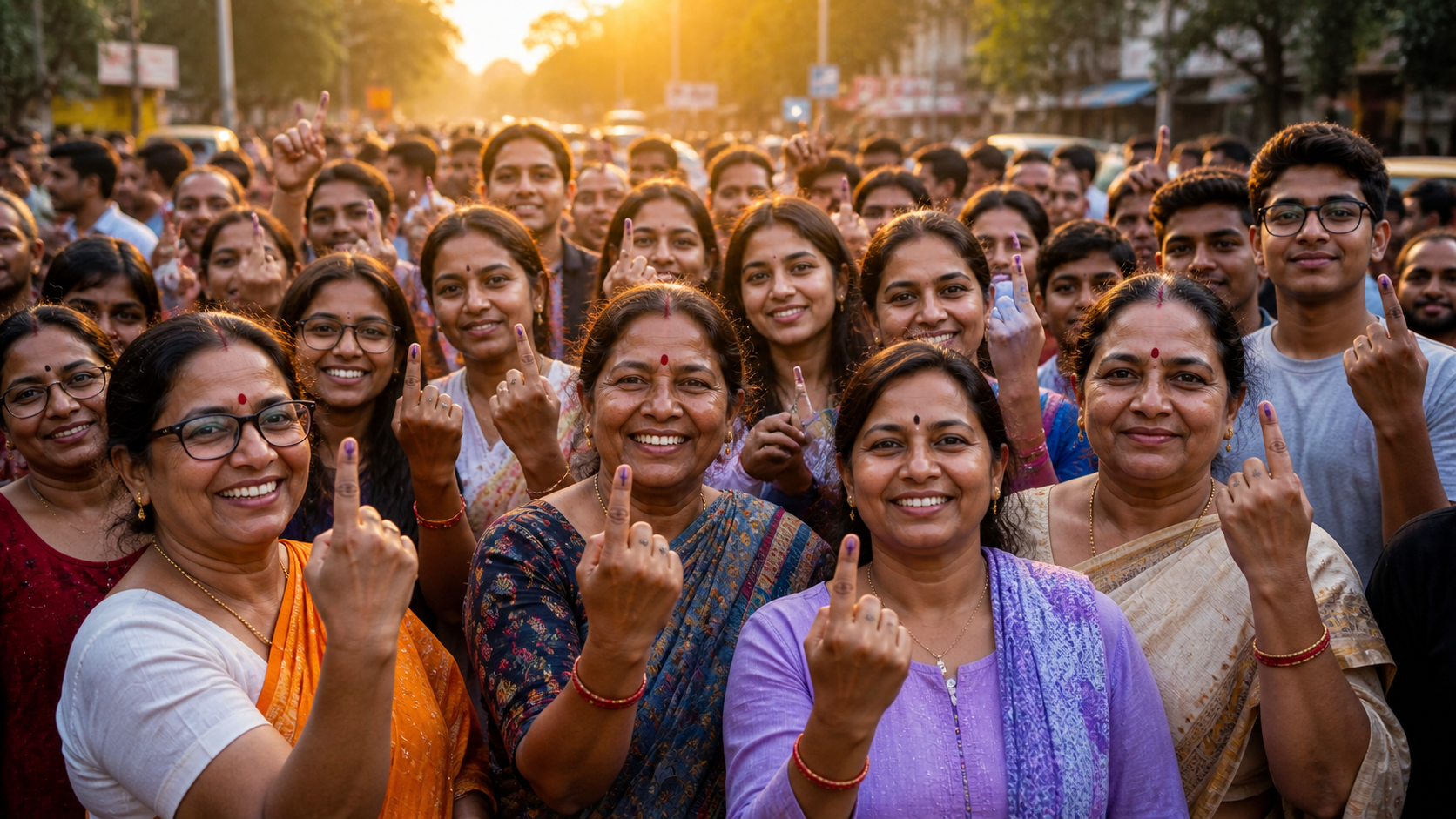
6.1 Assembly Election 2026: Results and Statistical Trends
Early trends and results showed the BJP surging past the majority mark of 148, leading or winning in 195 to 200 seats out of 294, while the incumbent TMC was reduced to 85-96 seats.
- Vote Share: The BJP's vote share saw a tectonic leap from 38.15% in 2021 to around 46-48%. Regions in South and South-West Bengal, previously TMC strongholds, turned completely saffron.
- Key Battles: BJP's Suvendu Adhikari maintained strong leads in Nandigram and challenged Mamata Banerjee in Bhabanipur. In a major upset, BJP's Saikat Panja defeated TMC minister Siddiqullah Chowdhury in Monteswar by over 14,000 votes.
- Symbolic Victories: Ratna Debnath, the mother of the RG Kar victim fielded by the BJP, secured a strong lead in Panihati, reflecting the electorate's demand for justice.
6.2 Underlying Factors of the Regime Change
- Women's Outrage and Safety Concerns: The horrific events of Sandeshkhali and RG Kar triggered massive polarization among women voters. Safety, dignity, and justice superseded the TMC's welfare schemes.
- "Bhorosar Shopoth" (Pledge of Trust): The BJP's manifesto successfully targeted youth and women, promising Rs 3000 monthly aid, an end to the 'syndicate raj', the implementation of the Uniform Civil Code (UCC), and a transparent administration. It framed the election as a shift from "Bhoy" (Fear) to "Bharosa" (Trust).
- Electoral Integrity: The deployment of over 2.4 lakh Central Armed Police Forces (CAPF) personnel and the massive cleansing of the voter list through the 2025 SIR campaign neutralized systemic electoral malpractices.
- Fatigue with Violence: The electorate's exhaustion with the ingrained culture of cut-money, political intimidation, and bloodshed ultimately resulted in an aggressive vote for change.
Conclusion
The political transition in West Bengal in May 2026 signifies much more than a routine electoral victory; it is the culmination of decades of structural trauma. From the bloody fields of Sainbari (1970) and the submerged cries of Marichjhapi (1979) to the systemic cruelty exposed in Sandeshkhali and RG Kar (2024), the state's citizens have endured a severe erosion of democratic and human rights. Coupled with massive capital flight that destroyed the industrial backbone and porous borders that altered the demographic landscape, the state was pushed to the brink.
The Election Commission's 2025 SIR campaign acted as a critical intervention, restoring the sanctity of the ballot by eliminating millions of illegal entries and triggering an unprecedented reverse migration. The overwhelming mandate given to the BJP in 2026—nearing 200 seats—reflects a society desperately rejecting the "threat culture" and syndicate politics. The paramount challenge for the incoming government will now be to dismantle the deep-rooted networks of political violence, restore industrial confidence, and deliver justice to the thousands of victims who have suffered under decades of institutionalized terror.
*(Disclaimer: The image used in this article is AI-generated/stock photography and is for representational purposes only.)*
Related Topics:
"Curating the elite intersection of global culture, cinematic intelligence, high-end gastronomy, and the premium evolution of modern lifestyle."
" Tracking the massive architecture of global capital, sovereign wealth shifts, and the economic engines of the new world order."
"Curating the elite intersection of global culture, cinematic intelligence, high-end gastronomy, and the premium evolution of modern lifestyle."
"Decoding the high-stakes chess game of global statecraft, strategic diplomacy, and the shifting balance of world power."
" Tracking the massive architecture of global capital, sovereign wealth shifts, and the economic engines of the new world order."

The Sovereign Policy Desk
Decoding the high-stakes chess game of global statecraft, strategic diplomacy, and the shifting balance of world power.
Get the Weekend Intelligence Briefing
Sign up for the deepest geopolitical and tech insights sent directly to your inbox every Sunday.
No spam. Unsubscribe anytime. View our Privacy Policy.
Loading Next Story